South America
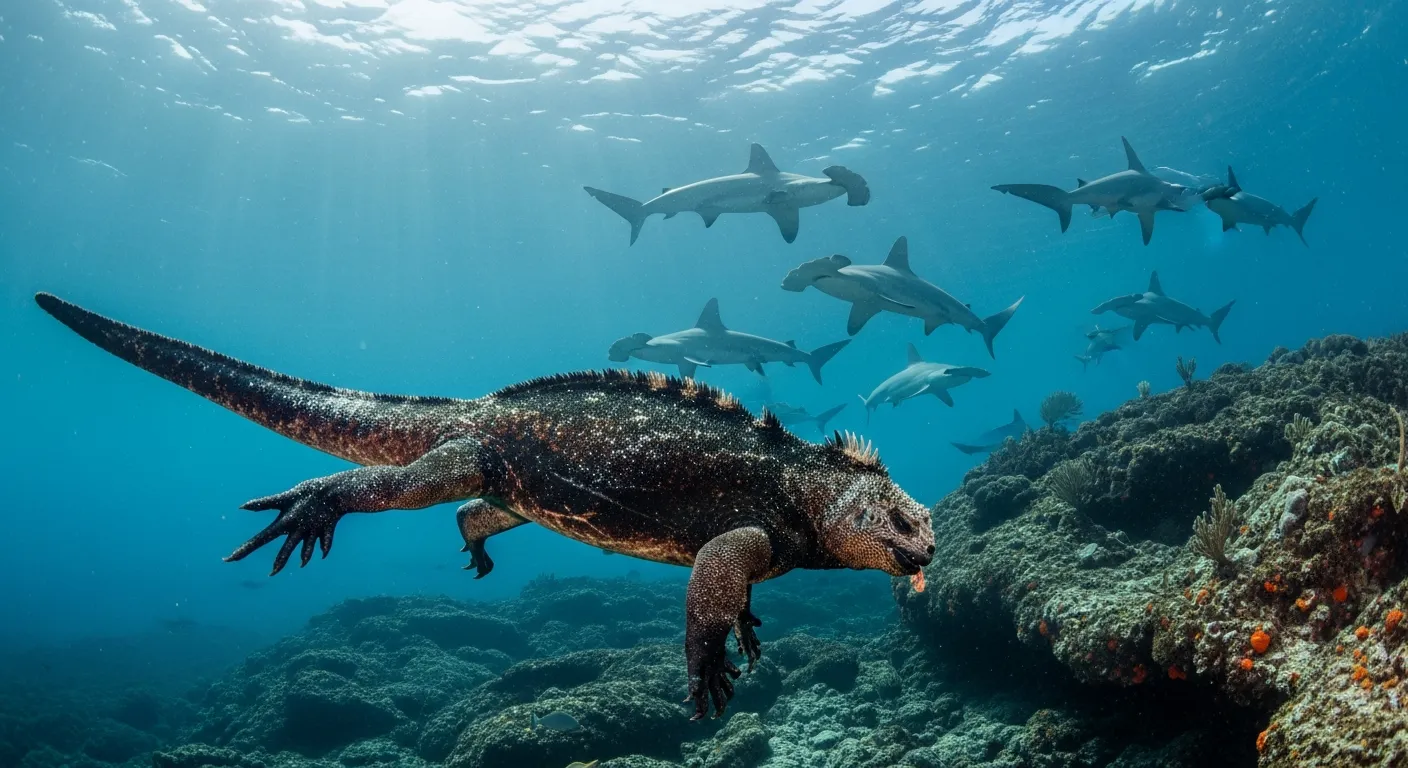
Explore the Galapagos Islands' legendary hammerhead schools, Brazil's Fernando de Noronha archipelago, and Colombia's Malpelo Island. South America offers unique encounters with marine iguanas, sea lions, and massive pelagic species in some of the world's most remote dive sites.
Countries & Territories
Explore diving destinations in South America

Argentina
Argentina might not be the first place that springs to mind for a dive trip, but trust us, it’s got some truly memorable cold-water diving experiences. Forget tropical reefs; here, it’s all about dramatic landscapes and incredible marine mammal encounters. Puerto Madryn, in particular, is where we head for playful interactions with sea lions and the sheer spectacle of southern right whales cruising past. For something completely different, the rugged coastlines of Tierra del Fuego near Ushuaia offer dives in a truly wild, remote setting, often surrounded by Magellanic penguins. We’d suggest aiming for late spring through early autumn, roughly October to April, to catch the best of the wildlife and slightly calmer conditions, though "calm" is a relative term down here. It’s a place for divers who appreciate raw nature over technicolour corals.

Brazil
Brazil for diving means choices, often wildly different ones depending on where you land. If we’re talking about the best of the best, Fernando de Noronha is where you’ll find us, with those spinner dolphins putting on a show and the water so clear it feels like you’re flying. It’s an archipelago that really stands out, especially for its pelagic action. Beyond Noronha, the Abrolhos National Marine Park is essential, primarily for the humpback whale breeding season, usually July through November. We’ve seen them there, and it’s an emotional experience, truly something special. Down south, places like Arraial do Cabo offer cooler water and different species, like the occasional Southern Right whale passing through. The diving here isn’t always postcard perfect like some Caribbean spots; conditions can vary, currents can be strong, and some sites are weather dependent. But for sheer biodiversity, particularly the Atlantic species, and the chance to combine your diving with some incredible topside adventures, Brazil has a lot going for it. We love the feeling of discovery here. It’s a country that keeps giving.

Chile
Chile isn't your typical Caribbean dive trip, and that's precisely why we love it. This is a destination for the adventurous, for those who appreciate the unique over the uniform. We're talking about two vastly different, utterly compelling sub-regions: the remote, volcanic wonder of Easter Island, or Rapa Nui as the locals call it, and the isolated biodiversity hotspot of the Juan Fernández Islands. Easter Island brings astonishing visibility, often exceeding 40 metres, alongside dramatic underwater lava formations and a surprising number of endemic species you won't spot anywhere else. Imagine diving alongside an underwater Moai, its silent gaze following you through the blue. The Juan Fernández archipelago, a UNESCO Biosphere Reserve, offers a completely different vibe, with kelp forests, fur seals, and the chance to encounter species like the curious Juan Fernández fur seal. Forget the tropical fish clichés; here, it's all about the odd, the endemic, and the extraordinary. We’d suggest visiting between November and March for the warmest water and best conditions.

Colombia
Colombia is a country that’s only just started to properly reveal its underwater secrets, and frankly, we’re thrilled about it. For years, Malpelo Island has been the poster child, a truly spectacular volcanic outcrop far out in the Pacific where you’re practically guaranteed to see hundreds of hammerheads and silky sharks cruising by. But there’s so much more. On the Caribbean side, places like San Andrés and Providencia dish out classic reef diving, all vibrant corals and slow drifts over the sand, perfect for spotting parrotfish and angelfish. Santa Marta and Tayrona offer a different vibe, with rocky reefs and a chance to dive into the national park's protected areas. The Pacific coast, especially around Gorgona Island, throws up bigger pelagics, with whale sharks and humpbacks making appearances depending on the season. If you’re looking for big animal action, we’d suggest August through October for Malpelo, when the hammerheads are really schooling. Currents can be fierce there, though, so it's not a spot for the faint of heart. Overall, Colombia feels like a proper adventure, a place where you’re still discovering new things on every trip.

Ecuador
Ecuador, for most divers, means one thing: Galápagos. And honestly, it’s for good reason. Those central islands, particularly around Wolf and Darwin, deliver those heart-thumping pelagic encounters we all dream about - think schooling hammerheads, playful sea lions, and the sheer spectacle of marine iguanas foraging underwater. We’d suggest aiming for the warmer months, roughly December to May, for the best visibility, though the cooler season brings a greater chance of mola mola. Don't overlook Isla de la Plata off the mainland coast; it’s a compelling spot in its own right, especially for encountering oceanic manta rays without the full Galápagos price tag. While the mainland coast offers some interesting finds like the Blue Sea Catfish and Little Snook, the real draw, and where we’d focus our dive time, remains firmly out in the archipelago.

Peru
When we talk about diving in South America, Peru often gets overlooked, and that’s a real shame because it offers something genuinely different. Forget the colourful reefs of the Caribbean; here, the Humboldt Current delivers an entirely unique, nutrient-rich experience. We’re talking about massive kelp forests, playful sea lion colonies, and surprisingly large octopus around Lima and the Palomino Islands - it’s a cooler water, macro-focused adventure. For a change of pace, the far north around Mancora gives you warmer water and a chance to spot species like smooth hammerheads, especially during the summer months from December to March. While it might not be a high-volume dive destination, the sheer productivity of the ecosystem and the chance to encounter barnacle blennies, blue bobos, or even orcas if you're very lucky, makes Peru a standout for the adventurous diver.

Venezuela
Venezuela, particularly the Los Roques Archipelago, delivers a genuinely remote Caribbean dive trip that’s increasingly rare to find. We’re talking about an entire national park, largely undeveloped, where the sheer volume of fish like barbers, damselfish, and parrotfish can make it feel like swimming through a living current. Visibility often stretches to 30 meters plus, giving you endless views of the reef structure and the occasional spotted soapfish lurking in the shadows. For us, the move here is to base yourself on Gran Roque and explore the surrounding cays, hitting sites where the Lamarck's sheet coral thrives and schools of silverfish flash by. While Morrocoy and Chichiriviche offer more accessible diving, Los Roques is where you'll find the quiet, uncrowded dives we all dream about, especially from November to May when the weather is at its calmest.