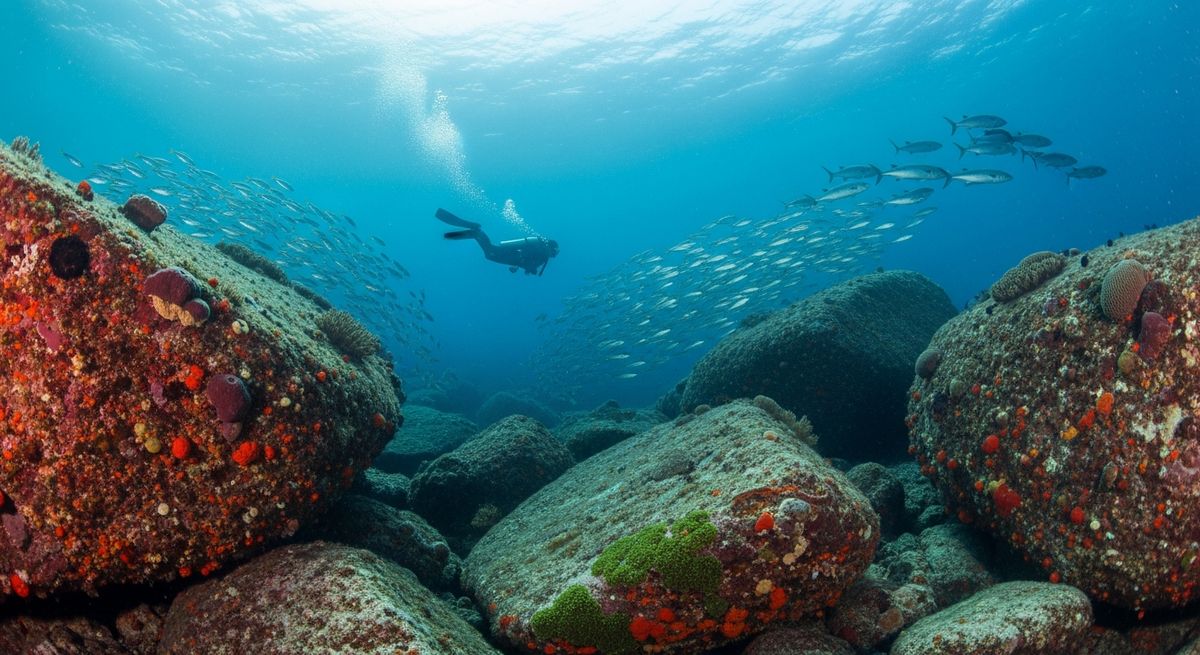
Cenderawasih Diving: West Papua, New Guinea Island
Protected Area
Teluk Cendrawasih
Why dive here
With 84+ marine species recorded in the area - including whale sharks and mantis shrimp - Cenderawasih Diving: West Papua, New Guinea Island offers some of Cenderawasih Bay's richest diving. Water ranges 27-31°C, warmest January, March, December.
Cenderawasih Bay offers a unique kind of Indonesian diving, a bit off the main liveaboard circuit. You’ll find some genuinely healthy reefs here, though for us, the big draw is the chance to spend time with whale sharks. They’re a regular feature, often curious and comfortable with divers. Beyond the pelagics, there's a good showing of macro life and some interesting wreck diving, making it a solid choice for those who enjoy a mix of underwater experiences, from beginners to more advanced divers. It’s not the most accessible spot, but that’s part of its charm.
Reviews for Cenderawasih Diving: West Papua, New Guinea Island
Conditions
Ocean conditions, forecast and tides for Cenderawasih Diving: West Papua, New Guinea Island
Cenderawasih Diving: West Papua, New Guinea Island Ocean Conditions
Monthly averages for Cenderawasih Diving: West Papua, New Guinea Island, sourced from Open-Meteo marine data + Copernicus Marine (EU) - nearest station: Open-Meteo marine grid (-3.8, 134.2) (18km away)
October Averages
Sea Temperature
29°C
84°F · Range: 26.8–30.6°C
Current Speed
10.63 cm/s
Direction: NE (48.8°)
Salinity
32.81 PSU
Based on 4 years of monitoring data · Data sources: Open-Meteo marine data + Copernicus Marine (EU)
Plan & book
Ways to dive Cenderawasih Bay, from day trips to liveaboards.
Day trips & courses
via GetYourGuideGuided dives, courses and snorkel trips with instant booking.
Find dive trips in Cenderawasih BayPlaces to stay
via Booking.comHotels and dive resorts near Cenderawasih Bay.
Search stays in Cenderawasih BayDive insurance
Most travel insurance excludes or limits scuba. Check what you need before you go.
Dive insurance explainedPartner links: we may earn a commission if you book, at no extra cost to you. How we make money
Where to Stay near Cenderawasih Diving: West Papua, New Guinea Island
Prices from Booking.com. We may earn a commission at no extra cost to you.