D.C Point - Sulawesi

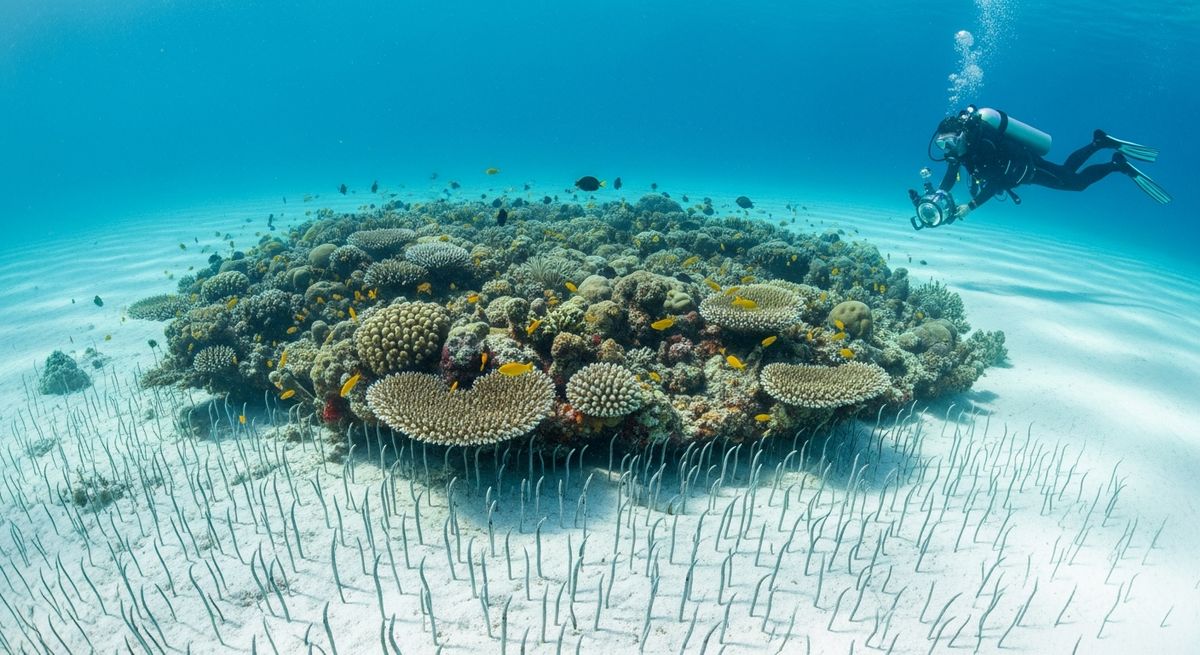
Hooters is a great check-out dive, somewhere we always go back to when we’ve been out of the water for a while. It’s an easy run down to 8m, then you can drift over the rubble patches and small coral heads towards the wall. We’ve found some really cool critters in the rubble here, those Tiny Rock Crabs are worth a careful look. Out on the wall, it's an easy cruise along with plenty of Parrotfish doing their thing. We often spot Glasseye Snapper lurking in the overhangs, and we always keep an eye out for the Lined-Lip Cowrie. Visibility here averages about 8m, so it’s not always super clear, but that just means you have to get a bit closer to the reef. It’s a gentle spot, perfect for shaking off the travel dust or for newer divers getting comfortable. We’ve had some cracking encounters with dolphins here too, just cruising by in the blue.

Location
Sulawesi, Indonesia, Southeast Asia
Coordinates
-0.752300, 121.761900
Type
reef

Best Time to Dive in Sulawesi

The warmest water temperatures in Sulawesi occur in November, averaging 30.4°C. The coolest conditions are in September at 28.7°C.

Monthly Water Temperatures

  • January: 29.5°C
  • February: 29.4°C
  • March: 29.8°C
  • April: 30.3°C
  • May: 30.3°C
  • June: 29.7°C
  • July: 29.1°C
  • August: 28.8°C
  • September: 28.7°C
  • October: 29.5°C
  • November: 30.4°C
  • December: 30.2°C

Nearby Dive Sites in Sulawesi

Nearest Dive Centres to D.C Point

Marine Life in Sulawesi

Home to 252 recorded species including 162 reef fish, 53 hard corals, 9 seagrass & algae, 9 sea snails & nudibranchs, 6 clams & mussels, 4 sea cucumbers.

Notable Species

Recommended Packing List for D.C Point

Based on average water temperature of 29.7°C, currents 4 cm/s.

  • Shorty or Rashguard - warm 30°C water needs minimal exposure protection
  • Mask - essential for every dive
  • Fins
  • BCD - buoyancy compensator
  • Regulator - your most safety-critical piece of gear
  • Dive Computer - tracks depth, time, and NDL
  • Surface Marker Buoy (SMB) - essential for boat pickups
  • Dive Torch - useful for crevices and colour at depth
  • Underwater Camera - capture your diving memories

Frequently Asked Questions

What is the typical depth range for diving at D.C Point?
D.C. Point offers a relatively shallow dive experience, with a maximum depth of 14 meters. The dive begins with a gradual slope, transitioning to a vibrant reef slope for further exploration. This makes it an accessible site for many divers looking to explore the waters of Sulawesi.
What kind of marine life and underwater features can divers expect to see at D.C Point?
D.C. Point is a vibrant reef dive site, starting with a gradual slope that leads to a rich reef slope. Divers can expect to encounter a diverse array of marine life, including smaller creatures like Damsel Fish, Fire Gobies, Hermit Crabs, Nudibranchs, Crinoid Shrimp, and Peacock Mantis Shrimp. Larger species such as Hawksbill Turtles, Blacktip Reef Sharks, and Eagle Ray are also frequently sighted, making it a fantastic spot for marine life observation.
How challenging are the dives at D.C Point for different skill levels?
D.C. Point is classified as an intermediate dive site, making it suitable for divers with some experience. The dive begins with a gradual slope before transitioning to a reef slope, offering a manageable challenge. While not overly demanding, divers should be comfortable with basic navigation and buoyancy control to fully enjoy the site.
What is the best time of year to dive at D.C Point for optimal conditions?
Based on the provided information, there is no specific data regarding the best time of year to dive at D.C. Point for optimal conditions. We recommend checking with local dive operators or consulting our When to Dive section for general seasonal guidance in the Indonesia region.
What scuba diving certifications are required or recommended to dive at D.C Point?
Given that D.C. Point is an intermediate dive site, a minimum certification such as Open Water Diver is typically required. An Advanced Open Water certification is recommended for greater comfort and skill, allowing divers to confidently explore the reef slope and manage the maximum depth of 14 meters. Always confirm specific requirements with your chosen dive center in Sulawesi.
What are the typical currents and visibility conditions like at D.C Point?
D.C. Point boasts excellent visibility, with an average of 26 meters, offering clear views of the reef and its inhabitants. While specific current information for D.C. Point is not provided, the site's intermediate difficulty suggests that currents are generally manageable or mild. Divers should always consult with local guides for real-time conditions before entering the water.