Fukui Point
Protected Area
KK Kota Manado
Why dive here
With 238+ marine species recorded in the area - including blacktip reef sharks, giant moray eels, pygmy seahorses, seahorses and sperm whales - Fukui Point offers some of Sulawesi's richest reef diving. Water ranges 29-31°C, warmest June, October, November.
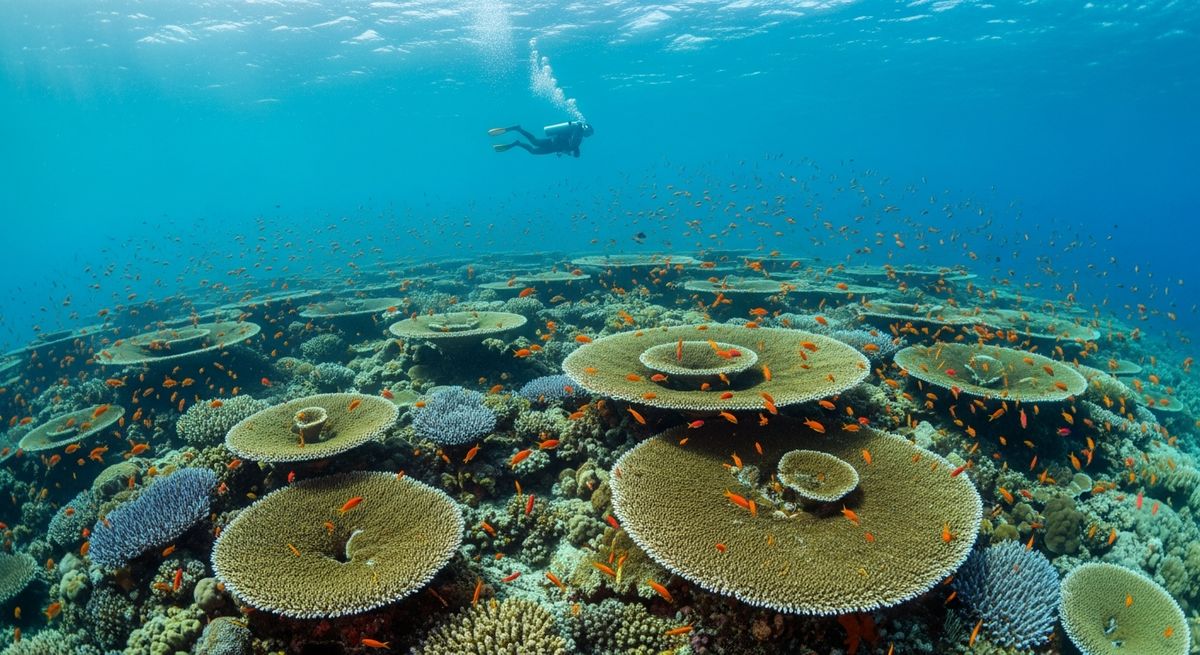
Fukui Point, on Bunaken's west coast, often makes it onto people’s favourite lists, and we can see why. It's not a typical wall dive, which is common around here. Instead, you'll find a series of gentle slopes with some sharp, short drops mixed in. We’ve found the currents here tend to be a little less aggressive than some of Bunaken's other spots, making it a good choice if you're looking for a slightly more relaxed drift. What we really love about Fukui are the fusiliers – they can be so dense they really do block out the sun for a few moments as you pass through. Look closer into the cracks and you'll often find white-spotted morays peeking out. The staghorn coral patches are particularly healthy here too, and if you’ve got a keen eye, we’ve spotted pygmy seahorses tucked away. It’s a site that rewards a slow pace, letting you really take in the details rather than just flying past.
Typical Fukui Point Dive Profile
Illustrative profile based on site depth and type. Actual dive profiles vary - always follow your dive computer and training.
Nearest Dive Centres to Fukui Point
Dive shops near Fukui Point
Bunaken Oasis Dive Resort
Panorama Dive Center
Fish In Air Bunaken
3WILL Bunaken
Siladen Resort & Spa
Celebes Divers
Reviews for Fukui Point
Conditions
Ocean conditions, forecast and tides for Fukui Point
Fukui Point Ocean Conditions
Monthly averages for Fukui Point, sourced from Open-Meteo marine data + Copernicus Marine (EU) - nearest station: Open-Meteo marine grid (1.5, 124.75) (0km away)
October Averages
Sea Temperature
30°C
87°F · Range: 29.6–31.2°C
Current Speed
1 cm/s
Direction: W (270°)
Chlorophyll-a
0.099 mg/m³
Very clear (oligotrophic)
Salinity
33.17 PSU
Based on 4 years of monitoring data · Data sources: Open-Meteo marine data + Copernicus Marine (EU)
Plan & book
Ways to dive Sulawesi, from day trips to liveaboards.
Day trips & courses
via GetYourGuideGuided dives, courses and snorkel trips with instant booking.
Find dive trips in SulawesiPlaces to stay
via Booking.comHotels and dive resorts near Sulawesi.
Search stays in SulawesiDive insurance
Most travel insurance excludes or limits scuba. Check what you need before you go.
Dive insurance explainedPartner links: we may earn a commission if you book, at no extra cost to you. How we make money
Where to Stay near Fukui Point
Prices from Booking.com. We may earn a commission at no extra cost to you.