G 6 Point
Why dive here
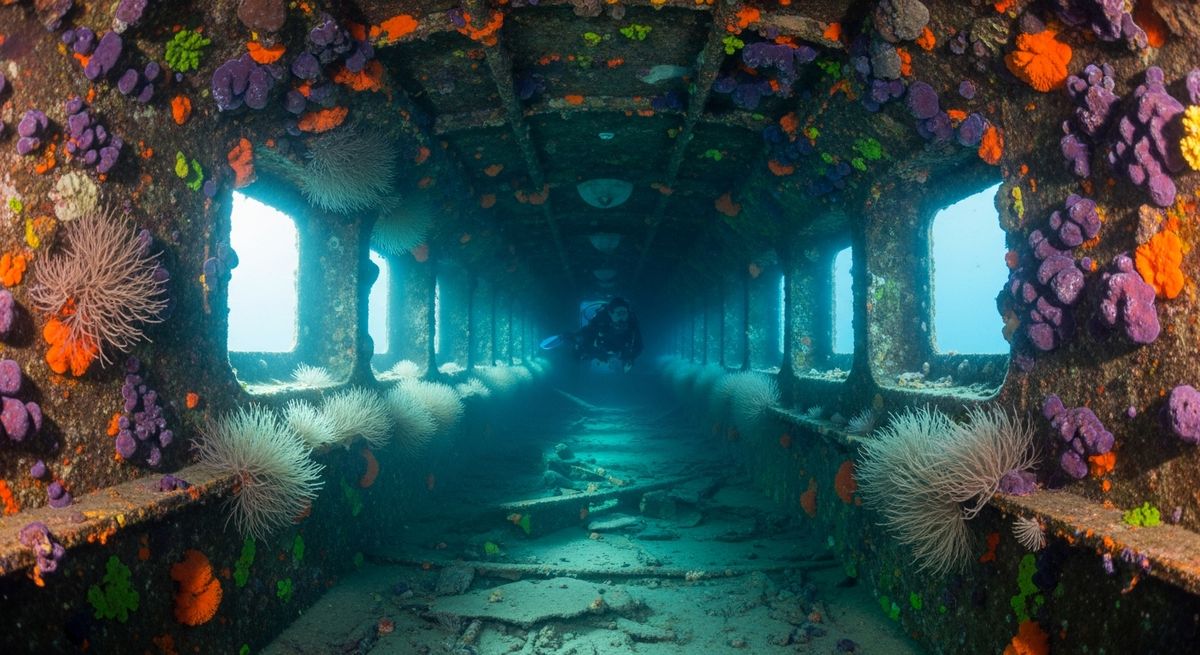
With 238+ marine species recorded in the area - including blacktip reef sharks, giant moray eels, pygmy seahorses, seahorses and sperm whales - G 6 Point offers some of Sulawesi's richest wreck diving. Water ranges 29-31°C, warmest June, October, November.
G 6 Point, just off its namesake Glamping Number 6, offers a solid wall dive. We’ve found the dominant feature here is the drop-off itself, a substantial wall covered in hard coral, barrel sponges, and some impressive sea fans. Maximum depth is a comfortable 19m, making it a good option for those who prefer to keep things a bit shallower. Look for the overhangs and a small hole near the top of the reef. We often spot Speed Jacks darting past, and Midnight Snapper are usually hanging around. If you’re into the smaller stuff, keep an eye out for nudibranchs and various shrimp and crabs tucked into crevices. Visibility averages a clear 26m, so you’ll have plenty of light to explore the wall. It’s a decent site for a relaxed dive, especially if you appreciate good coral formations.
Safety Notes
Wreck site - avoid penetration without wreck diving certification. Watch for sharp metal and entanglement hazards.
Nearest Dive Centres to G 6 Point
Dive shops near G 6 Point
View all dive centres in SulawesiReviews for G 6 Point
Conditions
Ocean conditions, forecast and tides for G 6 Point
G 6 Point Ocean Conditions
Monthly averages for G 6 Point, sourced from Open-Meteo marine data + Copernicus Marine (EU) - nearest station: Open-Meteo marine grid (1.5, 124.75) (0km away)
October Averages
Sea Temperature
30°C
87°F · Range: 29.6–31.2°C
Current Speed
1 cm/s
Direction: W (270°)
Chlorophyll-a
0.099 mg/m³
Very clear (oligotrophic)
Salinity
33.17 PSU
Based on 4 years of monitoring data · Data sources: Open-Meteo marine data + Copernicus Marine (EU)
Plan & book
Ways to dive Sulawesi, from day trips to liveaboards.
Day trips & courses
via GetYourGuideGuided dives, courses and snorkel trips with instant booking.
Find dive trips in SulawesiPlaces to stay
via Booking.comHotels and dive resorts near Sulawesi.
Search stays in SulawesiDive insurance
Most travel insurance excludes or limits scuba. Check what you need before you go.
Dive insurance explainedPartner links: we may earn a commission if you book, at no extra cost to you. How we make money
Where to Stay near G 6 Point
Prices from Booking.com. We may earn a commission at no extra cost to you.