Honeycomb - Sulawesi

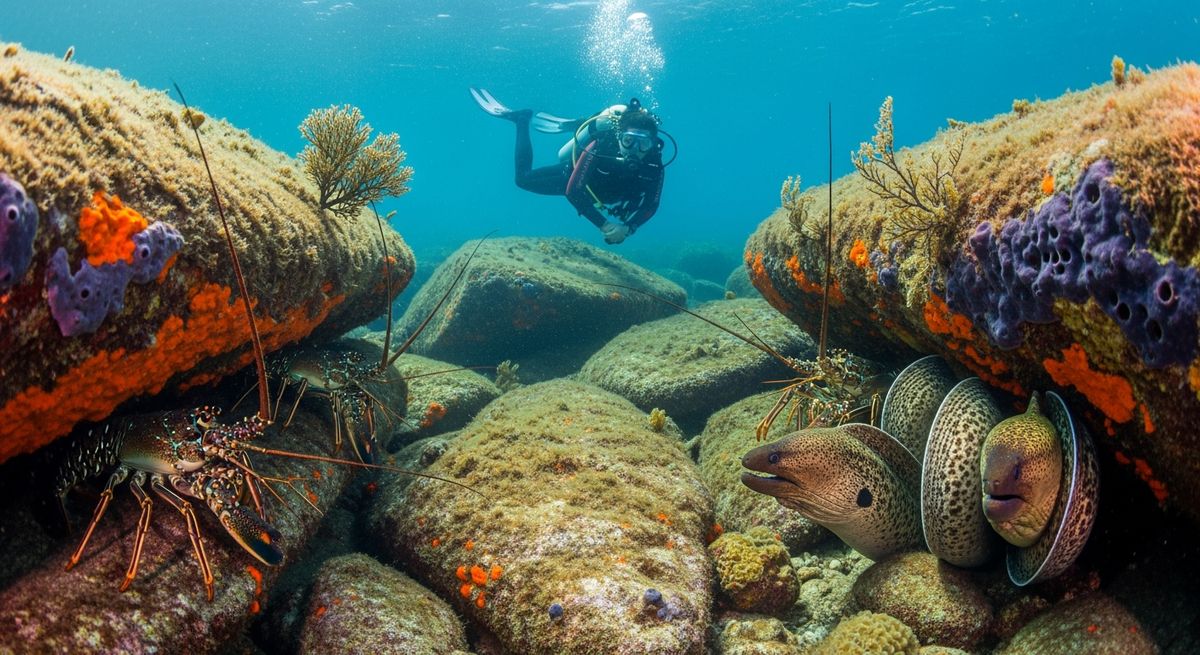
Honeycomb, on Sulawesi’s west coast, offers a solid wall dive. It’s a north-south facing stretch, textured with porous corals and a good spread of sponges. We’ve seen a lot of those pink *cupressina* hydroids here, which add a nice splash of color. The real draw, though, is the fish. Keep an eye out for blue-headed tilefish, they often swim in pairs and are pretty distinct with their bright blue heads and yellow bodies. If you’re lucky, you might even spot a sailfin goby tucked into a rock ledge. It’s a good spot for divers who enjoy taking their time to seek out the smaller, less common inhabitants.

Location
Sulawesi, Indonesia, Southeast Asia
Coordinates
0.483300, 123.050000

Marine Protected Area: KK Teluk Gorontalo

Best Time to Dive in Sulawesi

The warmest water temperatures in Sulawesi occur in November, averaging 30.4°C. The coolest conditions are in September at 28.7°C.

Monthly Water Temperatures

  • January: 29.5°C
  • February: 29.4°C
  • March: 29.8°C
  • April: 30.3°C
  • May: 30.3°C
  • June: 29.7°C
  • July: 29.1°C
  • August: 28.8°C
  • September: 28.7°C
  • October: 29.5°C
  • November: 30.4°C
  • December: 30.2°C

Nearby Dive Sites in Sulawesi

Nearest Dive Centres to Honeycomb

Marine Life in Sulawesi

Home to 252 recorded species including 162 reef fish, 53 hard corals, 9 seagrass & algae, 9 sea snails & nudibranchs, 6 clams & mussels, 4 sea cucumbers.

Notable Species

Recommended Packing List for Honeycomb

Based on average water temperature of 29.7°C, currents 4 cm/s.

  • Shorty or Rashguard - warm 30°C water needs minimal exposure protection
  • Mask - essential for every dive
  • Fins
  • BCD - buoyancy compensator
  • Regulator - your most safety-critical piece of gear
  • Dive Computer - tracks depth, time, and NDL
  • Surface Marker Buoy (SMB) - essential for boat pickups
  • Dive Torch - useful for crevices and colour at depth
  • Underwater Camera - capture your diving memories

Frequently Asked Questions

What are the typical depths encountered when diving the honeycomb caverns and tunnels in Gozo?
The provided data describes the Honeycomb dive site in Sulawesi, Indonesia, which is a reef dive with an unknown depth. This information does not include details about typical depths for the honeycomb caverns and tunnels in Gozo. To find specific depth information for Gozo, please refer to resources focused on that particular region.
What kind of marine life and geological formations can divers expect to see in Gozo's honeycomb coastline dive sites?
The provided context details the Honeycomb dive site in Sulawesi, Indonesia, where divers can expect to see porous corals, sponges, pink cupressina hydroids, blue-headed tilefish, and rare sailfin gobies. However, this information does not describe the marine life or geological formations specific to Gozo's honeycomb coastline dive sites. For details on Gozo's unique underwater environment, please consult local dive guides or specific Gozo dive site information.
How challenging is diving the honeycomb caverns and tunnels along Gozo's coast, and is it suitable for beginners?
The provided data indicates that the Honeycomb dive site in Sulawesi, Indonesia, is rated as an intermediate difficulty. However, this difficulty rating is not applicable to the honeycomb caverns and tunnels along Gozo's coast. We do not have information within this context regarding the challenge level or suitability for beginners in Gozo.
When is the best time of year to dive the honeycomb formations in Gozo for optimal conditions and visibility?
The provided context for the Honeycomb dive site in Sulawesi, Indonesia, does not include information about optimal diving conditions or visibility. Therefore, we cannot determine the best time of year to dive the honeycomb formations in Gozo based on this data. For details on seasonal conditions in Gozo, please refer to when-to-dive resources specific to that region.
What dive certifications are required to explore the honeycomb caverns and tunnels in Gozo?
The provided data for the Honeycomb dive site in Sulawesi, Indonesia, does not specify any required dive certifications. As such, we cannot provide information on the certifications needed to explore the honeycomb caverns and tunnels in Gozo from this context. Certification requirements for Gozo would depend on the specific dive sites and local regulations.
What are the typical current conditions and visibility like when diving Gozo's honeycomb coastline?
The provided description for the Honeycomb dive site in Sulawesi, Indonesia, does not contain details about typical current conditions or visibility. Therefore, we are unable to provide information regarding currents or visibility for Gozo's honeycomb coastline based on this data. Local dive operators in Gozo would be the best source for current conditions and visibility reports.