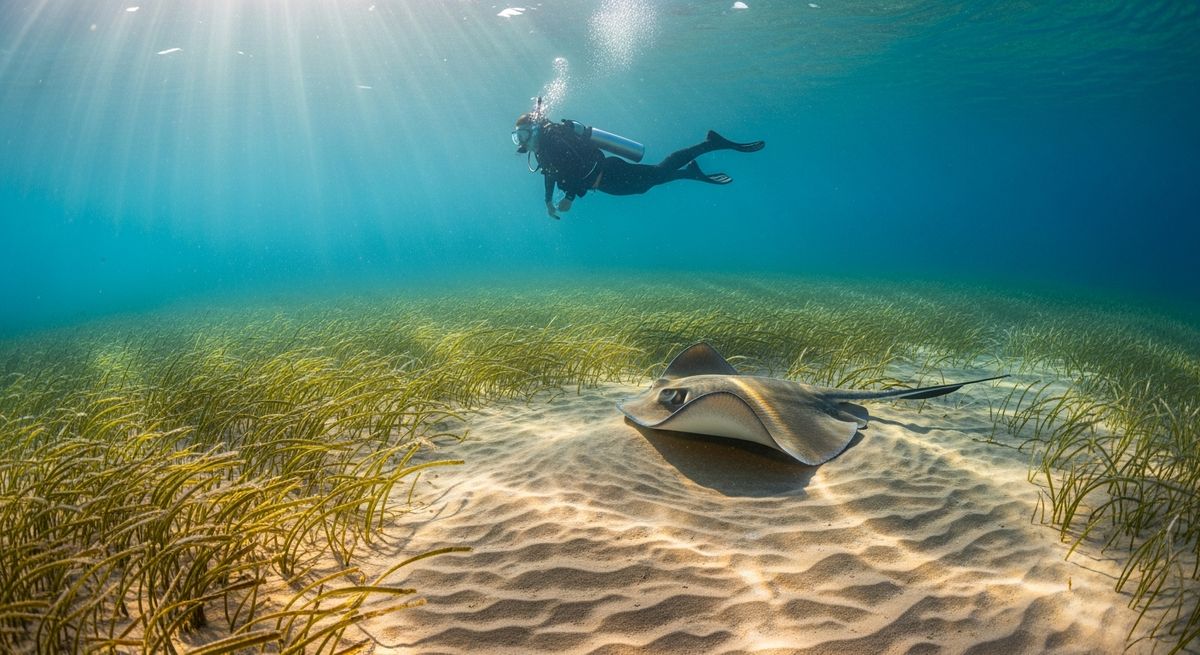
Traffic Jam
Protected Area
KK Teluk Gorontalo
Why dive here
With 238+ marine species recorded in the area - including blacktip reef sharks, giant moray eels, pygmy seahorses, seahorses and sperm whales - Traffic Jam offers some of Sulawesi's richest diving. Water ranges 29-31°C, warmest June, October, November.
Traffic Jam, off Sulawesi, lives up to its name. We're talking about a west-facing wall here, running north to south, but what really sets it apart are the ten vertical shafts cut into the reef. They’re deep enough to duck into, and that's where the juvenile fish stack up, sometimes so thick it's like a rush hour commute. Inside these shafts, you'll often spot masses of smaller fish just hanging out, a genuine spectacle. Beyond the shafts, the wall itself hosts a decent spread of olive green fluke sponges and some eye-catching pink sinogorgia soft corals. The leather corals are particularly impressive, and if you’re into macro, keep an eye out for Loch's nudibranch, they're often spotted here. It’s a good spot for divers who enjoy exploring unique reef architecture and don’t mind a bit of a current.
Nearest Dive Centres to Traffic Jam
Dive shops near Traffic Jam
View all dive centres in SulawesiReviews for Traffic Jam
Conditions
Ocean conditions, forecast and tides for Traffic Jam
Traffic Jam Ocean Conditions
Monthly averages for Traffic Jam, sourced from Open-Meteo marine data + Copernicus Marine (EU) - nearest station: Open-Meteo marine grid (1.5, 124.75) (0km away)
October Averages
Sea Temperature
30°C
87°F · Range: 29.6–31.2°C
Current Speed
1 cm/s
Direction: W (270°)
Chlorophyll-a
0.099 mg/m³
Very clear (oligotrophic)
Salinity
33.17 PSU
Based on 4 years of monitoring data · Data sources: Open-Meteo marine data + Copernicus Marine (EU)
Plan & book
Ways to dive Sulawesi, from day trips to liveaboards.
Day trips & courses
via GetYourGuideGuided dives, courses and snorkel trips with instant booking.
Find dive trips in SulawesiPlaces to stay
via Booking.comHotels and dive resorts near Sulawesi.
Search stays in SulawesiDive insurance
Most travel insurance excludes or limits scuba. Check what you need before you go.
Dive insurance explainedPartner links: we may earn a commission if you book, at no extra cost to you. How we make money
Where to Stay near Traffic Jam
Prices from Booking.com. We may earn a commission at no extra cost to you.