Diving in Dumaguete
Why dive here
Dumaguete offers some of Philippines's richest diving, with 496+ marine species recorded in the area - including barracuda, blacktip reef sharks, blue-spotted stingrays, bull sharks and octopuses. Water sits around 27°C.
Dumaguete, for us, isn’t just a jumping-off point for Apo Island, though that’s certainly a draw. It’s the black sand slopes of Dauin, just a short boat ride south, that truly grab our attention. You drop onto volcanic sand, dark and unassuming, then start scanning. Within minutes, you’re seeing frogfish of every colour, often swaying gently with the current. We’ve spent whole dives tracking a mimic octopus as it morphs from lionfish to sea snake, right there in front of us. The visibility can range quite a bit, but that’s part of the muck diving charm - you’re so focused on the small stuff that a bit of haze doesn’t really matter. We’ve found some incredible blue-ringed octopuses here, tiny and unassuming until their rings light up with that unmistakable warning. Look for the Bearded Flathead Goby, a quirky little character, or the vibrant Ryukyu Fairy Wrasse darting around. It’s a photographer’s dream, and we’d suggest going slow, really taking your time over a small patch of sand. Don't be afraid to ask your guide to point out the truly bizarre, like the Crazy Fish, or the tiny Dwarf Atomgoby.
Dumaguete Dive Site Map
Dive sites and dive centres in Dumaguete
Dumaguete Dive Sites
110 dive sites in Dumaguete
Apo Island Sanctuary
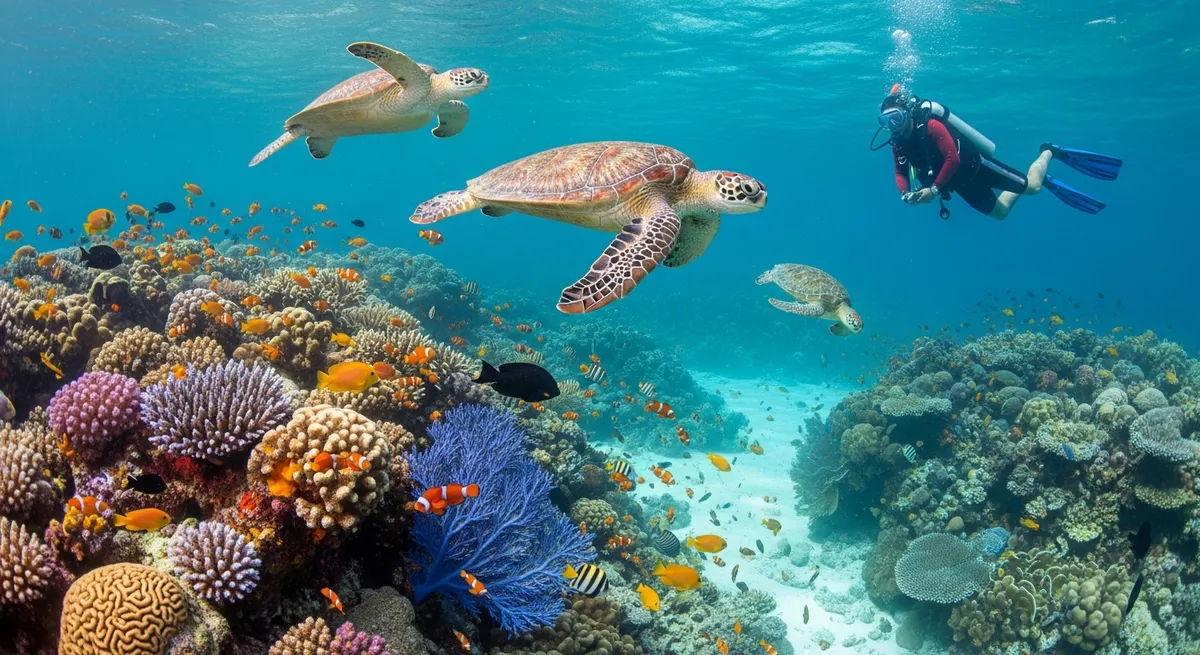
There are sanctuaries, and then there's Apo Island Sanctuary. This place isn't just a poster child for community conservation, it’s a living, breathing testament to what happens when everyone pulls in the same direction. We love that you can genuinely feel the difference here. Drop in, and you're immediately enveloped by the sheer volume of fish. Schools of dark-fin chromis and flag-tailed glass perchlets are so dense they shimmer like liquid silver, parting around you then reforming. Our favourite time to dive here is early morning, before the day boats crowd the mooring lines. That’s when you’re most likely to see the big parrotfish, the princess parrotfish in particular, cruising unbothered, or spot one of the resident freckled anglerfish tucked into a coral head. The hard coral gardens are just stunning; you can really spend a whole dive just hovering, watching the orange-lined triggerfish dart among them, or trying to pick out a black blenny peeking from its hole. It’s an easy dive, mostly shallow, perfect for photographers or anyone who just wants to soak in a thriving reef. The hundreds of sea turtles here are also a highlight, munching on seagrass or resting on the coral, seemingly unconcerned by divers.
Apo Island Sanctuary
There are sanctuaries, and then there's Apo Island Sanctuary. This place isn't just a poster child for community conservation, it’s a living, breathing testament to what happens when everyone pulls in the same direction. We love that you can genuinely feel the difference here. Drop in, and you're immediately enveloped by the sheer volume of fish. Schools of dark-fin chromis and flag-tailed glass perchlets are so dense they shimmer like liquid silver, parting around you then reforming. Our favourite time to dive here is early morning, before the day boats crowd the mooring lines. That’s when you’re most likely to see the big parrotfish, the princess parrotfish in particular, cruising unbothered, or spot one of the resident freckled anglerfish tucked into a coral head. The hard coral gardens are just stunning; you can really spend a whole dive just hovering, watching the orange-lined triggerfish dart among them, or trying to pick out a black blenny peeking from its hole. It’s an easy dive, mostly shallow, perfect for photographers or anyone who just wants to soak in a thriving reef. The hundreds of sea turtles here are also a highlight, munching on seagrass or resting on the coral, seemingly unconcerned by divers.
Arco Point
Arco Point, just off Dumaguete, is a decent spot for newer divers getting comfortable in the water. The site bottoms out at 20m, offering a relaxed dive along a sandy slope dotted with coral bommies. You’ll usually find a good mix of nudibranchs, gobies, and small reef fish tucked into the corals. It's a gentle introduction to Dumaguete’s diving, ideal for a buoyancy check or a slower pace.
Atlantis Reef
Atlantis Reef, near Dumaguete, offers a straightforward reef dive. You'll find a mix of hard and soft corals, home to smaller reef fish like damselfish and anthias, with occasional nudibranchs if you look closely. It's a relaxed spot, decent for an easy afternoon dive or for divers getting comfortable in the local waters.
Atmosphere House Reef
The Atmosphere House Reef in Dumaguete is a decent spot for a relaxed shore dive. Expect to potter around a sloping coral reef, keeping an eye out for nudibranchs, frogfish, and small reef fish hiding among the bommies. It’s a good choice for newer divers or those looking for an easy second or third dive of the day, particularly if you’re staying nearby.
Baha reef
Baha reef is a straightforward dive in Dumaguete, good for getting wet and remembering how to kick. The reef sits at a consistent 19 metres, making it an easy drift for newer divers. You'll likely spot a few turtles grazing and plenty of the usual reef fish cruising past. It's a relaxed spot, perfect for shaking off dive rust or a gentle introduction to the local scene.
Bahura
Bahura offers a gentle introduction to Dumaguete’s diving, particularly good for newer divers or those looking for a relaxed multi-level profile. The sloping reef is primarily sand and rubble with scattered patches of coral, holding plenty of smaller critters like nudibranchs and flatworms if you take your time. You’ll also spot small reef fish, the occasional moray, and a few pipefish tucked into the sandy areas. It’s a good spot for a second dive or for practicing your macro photography.
Balicasag
Balicasag is a little sand-fringed island just off Panglao. It’s got a reputation, and for good reason: turtles. We’ve seen them here in numbers that genuinely surprise you, sometimes so many you’re not sure where to look next. The island is ringed by a plateau, mostly 5 to 18 metres deep, before it falls away into the blue. That makes it a comfortable spot for newer divers, though the currents can pick up a bit. Keep an eye out for sardine balls too, they’re a common sight sweeping across the reef.
Banca Wreck
The Banca Wreck in Dumaguete is one of those dives we always recommend for a chill afternoon. It's not a deep dive, making it perfect for a long bottom time, and usually, the visibility is excellent – you can often see the entire wreck from the moment you drop down. What we love about this wreck is how approachable it is. You can swim right through the cargo hold, past the engine room, and out the bow, all in one easy pass. It’s an old fishing banca, maybe 20 metres long, that just sort of settled onto the sand, now lying on its side. Over the years, it’s become home to a bustling community. We often find resident lionfish tucked into crevices, sometimes a school of batfish hangs out near the mast, and the hard corals are really starting to take hold, especially on the upper parts of the hull. Keep an eye out for nudibranchs, too; they love the sponges growing on the old wooden beams. It’s a pretty easygoing dive, great for photographers wanting to practice their wreck skills without strong currents, and a solid choice for any diver looking for a relaxed, critter-filled exploration.
Basak
Basak offers a straightforward dive to 19 metres, making it an easy option for new divers around Dumaguete. We typically find a sloping sandy bottom with scattered corals here. Keep an eye out for resident garden eels popping from the sand and the occasional nudibranch moving across the reef patches. It’s a gentle introduction to Dumaguete diving, good for shaking off the rust or getting comfortable in the water.
Basak South
Basak South offers a gentle slope dive, generally suitable for newer divers or those looking for a relaxed outing. You'll often find a good mix of smaller reef fish here, like anemonefish and various gobies. It’s a solid spot for macro photography, especially along the sandy patches, where we’ve often come across nudibranchs and flatworms. Expect mild currents on most days.
BIGBOSS Bohol House reef
Okay, so you’re in Dumaguete and everyone’s buzzing about Apo Island. Fair enough. But honestly, for a chilled-out afternoon dive that still delivers, we often find ourselves back at the BIGBOSS Bohol House reef. This isn't some deep, dramatic wreck. It’s a deliberately scuttled fishing boat, sitting upright at a friendly 14 metres, making it perfect for beginners or anyone who just wants to potter about without the pressure. We love how the light catches the superstructure, illuminating the schools of juvenile batfish that weave in and out of the wheelhouse. You can easily poke around the deck, peer into the holds where glassfish shimmer like sequins, and if you’re patient, you’ll spot a moray eel peeking from a pipe or a crab scuttling across the growth on the hull. It’s less about a grand exploration and more about observing the smaller dramas playing out as the wreck slowly becomes part of the reef. Go late afternoon if you can; the light is softer, and the colours are just richer.
Show all 110 dive sites in Dumaguete
- Black Forest
- Blue House
- Bohol Beach club
- Bonets Corner
- Brothers house reef
- Brother’s Napaling Reef
- Cabakungan
- Car Wreck
- Cathedral Wall
- Caticugan Marine Sanctuary
- Central Visayas
- Cervera Shoal (Snake Island)
- Chapel Reef
- Coco Grove
- Coconut Point
- Cocosnest
- DAGOHOY
- Danao Wall
- Daquit Shoal
- Dauin North
- Dauin Sanctury
- Dive Point Coral reef
- Divers Heaven
- Diving at Apo Island
- Diving at Siquijor
- Doljo House Reef
- Doljo point
- DON CARLOS
- Eldorado Housereef
- FREEDIVE+ Freediving Playground
- Gak-Ang
- Garden Eels
- Gimmon Place
- Ginama Point
- Guinsuan
- Habagat, Wreck
- J.J.
- Jurassic Park
- Kalipayan, Bohol
- Kan Oran Reef
- Katipanan Reef
- Largahan
- Lighthouse
- LIGHT HOUSE
- Luca Sanctuary
- Mahi Mahi House Reef
- Mainit
- Maite
- Maite Marine Sanctuary
- Malatapay
- Mamsa Point
- Masaplod Sanctuary
- Masaplod South
- Masaplod Sur, Dauin Negros
- Momo Beach
- Napaling
- Nonoc Sanctuary
- Nonoc Shoal
- Olang Sanctuary
- Olo
- On the Rocks
- Oslob
- Oslob Whale Shark
- Paliton Sanctuary
- Paliton Staghorn
- Paliton Wall
- Pamilacan
- Pasihagon
- Punta
- Pura Vida Housereef
- Pyramids
- Republika Coral Ridge
- Rico’s Wall
- Rudys Rock
- Salagdoong
- Salagdoong Beach
- Sanctuary
- SAN FRANCISCO DE ASSISI
- San Miguel
- Sawang
- Ship Wreck
- SILVER REEF HOUSE REEF
- Solangon
- Sumilon Sanctuary
- Sunken Island
- Sunken Island, Pamilacan
- Sydney Park
- Takot Shoal
- Tambisan Wall
- Thalatta House Reef
- The Pier
- Tonga Point
- Tongo Point
- Tulapos Marine Sanctuary
- Tulapus
- Well House Reef
- West Point
- West Point - Pamilacan
Dumaguete Dive Centres
41 dive shops and operators in Dumaguete
Almira Diving Resort
Amola Diver
Apo scuba
Aquaventure White Tip Dive Supply
Atmosphere Resorts
Bahura Dive Siquijor
BIGBOSS DIVE - BOHOL
BLUE DREAM DIVE, KITE & WING RESORT MANAGEMENT
Show all 41 dive centres in Dumaguete
- Blue Gravity Diving Resort
- Blue Revival Diving College
- Bohol Pearl Dive Center Corporation
- BROTHER’S DIVE
- Coco Grove Dive Center
- Dauin Silver Reef Dive Resort Inc.
- Dive Point Siquijor
- Dive Works
- Diving King Dive Resort
- Easy Diving Dauin
- Elcielo Resort
- Freedive Academy Panglao
- Freedive Plus
- French Touch Diving
- GO2DIVE dive resort
- Honu Dive Diving Center
- KIM’S DIVE RESORT
- LET’S GO DIVING
- LILO-AN KINGDOM RESORT
- Liquid Dive Dumaguete
- MAHI MAHI DIVE RESORT
- Marine Conservation Philippines
- PSI DIVE
- Russian Divers Club
- Scuba Ventures
- Sea Explorers - Dauin
- Sea Explorers Siquijor
- Sea U Diving
- Super Lemon Dive Resort
- THALATTA RESORT INC.
- Valm Divers
- Vibrations dive center
- VOODOO DIVING CENTER
Ocean Wildlife in Dumaguete
496 species recorded in Dumaguete
Dumaguete Daylight & Sunrise/Sunset
Sunrise and sunset times for Dumaguete, calculated from coordinates
Today - Sunday 11 October
Sunrise
05:35
Sunset
17:33
Daylight
11h 58m
Golden Hour
17:05
First light (dawn) at 05:14 · Last light (dusk) at 17:54
Monthly Averages
| Month | Sunrise | Sunset | Daylight |
|---|---|---|---|
| Jan | 06:07 | 17:45 | 11h 38m |
| Feb | 06:06 | 17:56 | 11h 50m |
| Mar | 05:54 | 17:58 | 12h 4m |
| Apr | 05:37 | 17:57 | 12h 19m |
| May | 05:27 | 18:00 | 12h 33m |
| JunLongest | 05:28 | 18:07 | 12h 40m |
| Jul | 05:34 | 18:11 | 12h 37m |
| Aug | 05:39 | 18:05 | 12h 26m |
| Sep | 05:37 | 17:48 | 12h 11m |
| OctNow | 05:35 | 17:31 | 11h 56m |
| Nov | 05:40 | 17:23 | 11h 42m |
| DecShortest | 05:54 | 17:29 | 11h 35m |
Times are approximate local times based on longitude. Actual times may vary slightly depending on the exact timezone observed in Dumaguete.
Where to Stay near Dumaguete
Prices from Booking.com. We may earn a commission at no extra cost to you.
Marine Protected Areas near Dumaguete
41 protected areas near Dumaguete - please respect local regulations when diving
Tañon Strait Protected Seascape
Negros Occidental Coastal Wetlands Conservation Area (NOCWCA)
Dauis, Tagbilaran Bohol
Baclayon, Tagbilaran Bohol
San Juan Siquijor
Sagay Marine Reserve
Dumanquillas Bay Protected Landscape and Seascape
Cuatro Islas Protected Landscape & Seascape
Dumaguete City, Negros Oriental
Island of Banaon, Basaan, Saac, Tambu, Bambanon Wilderness Area
Carmen Critical Habitat
Island of Panglao; Mangrove areas from the west of Loboc River to the municipality of Laya Mangrove Swamp Forest Reserve
Showing 12 largest of 41
Getting to Dumaguete
Dumaguete City
Cebu City/Lapu-Lapu City
Laguindingan
Plan & book
Ways to dive Dumaguete, from day trips to liveaboards.
Day trips & courses
via GetYourGuideGuided dives, courses and snorkel trips with instant booking.
Find dive trips in DumaguetePlaces to stay
via Booking.comHotels and dive resorts near Dumaguete.
Search stays in DumagueteDive insurance
Most travel insurance excludes or limits scuba. Check what you need before you go.
Dive insurance explainedPartner links: we may earn a commission if you book, at no extra cost to you. How we make money