TOZAN MARU
Why dive here
TOZAN MARU is a wreck dive where divers can encounter sea turtles and sperm whales. Water ranges 27-30°C, warmest May, June, July.
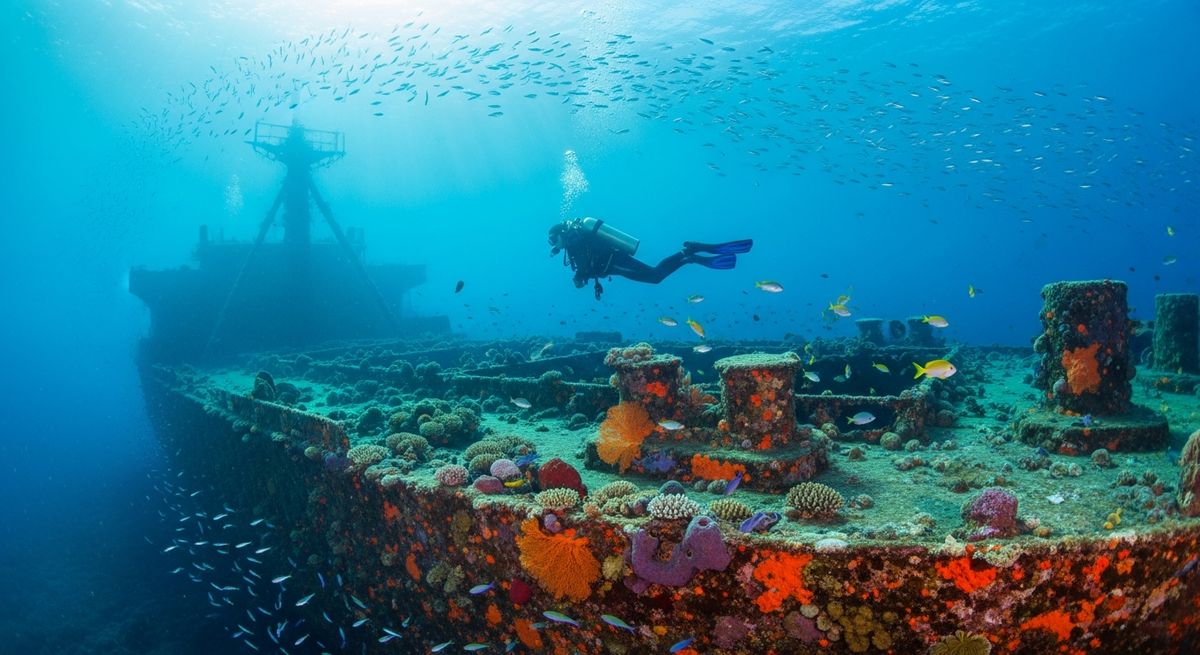
The Tozan Maru, for us, is a perfect introduction to the Coron wrecks, especially if you’re not quite ready for the deeper stuff. This isn't a 40-meter monster; she starts practically at the surface, which we love for the sheer accessibility and light. She ran aground in '69, split in two, and now the stern section lies on its side, draped in soft corals. We often start shallow, finning along the collapsed hull plates, spotting lionfish tucked into every crevice. The engine room is a highlight, quite open to the light, making penetration feel less daunting. Inside, you’ll see scattered machinery, and often a few resident groupers eyeballing you from the shadows. Keep an eye out for nudibranchs on the encrusted metalwork. The forward section, now largely broken up, still offers interesting swim-throughs and a chance to appreciate how the reef is slowly reclaiming this history. It’s ideal for photographers, too – that shallow depth means longer bottom times and fantastic ambient light.
Safety Notes
Wreck site - avoid penetration without wreck diving certification. Watch for sharp metal and entanglement hazards.
Reviews for TOZAN MARU
Conditions
Ocean conditions, forecast and tides for TOZAN MARU
TOZAN MARU Ocean Conditions
Monthly averages for TOZAN MARU, sourced from Open-Meteo marine data - nearest station: Open-Meteo marine grid (11.2, 119.35) (0km away)
October Averages
Sea Temperature
30°C
86°F · Range: 28.9–30.7°C
Air Temperature
28°C
82°F
Wind Speed
6.69 m/s
13.0 knots
Atmospheric Pressure
1008.9 hPa
Based on 4 years of monitoring data · Data sources: Open-Meteo marine data
Plan & book
Ways to dive Palawan, from day trips to liveaboards.
Day trips & courses
via GetYourGuideGuided dives, courses and snorkel trips with instant booking.
Find dive trips in PalawanPlaces to stay
via Booking.comHotels and dive resorts near Palawan.
Search stays in PalawanDive insurance
Most travel insurance excludes or limits scuba. Check what you need before you go.
Dive insurance explainedPartner links: we may earn a commission if you book, at no extra cost to you. How we make money
Where to Stay near TOZAN MARU
Prices from Booking.com. We may earn a commission at no extra cost to you.