Diving in Dili Coast
Why dive here
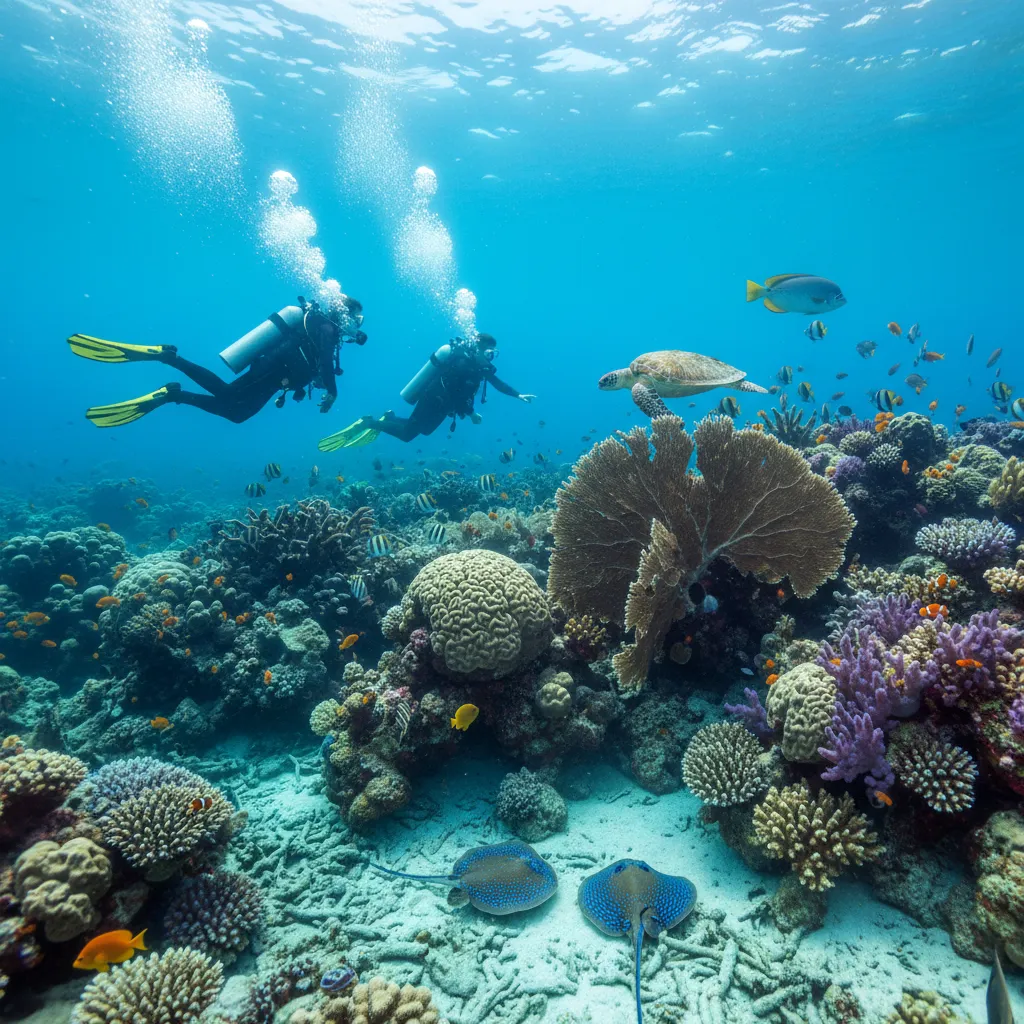
Dili Coast offers some of Timor-Leste's richest diving, with 260+ marine species recorded in the area - including barracuda, blue-spotted stingrays, giant moray eels, sea turtles and sperm whales. Water sits around 30°C.
The Dili Coast offers a surprisingly accessible introduction to Timor-Leste's underwater world, a great starting point before heading further afield. We love the convenience of shore diving right from the capital, meaning no long boat rides. The conditions are generally calm, perfect for newer divers finding their fins. What you'll see here is a fascinating mix of muck and reef, quite unusual for a capital city. Our favourite dives are the muck sites, where patience pays off. We’ve spent hours watching Orangespotted Gobies tending their burrows, finding tiny Anchor Trunkfish hiding in the seagrass, and marveling at the bizarre Threespot Righteye Flounder camouflaged against the sand. The reefs, while not as dramatic as some of Timor-Leste's outer sites, still hold plenty of interest. Look for the clown anemonefish bobbing in their homes, schools of Longfin Bannerfish fluttering past, and the flash of a Yellowmargin Triggerfish disappearing into the coral. We'd suggest going early in the morning to beat any surface chop and to have the sites mostly to yourself. It's an honest, rewarding dive experience without the hype.
Dili Coast Dive Site Map
Dive sites and dive centres in Dili Coast
Dili Coast Dive Sites
4 dive sites in Dili Coast
Dili Rock
Dili Rock is a site we keep coming back to, a standout for critter hunting, right on the Dili coastline. Don't let the "rock" in the name fool you, this is pure muck diving, and it’s brilliant for it. We love easing into a dive here, exploring the shallow slopes of volcanic rock and dark sand, usually around 5 to 15 metres. It’s an easy dive, perfect for beginners or anyone who likes to take their time and really search. The visibility can be a bit variable, sometimes 10 metres, sometimes less, but that’s part of the muck dive charm, forcing you to slow down and focus on the small stuff. What makes Dili Rock special for us are the frogfish. We’ve spotted painted frogfish here more times than we can count, sometimes just little specks, other times as big as a fist, blending perfectly with the sponges. It’s a game of eye-spy, and it's always rewarding. Beyond the frogfish, keep an eye out for the usual muck residents like robust ghost pipefish swaying gently in the slight surge, and various nudibranchs inching their way across the black sand. We’ve often found ourselves watching schools of blue and gold fusiliers darting overhead in the bluer water, a nice contrast to the often monochrome seabed. It's not a site for vibrant corals, but for those who find beauty in the unusual, it’s a truly rewarding spot. Our favourite time to dive it is early morning, before the coastal breeze picks up, making for an even calmer entry and better light.
HMAS Voyager
The HMAS Voyager isn’t some deep, dark, advanced wreck. No, this is a wreck for everyone, poking its bows out of the water not far from Dili's shore. It’s a great introduction to wreck diving, particularly if you’re new to the region. We love how accessible it is, really. You can snorkel over it, fin around it, or spend a good hour exploring its remains with a tank on your back. The destroyer ran aground back in 1942, and what's left is now a broken, coral-encrusted skeleton. It sits in just a meter of water, so you’re always bathed in sunlight, which makes the corals pop. We’ve seen parrotfish grazing right on the hull, nudibranchs crawling along the corroded metal, and schools of small fusiliers shimmering above the deck plates. It’s not about penetration, it’s about observing how nature reclaims something man-made. Our favourite time to visit is late morning when the sun is high and you get those beautiful light rays dancing through the water. It’s a gentle, reflective dive, perfect for photographers or anyone who just wants to take it easy.
Tasi Tolu
Tasi Tolu is a standout for Dili Coast, and we love it as a gentle introduction to Timor-Leste's underwater world. It’s got a real charm, especially for an easy shore dive. The reef starts shallow, around 3 metres, then slopes gradually to about 18, so it’s perfect for beginners or just a relaxed second dive. Drop in and you'll find yourself drifting over an expansive coral garden. We've seen some beautifully intricate coral structures here, forming plenty of hideouts for smaller fish. Look closely and you’re likely to spot Candy Cane Wrasses darting between the polyps or a patient Sponsal Cone working its way across the sand. The Dragon Wrasse, with its distinctive long snout, is a regular sight, too. What really makes Tasi Tolu our favourite in the immediate Dili area, though, is the sheer density of small reef fish. Schools of Rainbowfish often hang in the current, creating shimmering curtains of silver and blue. We’d suggest going in the morning; the light catches the reef just right, really bringing out the colours of the corals. Keep an eye out for the Blackedge Thicklip Wrasse; they’re quite curious and often come in for a closer look. While we've never been lucky enough to spot the resident seahorses, we know they're there, so if you have an eagle-eyed guide, you might just get lucky.
Wreck of HMAS Voyager
The Wreck of HMAS Voyager offers a different kind of dive on the Dili Coast. This isn't about vibrant reef action; it’s a journey into history beneath the waves. She was a World War I destroyer, scuttled intentionally in 1931, so you won’t find the dramatic breakages of a combat casualty, but rather a dignified resting place. We love the sheer scale of her; you can really make out the ship’s shape, her bow, stern, and the faint outlines of where her decks once ran. Penetration is out of the question – she’s largely collapsed and silted up – but we’d suggest taking your time to trace the length of the hull. Look for the large resident groupers tucked into crevices, their eyes following you as you pass. We’ve also seen barracuda circling high above the wreck on more than one occasion. It’s a dive for those who appreciate the quiet solemnity of a wreck, where the marine life feels more like respectful inhabitants than a bustling crowd.
Dili Coast Dive Centres
5 dive shops and operators in Dili Coast
Ocean Wildlife in Dili Coast
260 species recorded in Dili Coast
Dili Coast Daylight & Sunrise/Sunset
Sunrise and sunset times for Dili Coast, calculated from coordinates
Today - Sunday 11 October
Sunrise
05:17
Sunset
17:33
Daylight
12h 15m
Golden Hour
17:05
First light (dawn) at 04:56 · Last light (dusk) at 17:54
Monthly Averages
| Month | Sunrise | Sunset | Daylight |
|---|---|---|---|
| Jan | 05:30 | 18:05 | 12h 35m |
| Feb | 05:41 | 18:04 | 12h 23m |
| Mar | 05:43 | 17:52 | 12h 10m |
| Apr | 05:41 | 17:36 | 11h 55m |
| May | 05:43 | 17:26 | 11h 43m |
| JunShortest | 05:50 | 17:27 | 11h 37m |
| Jul | 05:54 | 17:33 | 11h 39m |
| Aug | 05:49 | 17:37 | 11h 49m |
| Sep | 05:32 | 17:35 | 12h 3m |
| OctNow | 05:15 | 17:33 | 12h 17m |
| Nov | 05:07 | 17:38 | 12h 31m |
| DecLongest | 05:14 | 17:52 | 12h 38m |
Times are approximate local times based on longitude. Actual times may vary slightly depending on the exact timezone observed in Dili Coast.
Where to Stay near Dili Coast
Prices from Booking.com. We may earn a commission at no extra cost to you.
Marine Protected Areas near Dili Coast
6 protected areas near Dili Coast - please respect local regulations when diving
Behau
Lamsanak
Suco de Vila
Batugadé
Lagoa Tasitolu
Area Mangal Hera
Getting to Dili Coast
Dili
Oecussi-Ambeno
Suai
Plan & book
Ways to dive Dili Coast, from day trips to liveaboards.
Day trips & courses
via GetYourGuideGuided dives, courses and snorkel trips with instant booking.
Find dive trips in Dili CoastPlaces to stay
via Booking.comHotels and dive resorts near Dili Coast.
Search stays in Dili CoastDive insurance
Most travel insurance excludes or limits scuba. Check what you need before you go.
Dive insurance explainedPartner links: we may earn a commission if you book, at no extra cost to you. How we make money