Entrance Bommies
Why dive here
With 113+ marine species recorded in the area - including dugongs, grey reef sharks, humpback whales, sea turtles and tiger sharks - Entrance Bommies offers some of Coral Sea's richest reef diving. Water ranges 25-30°C, warmest January, February, March.
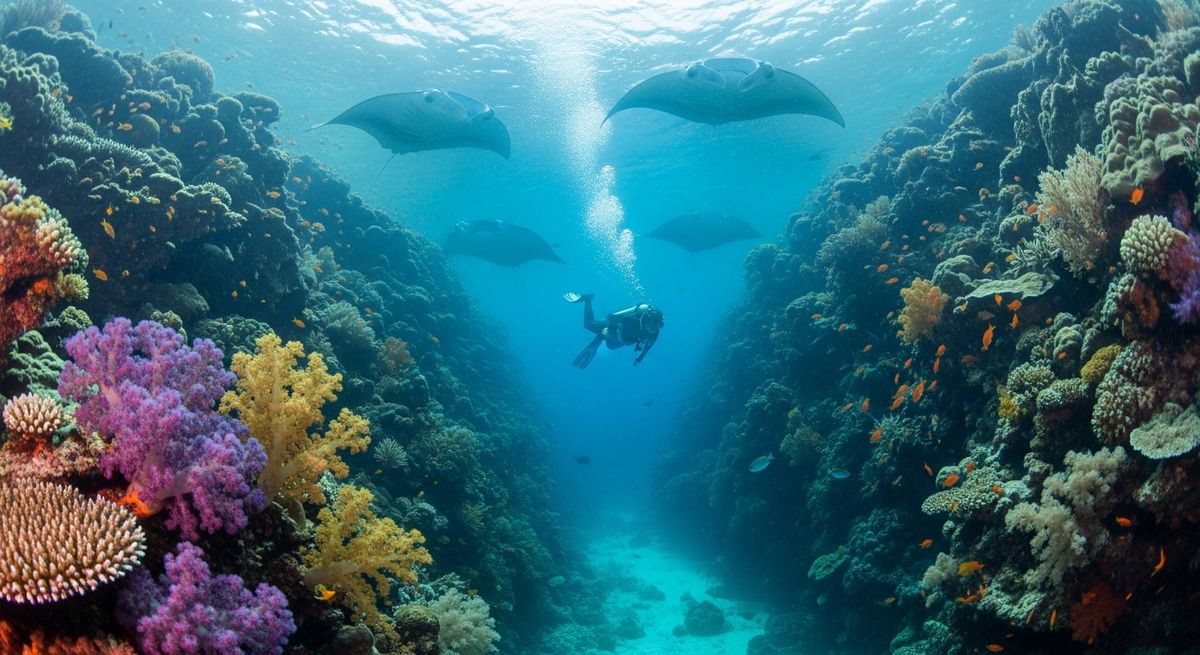
Located at the entrance of Lady Musgrave Lagoon is the Entrance Bommie. This dive site has a depth of 18m and consists of a vast array of large bommies that have stunning plate corals on top. You’ll also see foliose coral, or lettuce leaf coral as we like to call them. Maximum depth: 16m. Average visibility: 12m. Foliose coral form beautiful, thin, plate like structures that often resemble the open petals of a flower. Overflowing in these bommies are thriving baitfish that attract large pelagic
Nearest Dive Centres to Entrance Bommies
Dive shops near Entrance Bommies
View all dive centres in Coral SeaReviews for Entrance Bommies
Conditions
Ocean conditions, forecast and tides for Entrance Bommies
Entrance Bommies Ocean Conditions
Monthly averages for Entrance Bommies, sourced from Open-Meteo marine data + Copernicus Marine (EU) - nearest station: Open-Meteo marine grid (-16.5, 148) (0km away)
October Averages
Sea Temperature
26°C
79°F · Range: 25.4–29°C
Current Speed
10.3 cm/s
Direction: SE (119.1°)
Salinity
35.38 PSU
Based on 4 years of monitoring data · Data sources: Open-Meteo marine data + Copernicus Marine (EU)
Plan & book
Ways to dive Coral Sea, from day trips to liveaboards.
Day trips & courses
via GetYourGuideGuided dives, courses and snorkel trips with instant booking.
Find dive trips in Coral SeaPlaces to stay
via Booking.comHotels and dive resorts near Coral Sea.
Search stays in Coral SeaDive insurance
Most travel insurance excludes or limits scuba. Check what you need before you go.
Dive insurance explainedPartner links: we may earn a commission if you book, at no extra cost to you. How we make money
Where to Stay near Entrance Bommies
Prices from Booking.com. We may earn a commission at no extra cost to you.