Diving in Coral Sea
Why dive here
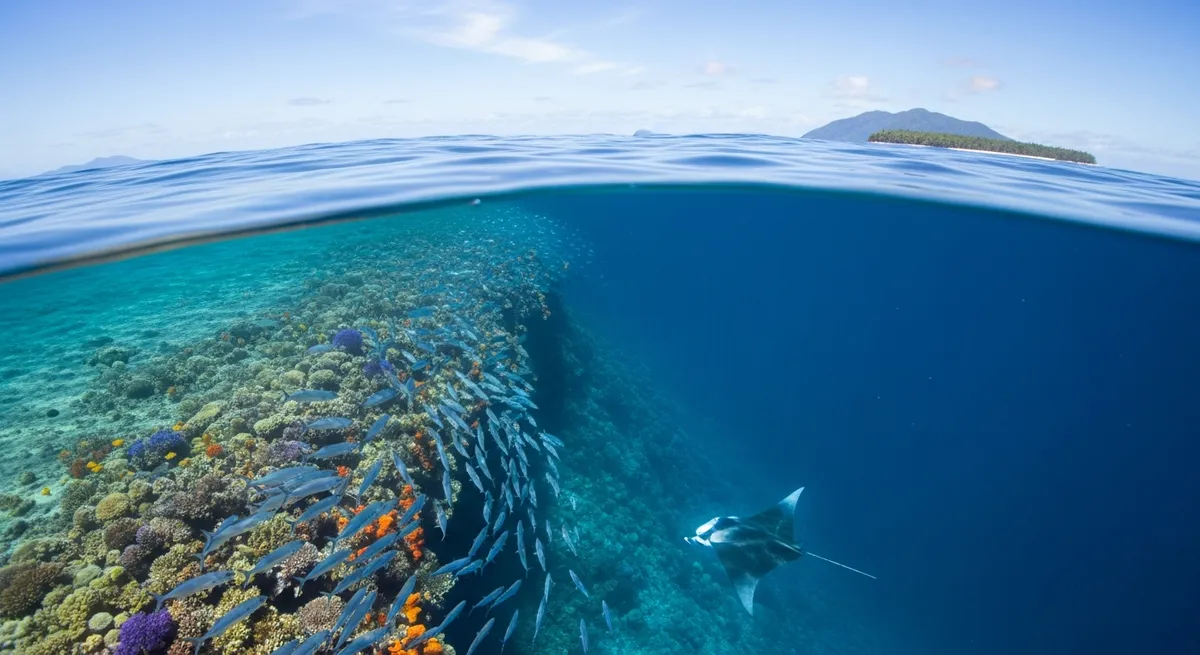
Coral Sea offers some of Australia's richest diving, with 113+ marine species recorded in the area - including dugongs, grey reef sharks, humpback whales, sea turtles and tiger sharks. Water ranges 25-30°C, warmest January, February, March.
The Coral Sea is where we go when we want to feel small, truly insignificant, in the best possible way. This isn't your average shore dive; we're talking remote pinnacles erupting from thousands of metres of blue, sometimes with a fair bit of current to keep things interesting. Our pick is Osprey Reef, specifically North Horn. You descend into what feels like a natural amphitheatre, and then the grey reef sharks start to appear, not in a frantic feeding frenzy, but circling, curious, in an almost balletic display. We love the sheer scale of the walls here, often adorned with huge colonies of Montipora and Galaxea coral. Keep an eye out for enormous Humpnose Unicornfish cruising the deeper sections and those pretty Line Butterflyfish fluttering in the shallows. Diving Osprey in the Australian winter (June to August) often brings clearer water and a slightly better chance of pelagics, though the thermocline can be noticeable. Expect deep blue, serious visibility, and the kind of wide-angle photography opportunities that fill entire memory cards. It’s wild, proper open ocean stuff.
Coral Sea Dive Site Map
Dive sites and dive centres in Coral Sea
Coral Sea Dive Sites
100 dive sites in Coral Sea
Anemone Bommies - Lady Elliot Island
Embark on an extraordinary adventure at Lady Elliot Island’s Anemone Bommie dive site! Delight in a kaleidoscope of colors as you encounter playful clownfish nestled in their anemone homes. Admire the breathtaking array of vibrant corals and witness a diverse array of marine life, from graceful sea turtles to mes Maximum depth: 17m. Average visibility: 17m. Discover a world of color! Encounter captivating anemones hosting clownfish, vibrant corals, and a variety of marine life. Unforgettable underwater adventure
Bait Reef
Bait Reef feels like a secret handshake with the Coral Sea. It’s not about grand pelagics, though a reef shark might cruise past. Here, we dive for the small stuff, the details often missed on bigger, busier sites. Find a patch of healthy coral, settle in, and watch the show. We’ve spent whole dives mesmerised by the resident Camouflage Groupers, perfectly blending into their surroundings until they suddenly aren’t. The Blue Tuskfish are everywhere, digging into the sand, flashing their brilliant colours. And those schools of Blue and Gold Fusiliers – they’re so thick they sometimes make the light ripple. We especially love the late afternoon dives here, when the light softens and the colours really pop. Keep an eye out for the Oriental Flying Gurnard, an oddball beauty we’ve spotted more than once gliding over the sandy patches between coral bommies. This site suits divers who appreciate a slower pace, who are happy to hover and observe, rather than chase after big fish. It's a place for macro lovers, or anyone who wants a reminder of the sheer variety hiding in plain sight.
Barolin Point Dive Site
Barolin Point is a site we’ve always enjoyed, especially as a reliable shore dive. It’s not the Great Barrier Reef’s showiest site, but it’s got a real charm. Drop in and you’re often greeted by schools of silver moonies shimmering in the shallows, a lovely welcome before you even properly descend. We’ve had some cracking encounters here with Grey Sweetlips hovering under ledges, and on a good day, the smaller reef gobies, like the Threadfin, are busy doing their thing if you slow down and look closely. Our favourite way to dive Barolin is definitely as a drift, letting the current do the work. The reef structure itself is interesting, with plenty of nooks and crannies to explore. It’s perfect for a relaxed dive, maybe a bit of macro photography, or just enjoying the simpler pleasures of a healthy reef. Don't expect dramatic drop-offs; think gentle slopes and plenty of hiding spots for the smaller critters. The pigmy sperm whales are a rare treat if you're incredibly lucky, but you'll almost certainly spot the Banded Dotterel or Eastern Reef Egrets foraging along the shore. We’d suggest going at high tide to minimise the walk over the rocks. It’s a great spot for newer divers or those who prefer convenience over a boat trip.
Black Island “WONDERWALL“
Black Island’s “Wonderwall” is a peculiar spot, and we mean that in the best way. For a wall dive, it’s remarkably shallow, topping out at 14 metres, which makes it perfect for longer bottom times and really soaking in the details. Visibility here can swing wildly – from a crisp 10 metres to a silty 5 metres, especially with a strong tidal push, so check with your skipper before gearing up. When it’s good, the wall itself is a tapestry of corals: bold plates of turbinaria coral, delicate staghorns, and those chunky pavona corals we love, all vying for space. What really gets us though are the fish schools. We’re talking fusiliers so dense they create shimmering curtains, baitfish swarming in nervous clouds, and the always-entertaining damselfish darting between coral heads. You’ll spot dusky parrotfish grazing, and the occasional humphead unicornfish cruising by. And keep those eyes peeled for turtles – they often drift past the wall’s edge. If you’re into macro, those devilishly camouflaged squid are often lurking, but good luck spotting them! This site is a great pick for newer divers or anyone who loves to take their time exploring a vibrant, fish-filled reef without the pressure of deep depths.
Blue Pearl Bay 2
Blue Pearl Bay 2 might seem like just another patch of reef, especially with the reminders of Cyclone Debbie scattered about. But give it a chance, and you'll find a surprisingly resilient site. The wall here offers a gentle drop, perfect for newer divers getting comfortable with depth, or for those just wanting a relaxed cruise. We love how the reef is bouncing back, with new corals finding purchase on the rocky sections. Keep an eye out for the big schools of batfish that often hang around, curious and unhurried. We’ve seen them so thick you almost have to part them to swim through. The damselfish are everywhere, flitting around the bommies, and if you take your time, you’ll spot a good variety of nudibranchs tucked into crevices. The visibility can be a bit variable, averaging around 10m, so it’s less about grand vistas and more about the smaller details. This is a site for divers who appreciate the subtle beauty of regrowth and the persistent life on a recovering reef, best enjoyed as a slow, meandering drift.
Butterfly Bay
Butterfly Bay offers a calm entry, making it a good spot for newer divers or those looking for a relaxed dive. We typically find schools of snapper weaving through the soft corals here. Look closely, and you might spot a few nudibranchs grazing on the shallower reef. It's a pleasant, easy dive, best enjoyed at a leisurely pace.
Butterfly Bay “KEYHOLE“
Keyhole at Butterfly Bay is exactly what it sounds like: a tight squeeze, only accessible to the smallest liveaboards. And that's part of its charm. We love places that feel a bit exclusive, and this certainly fits. Drop in and you're immediately in a maze of coral. The staghorn corals, both blue and red, are particularly impressive here, forming dense, sculptural gardens that feel ancient. It’s shallow, only topping out at 11 metres, but don’t let that fool you into thinking it’s basic. Visibility averages around 7 metres, which isn't huge, but it focuses your attention. We often find ourselves just hovering, eyes scanning the nooks and crannies. Anemonefish are always buzzing around, but keep an eye out for the larger barracuda patrolling the edges. We’ve also had luck spotting wobbegongs tucked into the coral and the occasional blue-spotted stingray cruising the sandy patches. It’s an intimate dive, perfect for photographers or anyone who likes to take their time and really explore a smaller, protected ecosystem.
CHIN LONG WEE
Chin Long Wee is a dive site we think about often when someone asks for a proper Coral Sea wreck. This isn't some pristine, intact vessel; she's been down since '76, courtesy of a cyclone, and the reef has absolutely swallowed her. You won't find much in the way of superstructure, more a scattering of ribs and plating, but that's precisely what makes her special. What's left of the old fishing vessel is now a foundation for some seriously impressive hard corals. Think massive plates and bommies, textured with brain corals and sea fans, all vying for space. We’ve drifted over the site and seen schools of fusiliers so thick they momentarily block the sun, only to part and reveal a resident grey reef shark cruising by. It’s a site that really shows the power of the ocean to reclaim, transforming tragedy into a vibrant, living reef. Visibility here is usually excellent, classic Coral Sea blues. It’s a shallower wreck, making it accessible for most, but the sheer volume of life makes it a standout. Keep an eye out for larger pelagics passing through – they often use these isolated structures as cleaning stations.
Conical Rocks Reef
Conical Rocks Reef offers a solid Coral Sea dive for those exploring Australia's more remote sites. It's a classic coral and rock reef, with plenty of nooks and crannies for reef sharks to patrol. We've often found schooling jacks here, a good indicator of healthy currents bringing in the nutrients. It’s a rewarding spot for experienced divers looking for a proper blue water experience.
Coral Gardens - Lady Elliot Island
Hardy Reef is an odd duck, and we love it. Most people know it for the pontoon, but beneath that bustling platform, the diving is genuinely charming. With a max depth of 9 metres, it’s a site for relaxing, long bottom times, and really appreciating the details. We’ve spent hours drifting along the coral bommies, spotting brownbanded bamboo sharks tucked into crevices and watching yellowtail fusiliers form shimmering clouds so thick you can barely see the reef beyond. Visibility averages a decent 9 metres, though we’ve had days closer to 15. Keep an eye out for the resident giant Queensland groper; they’re enormous and completely unfazed by divers. While it’s not a drift dive, the gentle currents make for an easy cruise past staghorn and yellow scroll corals. It’s a perfect spot for newer divers, or anyone who just wants to take their time with a camera, without the pressure of strong currents or deep dives.
Corroboree Reef
Corroboree Reef, out in the Coral Sea, offers a classic Australian outer-reef dive. We’ve found it’s best for experienced divers comfortable with potential currents and deeper profiles. Look for pelagic species cruising the reef edge, along with schooling fish and the usual suspects like reef sharks. It's a proper Coral Sea adventure, often part of a liveaboard itinerary.
Cruise Whitsundays Pontoon
The Cruise Whitsundays Pontoon is a surprisingly busy spot, attracting quite a crowd of reef fish around its legs. You’ll often see schools of yellow-spotted trevally darting past, with lancer and tuskfish patrolling the calmer areas. Look closely for those more unusual finds, like the striated locust lobster tucked into crevices or dusky filefish drifting near the coral. It’s a good, easy dive for shaking out the cobwebs, particularly if you’re new to the area or prefer a more relaxed pace.
Show all 100 dive sites in Coral Sea
- Dangerous Reef
- Dangerous Reef
- Dolphin Point
- Entrance Bommies
- Explore
- Farmers Reef
- Farmers Reef
- Firth Patch
- Fish Reef
- Fitzroy Reef
- Flat Rock Reef
- Forty Five - Lady Elliot Island
- Gary s Lagoon
- Gothenburg Wreck
- Hardy Reef
- Hardy Reef
- Haswell Patch
- Hay Reef
- Heron Island
- Holmes Reef
- Holmes Reefs
- Hook Reef
- Horseshoe Reef
- Io Reef
- Irving Reef
- Jeff’s Edge
- Knuckle Reef
- Knuckle Reef South
- Lady Musgrave Aquarium
- Lamont Reef
- Lavers Cay
- Leeper Reef
- Line Reef
- Llewellyn Reef
- Lupton Reef
- Mackerel bay
- Malay Reef
- Man and Wife Rocks
- Manning Reef
- Manta Bommie
- Manta Ray Bay
- Maori Wrasse Bommie - Lady Elliot Island
- Marsh Reef
- Mast Head Reef
- Mid Reef
- Moore Reefs
- Mother Mcgregor Reef
- Net Reef
- North End Reef
- North Keppel Island Reef
- North Reef
- One Fathom Patch
- Parker Reef
- Passage Patch
- Pearl Ledge
- Phillips Reef
- Pilot Reef
- Polmaise Reef
- Pompey Reef
- Prince Reef
- Pumpkin
- Ripple Reef
- Sandpiper Reef
- Sandy 2nd’s - Lady Elliot Island
- Sealark Patch
- Severence Wreck - Lady Elliot Island
- Shelving Reef
- Ship Wreck Bay
- Shrimp Reef
- Sloping
- Spiders Ledge - Lady Elliot Island
- Split Rock Reef
- Square Rocks Reef
- Sykes Reef
- The Apartments
- The Campgrounds
- The Canyons
- The Cathedral
- The Caves
- The Chimney
- The Stepping Stones
- Three Pyramids - Lady Elliot Island
- Triangle Reef
- Turner Cay
- Turtle Bommie
- West Reef
- Wistari Reef
- Wreck of Cherry Venture
Coral Sea Dive Centres
13 dive shops and operators in Coral Sea
Airlie Beach Dive Centre
Aquadive
Bundaberg Aqua Scuba
Dive Coaching Australia
Dive Shop
Marine Center
OCEANSENSE North QLD
OCEAN VOYAGER PTY LTD
Show all 13 dive centres in Coral Sea
Ocean Wildlife in Coral Sea
113 species recorded in Coral Sea
Coral Sea Daylight & Sunrise/Sunset
Sunrise and sunset times for Coral Sea, calculated from coordinates
Today - Sunday 11 October
Sunrise
05:31
Sunset
18:00
Daylight
12h 29m
Golden Hour
17:30
First light (dawn) at 05:08 · Last light (dusk) at 18:23
Monthly Averages
| Month | Sunrise | Sunset | Daylight |
|---|---|---|---|
| Jan | 05:28 | 18:47 | 13h 19m |
| Feb | 05:48 | 18:38 | 12h 49m |
| Mar | 06:01 | 18:15 | 12h 15m |
| Apr | 06:11 | 17:47 | 11h 36m |
| May | 06:23 | 17:28 | 11h 5m |
| JunShortest | 06:35 | 17:23 | 10h 49m |
| Jul | 06:37 | 17:32 | 10h 55m |
| Aug | 06:23 | 17:44 | 11h 21m |
| Sep | 05:56 | 17:53 | 11h 57m |
| OctNow | 05:28 | 18:02 | 12h 34m |
| Nov | 05:09 | 18:18 | 13h 9m |
| DecLongest | 05:10 | 18:37 | 13h 27m |
Times are approximate local times based on longitude. Actual times may vary slightly depending on the exact timezone observed in Coral Sea.
Where to Stay near Coral Sea
Prices from Booking.com. We may earn a commission at no extra cost to you.
Marine Protected Areas near Coral Sea
14 protected areas near Coral Sea - please respect local regulations when diving
Shoalwater and Corio Bays Area (Shoalwater Bay Training Area, in part - Corio Bay)
Broad Sound
Fitzroy River
Cape Palmerston - Rocky Dam
West Hill
Sand Bay
West Hill
Corio Bay
Cape Palmerston - Rocky Dam
Balban Dara Guya (Leekes Creek)
Cawarral Creek
Bassett Basin
Showing 12 largest of 14
Getting to Coral Sea
Mackay
Hamilton Island
Proserpine
Plan & book
Ways to dive Coral Sea, from day trips to liveaboards.
Day trips & courses
via GetYourGuideGuided dives, courses and snorkel trips with instant booking.
Find dive trips in Coral SeaPlaces to stay
via Booking.comHotels and dive resorts near Coral Sea.
Search stays in Coral SeaDive insurance
Most travel insurance excludes or limits scuba. Check what you need before you go.
Dive insurance explainedPartner links: we may earn a commission if you book, at no extra cost to you. How we make money