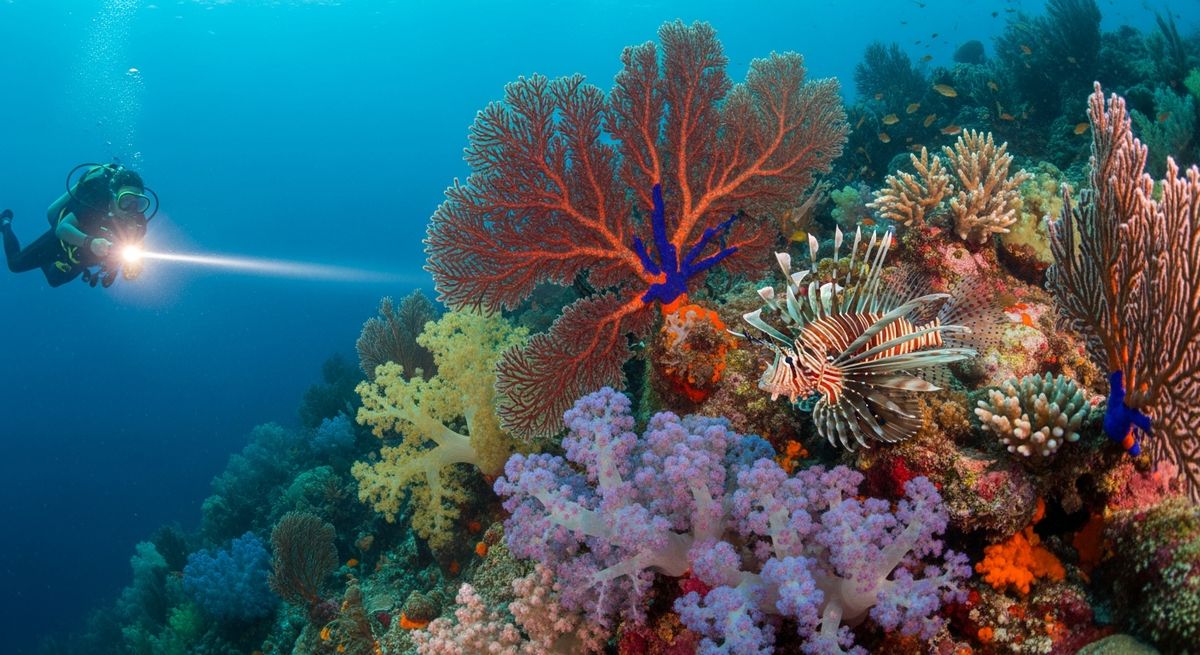
Hardy Reef - Coral Sea

Lochmara, tucked away in Kaikōura, is one of those places that surprises you. Forget dramatic walls or pelagic encounters, this site is all about the little things, and a fantastic example of a conservation success story. We love seeing the ongoing work to regenerate the kelp forests; you can really see the difference it makes to the fish life. Dropping to a gentle 10 metres, the focus here is the small stuff, especially around the underwater observatory. We’ve had fantastic luck spotting olive rockfish tucked into crevices and common triplefins zipping about. Keep an eye out for the resident conger eel, he’s usually lounging under his favourite rock, looking grumpy. Visibility averages 4 metres, which sounds low, but it actually forces you to slow down and really observe. It’s a great spot for newer divers or those who prefer a relaxed pace and appreciate the smaller wonders of the temperate reef. You’ll be surrounded by schools of blue mackerel, and if you’re patient, a short-tail stingray might glide past. Above the surface, the conservation work continues, with plenty of birdlife like spotted shags and blue penguins adding to the experience.

Location
Coral Sea, Australia, Australasia
Coordinates
-23.287200, 150.840400
Type
reef

Marine Protected Area: Cawarral Creek

Best Time to Dive in Coral Sea

The warmest water temperatures in Coral Sea occur in March, averaging 28.3°C. The coolest conditions are in August at 21.2°C.

Monthly Water Temperatures

  • January: 27.9°C
  • February: 28.3°C
  • March: 28.3°C
  • April: 27.2°C
  • May: 25.0°C
  • June: 23.0°C
  • July: 21.6°C
  • August: 21.2°C
  • September: 22.3°C
  • October: 24.3°C
  • November: 26.3°C
  • December: 27.7°C

Nearby Dive Sites in Coral Sea

Nearest Dive Centres to Hardy Reef

Marine Life in Coral Sea

Home to 120 recorded species including 73 reef fish, 30 hard corals, 8 seagrass & algae, 3 other, 2 sharks & rays, 1 whales & dolphins.

Notable Species

Recommended Packing List for Hardy Reef

Based on average water temperature of 25.2°C, currents 5 cm/s.

  • Shorty or Rashguard - warm 25°C water needs minimal exposure protection
  • Mask - essential for every dive
  • Fins
  • BCD - buoyancy compensator
  • Regulator - your most safety-critical piece of gear
  • Dive Computer - tracks depth, time, and NDL
  • Surface Marker Buoy (SMB) - essential for boat pickups
  • Dive Torch - useful for crevices and colour at depth
  • Underwater Camera - capture your diving memories

Frequently Asked Questions

What are the typical diving depths at Hardy Reef?
At Hardy Reef, divers can expect a maximum depth of 9 meters. This shallow reef offers excellent opportunities for exploring the vibrant marine life within this range, making it accessible for various skill levels.
What kind of marine life and coral can divers expect to see at Hardy Reef?
Divers at Hardy Reef will encounter spectacular fish life, including Trevally, Coral Trout, Snapper, and yellowtail fusiliers. Keep an eye out for the impressive Giant Maori Wrasse and a two-meter-long Giant Queensland Groper, which often congregate near the Reefworld Pontoon. The reef also boasts plenty of hard corals and various crustaceans like hermit crabs, offering a rich wildlife experience.
How difficult is diving at Hardy Reef, and is it suitable for beginners?
Diving at Hardy Reef is rated as intermediate difficulty. While it offers a rewarding experience, beginners should ensure they are comfortable with their skills and potentially dive with an experienced guide or instructor. The relatively shallow maximum depth of 9 meters can be manageable for those with some prior experience.
When is the best time of year to dive at Hardy Reef for optimal conditions and marine life sightings?
The provided data does not specify the best time of year to dive at Hardy Reef for optimal conditions or marine life sightings. For general information on seasonal diving, you might consult our When to Dive guide.
What scuba diving certifications are required to dive at Hardy Reef?
The provided information does not specify particular scuba diving certifications required to dive at Hardy Reef. Generally, an Open Water Diver certification is a prerequisite for most recreational dives. It's always best to check with local dive operators for their specific requirements.
What are the typical water conditions and currents like for diving at Hardy Reef?
Divers at Hardy Reef can typically expect an average visibility of 9 meters, offering clear views of the vibrant reef. The provided data does not include specific details on water temperatures or typical current conditions. It is always advisable to consult with local dive operators for up-to-date conditions before your dive.