Manta Bommie
Why dive here
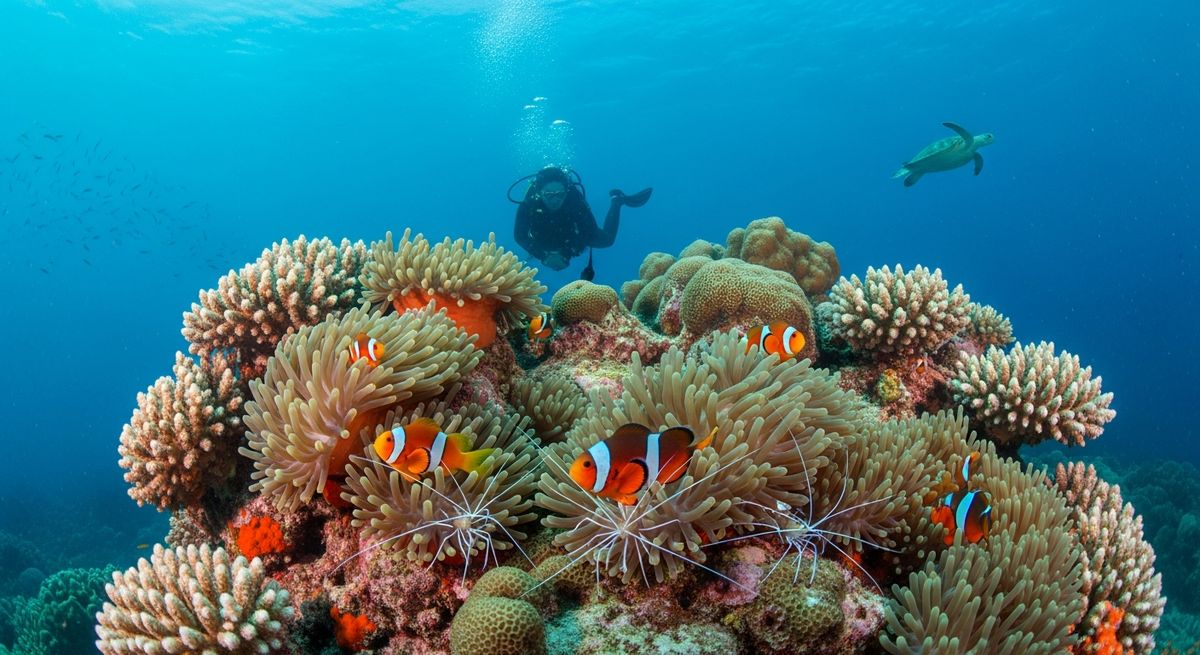
With 113+ marine species recorded in the area - including dugongs, grey reef sharks, humpback whales, sea turtles and tiger sharks - Manta Bommie offers some of Coral Sea's richest reef diving. Water ranges 25-30°C, warmest January, February, March.
Passe de Tiputa is really something. We’ve done it dozens of times and it still feels like the first, that rush of being swept into the lagoon, flying over a landscape of brain coral and anemones. We love a drift dive, and this is drift diving amplified. You’ll drop in just outside the pass on an incoming tide, then let the current carry you into the lagoon. The depth here often hovers around 20 metres, so there's plenty of bottom time to take in the show. What makes it special? The sheer volume of sharks. Grey reef sharks mostly, patrolling the entrance in dizzying numbers, sometimes hundreds, just hanging in the current, looking utterly unbothered by us. We’ve also had lucky encounters with mantas here, gliding through the blue. Keep an eye out for bottlenose dolphins, too; they often put on a playful display. The visibility averages 28 metres, a proper blue, though the currents can be quite strong. Our tip: go early in the morning for fewer boats and that beautiful soft light. This dive suits experienced divers comfortable with current, looking for a truly exhilarating ride. It’s an immersion in the raw power of the ocean, a proper shot of adrenaline.
Nearest Dive Centres to Manta Bommie
Dive shops near Manta Bommie
View all dive centres in Coral SeaReviews for Manta Bommie
Conditions
Ocean conditions, forecast and tides for Manta Bommie
Manta Bommie Ocean Conditions
Monthly averages for Manta Bommie, sourced from Open-Meteo marine data + Copernicus Marine (EU) - nearest station: Open-Meteo marine grid (-16.5, 148) (0km away)
October Averages
Sea Temperature
26°C
79°F · Range: 25.4–29°C
Current Speed
10.3 cm/s
Direction: SE (119.1°)
Salinity
35.38 PSU
Based on 4 years of monitoring data · Data sources: Open-Meteo marine data + Copernicus Marine (EU)
Plan & book
Ways to dive Coral Sea, from day trips to liveaboards.
Day trips & courses
via GetYourGuideGuided dives, courses and snorkel trips with instant booking.
Find dive trips in Coral SeaPlaces to stay
via Booking.comHotels and dive resorts near Coral Sea.
Search stays in Coral SeaDive insurance
Most travel insurance excludes or limits scuba. Check what you need before you go.
Dive insurance explainedPartner links: we may earn a commission if you book, at no extra cost to you. How we make money
Where to Stay near Manta Bommie
Prices from Booking.com. We may earn a commission at no extra cost to you.