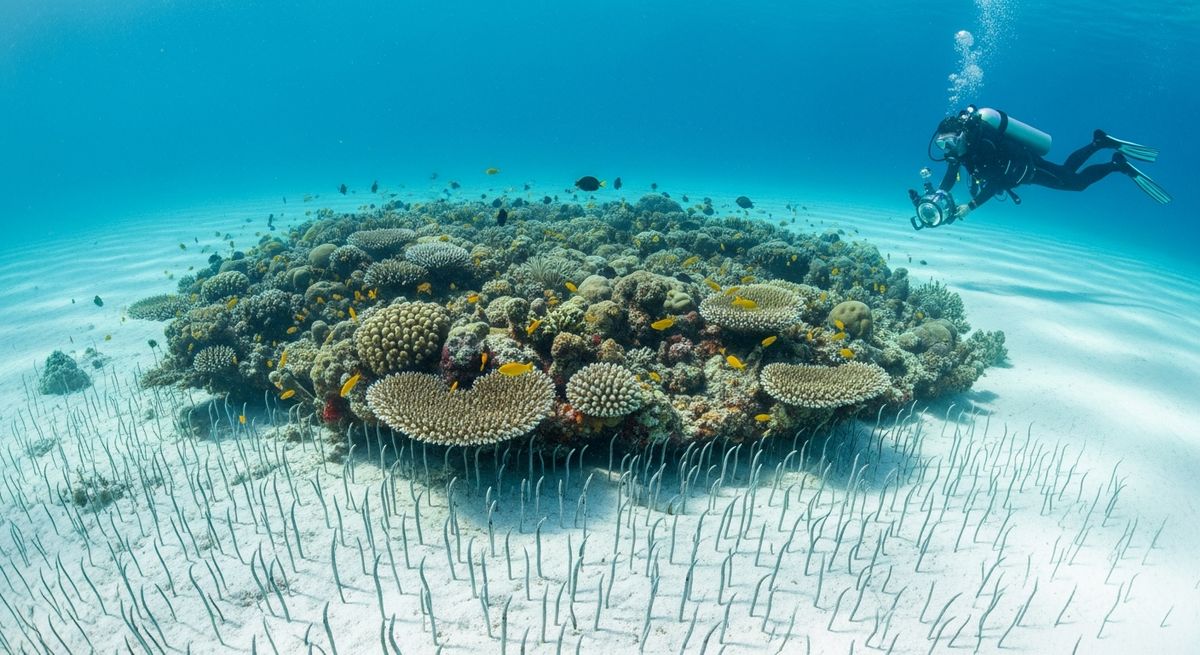
Sandy 2nd’s - Lady Elliot Island
Why dive here
With 113+ marine species recorded in the area - including dugongs, grey reef sharks, humpback whales, sea turtles and tiger sharks - Sandy 2nd’s - Lady Elliot Island offers some of Coral Sea's richest reef diving. Water ranges 25-30°C, warmest January, February, March.
Ted's Point on Roatán's south side is one of those sites we always come back to. It's not the deepest dive, topping out around 21m, but what it lacks in depth it makes up for in detail. We love dropping onto the sandy bottom first, keeping an eye out for yellowhead jawfish darting in and out of their burrows. The real magic happens on the east wall, where the slope transitions into a vibrant canvas of tunicates and sponges. We’ve had some fantastic encounters here with free-swimming morays, especially when the current picks up a little, and it's a solid spot for spotting permits cruising by. Look closely among the younger brain corals for tiny gobies, like the Kuna and Smallmouth, they're everywhere once you get your eye in. This spot suits divers who appreciate a slow, observational dive, perfect for photographers or anyone keen on finding the smaller stuff. We'd suggest aiming for a mid-morning dive before boat traffic peaks, and keep an eye on the sand for stargazers – they're masters of disguise here.
Nearest Dive Centres to Sandy 2nd’s - Lady Elliot Island
Dive shops near Sandy 2nd’s - Lady Elliot Island
View all dive centres in Coral SeaReviews for Sandy 2nd’s - Lady Elliot Island
Conditions
Ocean conditions, forecast and tides for Sandy 2nd’s - Lady Elliot Island
Sandy 2nd’s - Lady Elliot Island Ocean Conditions
Monthly averages for Sandy 2nd’s - Lady Elliot Island, sourced from Open-Meteo marine data + Copernicus Marine (EU) - nearest station: Open-Meteo marine grid (-16.5, 148) (0km away)
October Averages
Sea Temperature
26°C
79°F · Range: 25.4–29°C
Current Speed
10.3 cm/s
Direction: SE (119.1°)
Salinity
35.38 PSU
Based on 4 years of monitoring data · Data sources: Open-Meteo marine data + Copernicus Marine (EU)
Plan & book
Ways to dive Coral Sea, from day trips to liveaboards.
Day trips & courses
via GetYourGuideGuided dives, courses and snorkel trips with instant booking.
Find dive trips in Coral SeaPlaces to stay
via Booking.comHotels and dive resorts near Coral Sea.
Search stays in Coral SeaDive insurance
Most travel insurance excludes or limits scuba. Check what you need before you go.
Dive insurance explainedPartner links: we may earn a commission if you book, at no extra cost to you. How we make money
Where to Stay near Sandy 2nd’s - Lady Elliot Island
Prices from Booking.com. We may earn a commission at no extra cost to you.