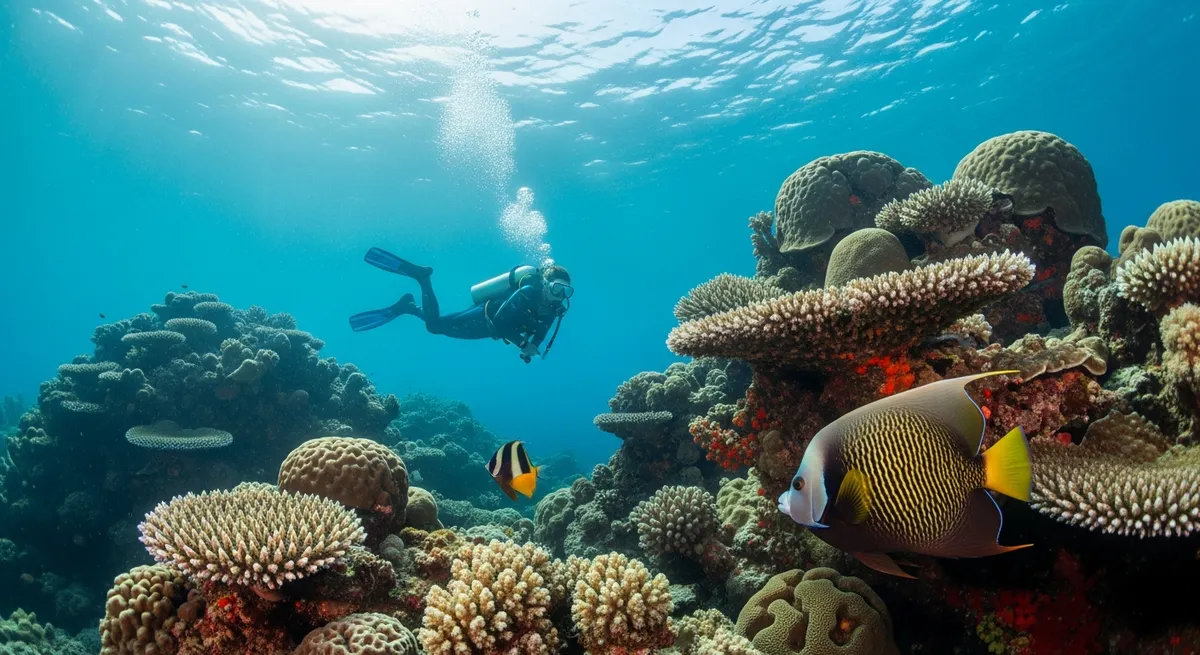
Diving in Lord Howe Island
Why dive here
Lord Howe Island offers some of Australia's richest diving, with 63+ marine species recorded in the area - including bull sharks, great white sharks, humpback whales, seals & sea lions and sea turtles. Water ranges 19-25°C, warmest January, February, March.
Lord Howe Island, a speck of volcanic rock way out in the Tasman Sea, feels like stepping back in time. It’s the world’s southernmost coral reef, and that alone makes it special. We love the drift dives, letting the current carry you over healthy corals, a surprising mix of tropical and temperate species. You’ll spot greenback stingarees tucked under ledges and rusty catsharks cruising the seafloor. Visibility here is often ridiculously good, making the pinnacles like Ball’s Pyramid feel even more dramatic as they rise from the deep. Our favourite time to visit is during the cooler months when the water is crisp and the pelagics are more active. Keep an eye out for snapper and dory darting amongst the schools of Pacific sardines. It's a proper adventure to get here, but completely worth it for the quiet, uncrowded diving and that unique blend of marine life.
Lord Howe Island Dive Site Map
Dive sites and dive centres in Lord Howe Island
Lord Howe Island Dive Centres
18 dive shops and operators in Lord Howe Island
Abyss Scuba Diving
Aquatic Explorers
Brisbane Dive Academy
Crest Diving
Deep 6
Dive Centre Bondi
Dive Centre Manly
Dive Forster
Show all 18 dive centres in Lord Howe Island
Ocean Wildlife in Lord Howe Island
63 species recorded in Lord Howe Island
Lord Howe Island Daylight & Sunrise/Sunset
Sunrise and sunset times for Lord Howe Island, calculated from coordinates
Today - Sunday 11 October
Sunrise
05:50
Sunset
18:31
Daylight
12h 42m
Golden Hour
17:59
First light (dawn) at 05:25 · Last light (dusk) at 18:56
Monthly Averages
| Month | Sunrise | Sunset | Daylight |
|---|---|---|---|
| Jan | 05:33 | 19:33 | 14h 0m |
| Feb | 06:01 | 19:15 | 13h 13m |
| Mar | 06:23 | 18:43 | 12h 20m |
| Apr | 06:44 | 18:04 | 11h 20m |
| May | 07:04 | 17:36 | 10h 32m |
| JunShortest | 07:22 | 17:27 | 10h 5m |
| Jul | 07:22 | 17:37 | 10h 15m |
| Aug | 07:01 | 17:56 | 10h 56m |
| Sep | 06:24 | 18:15 | 11h 52m |
| OctNow | 05:45 | 18:34 | 12h 49m |
| Nov | 05:17 | 19:00 | 13h 43m |
| DecLongest | 05:13 | 19:25 | 14h 12m |
Times are approximate local times based on longitude. Actual times may vary slightly depending on the exact timezone observed in Lord Howe Island.
Where to Stay near Lord Howe Island
Prices from Booking.com. We may earn a commission at no extra cost to you.
Marine Protected Areas near Lord Howe Island
3 protected areas near Lord Howe Island - please respect local regulations when diving
Lord Howe
Îles Lord Howe
Lord Howe Island
Plan & book
Ways to dive Lord Howe Island, from day trips to liveaboards.
Day trips & courses
via GetYourGuideGuided dives, courses and snorkel trips with instant booking.
Find dive trips in Lord Howe IslandPlaces to stay
via Booking.comHotels and dive resorts near Lord Howe Island.
Search stays in Lord Howe IslandDive insurance
Most travel insurance excludes or limits scuba. Check what you need before you go.
Dive insurance explainedPartner links: we may earn a commission if you book, at no extra cost to you. How we make money