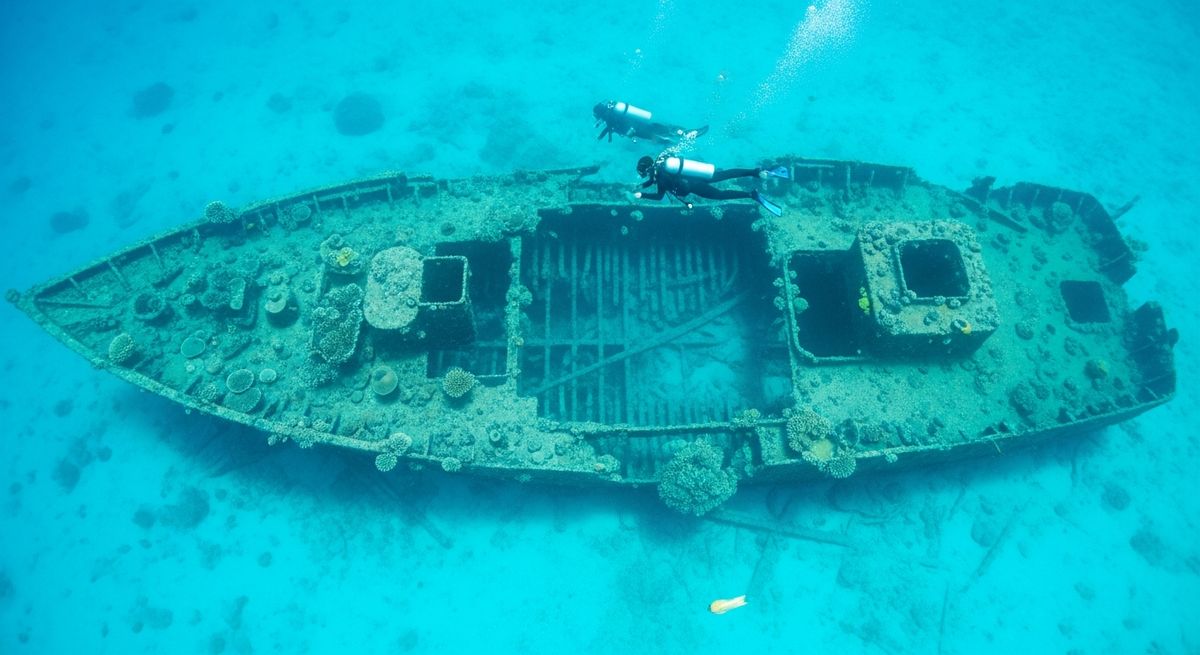
HMS CONQUEROR
Protected Area
Conception Island National Park
Why dive here
With 362+ marine species recorded in the area - including barracuda, blacktip reef sharks, dolphins, dwarf minke whales and humpback whales - HMS CONQUEROR offers some of Long Island's richest wreck diving. Water ranges 26-30°C, warmest August, September, October.
The HMS Conqueror isn't your typical wreck dive. We’re talking about a mid-19th century British battleship, sunk in 1861, right off Rum Cay, near Long Island. Don’t expect a deep, intact hull here; this one's been battered by time and waves, sitting in a ridiculously shallow two metres of water. It's more of an archaeological treasure hunt than a penetration dive. What you get are huge, scattered pieces of history: enormous iron hull plates, cannon, and anchor chains spread across the sand. The sheer scale of some of the components still impresses, even after all these years of exposure. It’s perfect for snorkelers or very casual divers looking to spend a long surface interval exploring. Our favourite part? How the light plays on the metal, glinting off the dark encrustations, highlighting the resident parrotfish and angelfish nosing around the rust. It’s a gentle place, but full of stories. You can spend an hour just floating, tracing the lines of the wreck, imagining it in its prime.
Typical HMS CONQUEROR Dive Profile
Illustrative profile based on site depth and type. Actual dive profiles vary - always follow your dive computer and training.
Safety Notes
Wreck site - avoid penetration without wreck diving certification. Watch for sharp metal and entanglement hazards.
Reviews for HMS CONQUEROR
Conditions
Ocean conditions, forecast and tides for HMS CONQUEROR
HMS CONQUEROR Ocean Conditions
Monthly averages for HMS CONQUEROR, sourced from Open-Meteo marine data + Copernicus Marine (EU) - nearest station: Open-Meteo marine grid (23.66, -74.95) (14km away)
October Averages
Sea Temperature
30°C
85°F · Range: 28–30.8°C
Current Speed
8.94 cm/s
Direction: NW (333.4°)
Chlorophyll-a
0.053 mg/m³
Very clear (oligotrophic)
Salinity
36.55 PSU
Based on 4 years of monitoring data · Data sources: Open-Meteo marine data + Copernicus Marine (EU)
Plan & book
Ways to dive Long Island, from day trips to liveaboards.
Day trips & courses
via GetYourGuideGuided dives, courses and snorkel trips with instant booking.
Find dive trips in Long IslandPlaces to stay
via Booking.comHotels and dive resorts near Long Island.
Search stays in Long IslandDive insurance
Most travel insurance excludes or limits scuba. Check what you need before you go.
Dive insurance explainedPartner links: we may earn a commission if you book, at no extra cost to you. How we make money
Where to Stay near HMS CONQUEROR
Prices from Booking.com. We may earn a commission at no extra cost to you.