Diving in Long Island
Why dive here
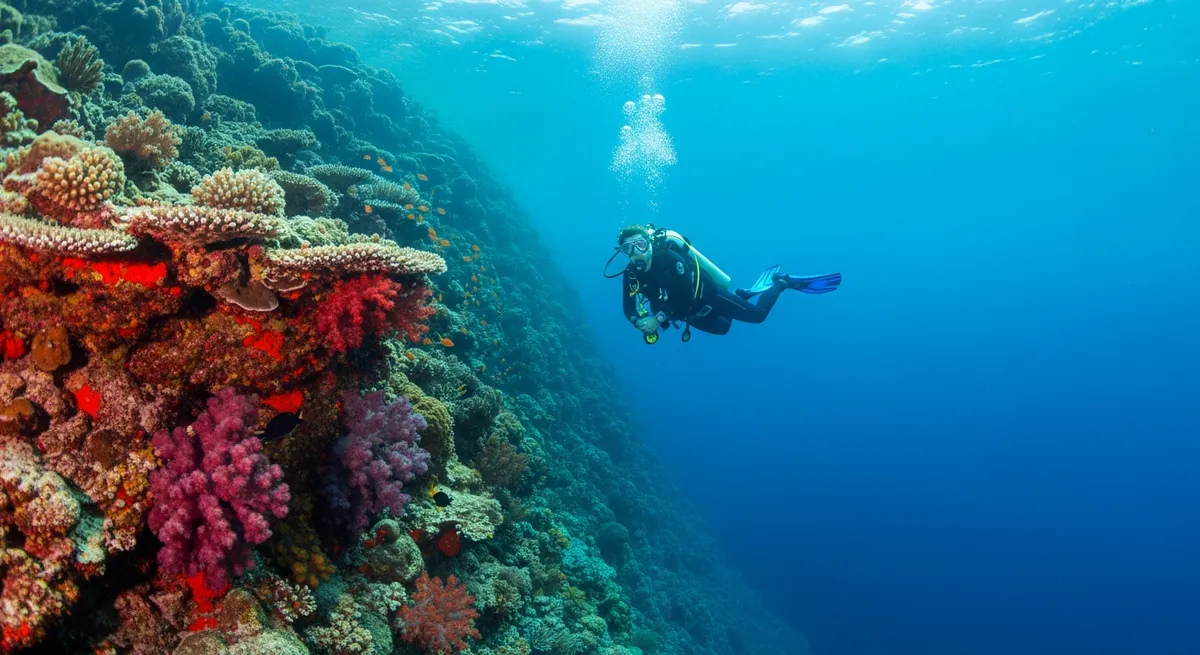
Long Island offers some of Bahamas's richest diving, with 362+ marine species recorded in the area - including barracuda, blacktip reef sharks, dolphins, dwarf minke whales and humpback whales. Water ranges 26-30°C, warmest August, September, October.
Long Island in the Bahamas is a different beast entirely. We’re not talking about those bustling dive hubs; this is where you go to really escape. With no dive centres listed, planning takes a bit more grit, but that’s exactly what makes it special. You’ll be arranging boat charters, likely with a local fisherman, and diving on your own terms. Dean's Blue Hole is the big draw, and for good reason. Dropping to an astonishing 202 metres, it’s a dizzying descent even for experienced freedivers, let alone us bubble-blowers. We've taken a few breaths down to the shallower edges, around the 30-metre mark, where the light shifts dramatically and the walls close in. It’s an eerie, captivating place. But don’t let the blue hole overshadow the reef diving. The wall dives here are exceptional, uncrowded and vibrant. We’ve had incredible encounters with reef sharks patrolling the drop-offs, moving with an elegant power. Keep an eye out for the smaller, more unusual stuff too - the Fringed Filefish, for example, is a master of camouflage. The Golden-lined Marginella is another little oddity we love spotting. Surface conditions are generally calm in summer, making for some truly serene dives. Stronger currents can be present on the outer walls, so good buoyancy is key.
Long Island Dive Site Map
Dive sites and dive centres in Long Island
Long Island Dive Sites
37 dive sites in Long Island
Angelfish Blue Hole
Angelfish Blue Hole, just off Stocking Island, is a dive for those who appreciate the dynamic side of the ocean. The tides here constantly shift, pushing a good current through a vertical tunnel, and that movement brings in the fish. Descend into the small entrance, and you might briefly share the space with a hunting eagle ray before it zips off. Inside, schools of yellow jacks cruise past, circling the entrance, their shapes outlined by the sun above. You’ll also spot parrotfish keeping a wary distance as you go deeper into the sand and rock base. It’s a good spot for divers who enjoy a bit of current and don't mind a smaller entrance.
Barracuda Shoals
Barracuda Shoals is one of those sites we always suggest early in a trip, especially if you're getting your sea legs back. At just 10 metres, it's a relaxed dive, but don't mistake shallow for uninteresting. We've often found large schools of barracuda hanging just under the boat, using it for shade, before they peel off into the blue. On the reef itself, look for nurse sharks napping on the sandy patches, and big schools of goatfish and snapper moving together. It's a great spot for an easy-going dive with plenty of resident fish life.
Black Forest
Black Forest, off Long Island, offers a classic Caribbean wall dive. We've found the wall here is home to plenty of sponges and the usual reef fish, like grunts and snappers, tucked into ledges. It's a relaxed drift, generally, and a good option for those looking for a straightforward, pleasant dive without too much fuss.
CAPTAIN MOXEY
Captain Moxey isn't your typical deep wreck; it's practically a wading pool at two metres. But don't let the shallows fool you. This isn't some broken-up pile of metal. We're talking about a proper, mostly intact wooden schooner from the Prohibition era, scuttled after a chase. Sliding into the warm, bath-like water, you're immediately looking down onto the deck. The hull’s still there, barnacle-encrusted, and in places you can peer right into what would have been the cargo hold. Sunlight just floods the whole scene, giving everything a golden glow, making it easy to spot the big schools of snapper that call the wreck home. We've seen nurse sharks napping under the bow, and often find barracuda hovering with that classic stoic look. It's a fantastic spot for a long, relaxed snorkel or a super shallow dive. Perfect for photographers, or when you just want a low-key afternoon exploring history without the pressure of depth.
CARIBBEAN EXPRESS
The Caribbean Express is one of those wrecks that just makes for an easy, fun dive. It's a motor vessel, sitting upright in only 10 metres of water off Long Island. We love this site for its accessibility and the way the light filters through the shallow water. You can spend a good chunk of time exploring the hull and superstructure, which is still remarkably intact. Schools of grunts and snapper are constantly milling about the open cargo holds, and we've often spotted nurse sharks napping under the deeper sections. It’s perfect for divers who want a relaxed wreck dive without the pressure of depth or strong currents, offering a great chance to hone your wreck navigation skills or simply enjoy a long bottom time with plenty to see.
Columbus Point
Columbus Point, off Long Island, delivers a solid Caribbean dive. We've often found ourselves drifting along its wall, spotting reef sharks patrolling the depths and the occasional eagle ray gliding past. It's a relaxed site, good for knocking out a couple of easy dives without too much fuss. Definitely one for those who appreciate consistent reef action over dramatic topography.
COMMERCIAL DISPATCH
The *Commercial Dispatch* isn't a deep dive, not even close, but that's precisely its charm. This old tanker ran aground on Samana Cay back in 1970, and now she sits in about five metres of water, her bow often poking above the surface at low tide. We love that you can practically snorkel this wreck. It's a fantastic site for getting a feel for a proper shipwreck without the need for advanced certs or serious bottom time. You'll see plenty of her 58-metre length, with much of the hull and superstructure still intact and easily explored. Sunlight pours through the openings, illuminating schools of snapper that dart through what were once crew quarters. Tarpon often cruise the perimeter, and we’ve even seen eagle rays pass overhead. Our favourite part? The way the light plays off the rust, casting a warm glow, and the feel of the current gently swaying the soft corals that have taken hold. It's an easy drift, a proper shallow exploration, and an excellent spot for photographers looking for an interesting subject with plenty of natural light.
Connected dott
Connected Dott, off Long Island, provides a relaxed drift dive over a sand and patch reef environment. Look for garden eels swaying from the sandy bottom and stingrays gliding past. It's a good spot for newer divers to experience a gentle current without much depth.
Deans Blue Hole
Dropping into Dean's Blue Hole is a unique experience, a sheer wall descent into an enormous limestone cavern. You'll find yourself surrounded by schooling tarpon and snapper as you sink, with the occasional reef shark patrolling the edges. It’s a compelling spot for advanced divers looking for something a bit different, a truly vertical dive where the bottom is out of sight. The real draw here is the incredible depth and geological formation, not necessarily a vibrant coral reef.
Deep South Reef
Deep South Reef definitely lives up to its name. You're looking at a deeper dive here, suited for advanced divers comfortable with potential currents. The main attraction is a healthy coral reef system, sloping down into the blue, where we’ve often spotted larger pelagics cruising past. If you're keen to explore beyond the usual shallow reef dives, this one delivers.
Dive Exuma
Long Island often gets overlooked for its flashy neighbours, but for a certain kind of diver, that's exactly the appeal. We're talking about Dive Exuma, not a single site, but a whole philosophy of exploring the lesser-known fringes. Forget the big pelagics for a moment. This is about the macro. We love spending an entire dive just combing through the turtle grass and sandy patches here. You'll spot more weird and wonderful bottom dwellers than you ever thought possible. Think Sand Stargazers peeking out with only their eyes, Pallid Snake Eels weaving through the sand, and a dozen species of gobies – the tiny, brilliant Orangeside and Goldspot Goby are our favourite. The real trick here is to go slow, like, glacial slow. Bring a good magnifying glass for your camera, if that's your thing. It’s perfect for divers who find joy in the miniature, for those who’d rather spend 45 minutes with a Speckled Worm Eel than five seconds with a passing reef shark. It's a true treasure hunt.
Grandma s Secret Garden
Grandma’s Secret Garden, off Long Island, is a gentle coral reef dive. You'll find a mix of hard and soft corals here, providing shelter for smaller reef fish. It’s a good spot for a relaxed dive, especially if you enjoy exploring a healthy reef without strong currents.
Show all 37 dive sites in Long Island
Long Island Dive Centres
No dive centres listed in Long Island yet. Browse all dive centres.
Ocean Wildlife in Long Island
362 species recorded in Long Island
Long Island Daylight & Sunrise/Sunset
Sunrise and sunset times for Long Island, calculated from coordinates
Today - Sunday 11 October
Sunrise
05:56
Sunset
17:40
Daylight
11h 44m
Golden Hour
17:10
First light (dawn) at 05:33 · Last light (dusk) at 18:03
Monthly Averages
| Month | Sunrise | Sunset | Daylight |
|---|---|---|---|
| Jan | 06:45 | 17:35 | 10h 49m |
| Feb | 06:35 | 17:56 | 11h 21m |
| Mar | 06:11 | 18:10 | 11h 58m |
| Apr | 05:41 | 18:22 | 12h 41m |
| May | 05:20 | 18:35 | 13h 16m |
| JunLongest | 05:14 | 18:49 | 13h 35m |
| Jul | 05:23 | 18:51 | 13h 28m |
| Aug | 05:36 | 18:35 | 12h 59m |
| Sep | 05:47 | 18:06 | 12h 19m |
| OctNow | 05:58 | 17:36 | 11h 39m |
| Nov | 06:15 | 17:16 | 11h 1m |
| DecShortest | 06:35 | 17:17 | 10h 41m |
Times are approximate local times based on longitude. Actual times may vary slightly depending on the exact timezone observed in Long Island.
Where to Stay near Long Island
Prices from Booking.com. We may earn a commission at no extra cost to you.
Marine Protected Areas near Long Island
9 protected areas near Long Island - please respect local regulations when diving
Exuma Cays Land & Sea Park
Bight of Acklins National Park
Jewfish Cay Marine Reserve
Conception Island National Park
Moriah Harbour Cay National Park
West Coast Dive Site
Graham's Harbour
Pigeon Creek & Snow Bay National Park
Greens Bay National Park
Getting to Long Island
Stella Maris
San Salvador
Nassau
Plan & book
Ways to dive Long Island, from day trips to liveaboards.
Day trips & courses
via GetYourGuideGuided dives, courses and snorkel trips with instant booking.
Find dive trips in Long IslandPlaces to stay
via Booking.comHotels and dive resorts near Long Island.
Search stays in Long IslandDive insurance
Most travel insurance excludes or limits scuba. Check what you need before you go.
Dive insurance explainedPartner links: we may earn a commission if you book, at no extra cost to you. How we make money