Flintstones
Protected Area
West Dog Island
Why dive here
With 449+ marine species recorded in the area - including barracuda, blacktip reef sharks, dolphins, dwarf minke whales and eagle rays - Flintstones offers some of Virgin Gorda & Anegada's richest reef diving. Water ranges 27-30°C, warmest August, September, October.
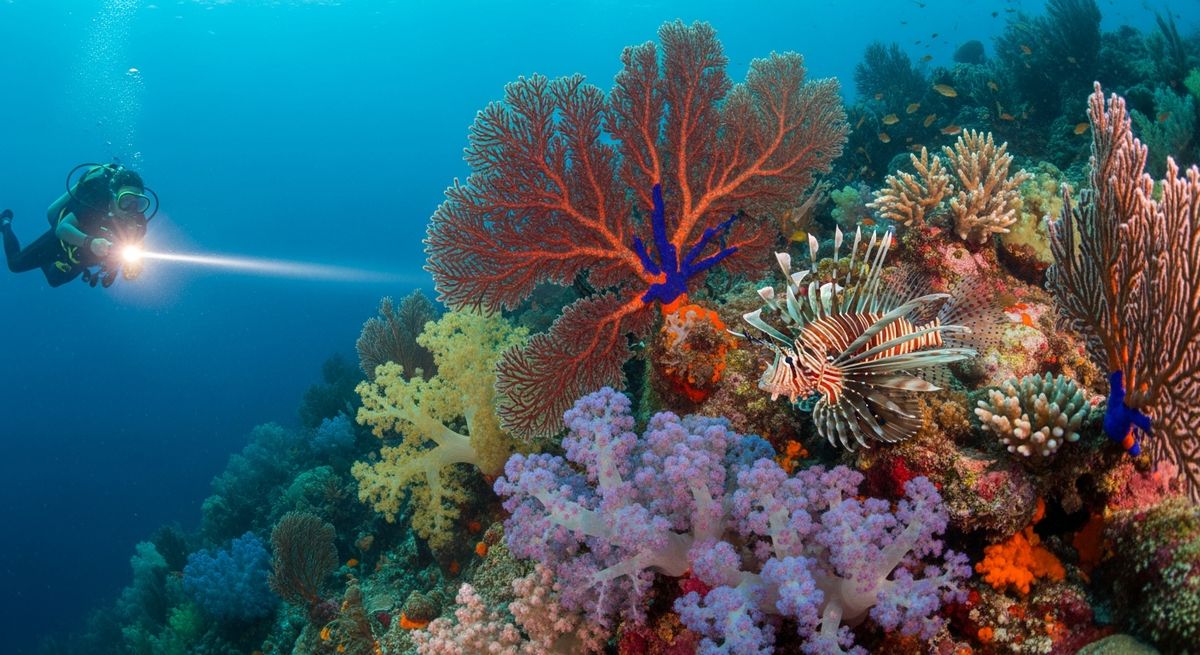
Flintstones is our pick when we're around Virgin Gorda and fancy something a bit different. It’s a jumble of massive boulders, like a giant spilled a bag of rocks, and we love drifting through the natural swim-throughs and around the formations. You’re never really deep, maybe 19 metres at most, but the action is all about those nooks and crannies. Bring a good torch, because every overhang and small cave could hold a Green Finger Sponge or a shy Onestripe Eel. We often spot Eyed Flounder perfectly camouflaged on the sand patches between the rocks, and there are always plenty of Sharpnose Pufferfish darting about. Keep an eye out for the smaller stuff too; we’ve found American Crested Pipefish tucked away in the weed. Visibility averages 12 metres, which is decent enough to appreciate the scale of the rocks as you glide past. This site is excellent for divers who enjoy exploring structure and have an eye for the smaller, more unusual reef residents.
Nearest Dive Centres to Flintstones
Dive shops near Flintstones
View all dive centres in Virgin Gorda & AnegadaReviews for Flintstones
Conditions
Ocean conditions, forecast and tides for Flintstones
Flintstones Ocean Conditions
Monthly averages for Flintstones, sourced from Open-Meteo marine data - nearest station: Open-Meteo marine grid (18.5, -64.42) (5km away)
October Averages
Sea Temperature
30°C
86°F · Range: 29.1–31.1°C
Air Temperature
28°C
83°F
Wind Speed
7.66 m/s
14.9 knots
Atmospheric Pressure
1013.1 hPa
Based on 4 years of monitoring data · Data sources: Open-Meteo marine data
Plan & book
Ways to dive Virgin Gorda & Anegada, from day trips to liveaboards.
Day trips & courses
via GetYourGuideGuided dives, courses and snorkel trips with instant booking.
Find dive trips in Virgin Gorda & AnegadaPlaces to stay
via Booking.comHotels and dive resorts near Virgin Gorda & Anegada.
Search stays in Virgin Gorda & AnegadaDive insurance
Most travel insurance excludes or limits scuba. Check what you need before you go.
Dive insurance explainedPartner links: we may earn a commission if you book, at no extra cost to you. How we make money
Where to Stay near Flintstones
Prices from Booking.com. We may earn a commission at no extra cost to you.