Diving in Virgin Gorda & Anegada
Why dive here
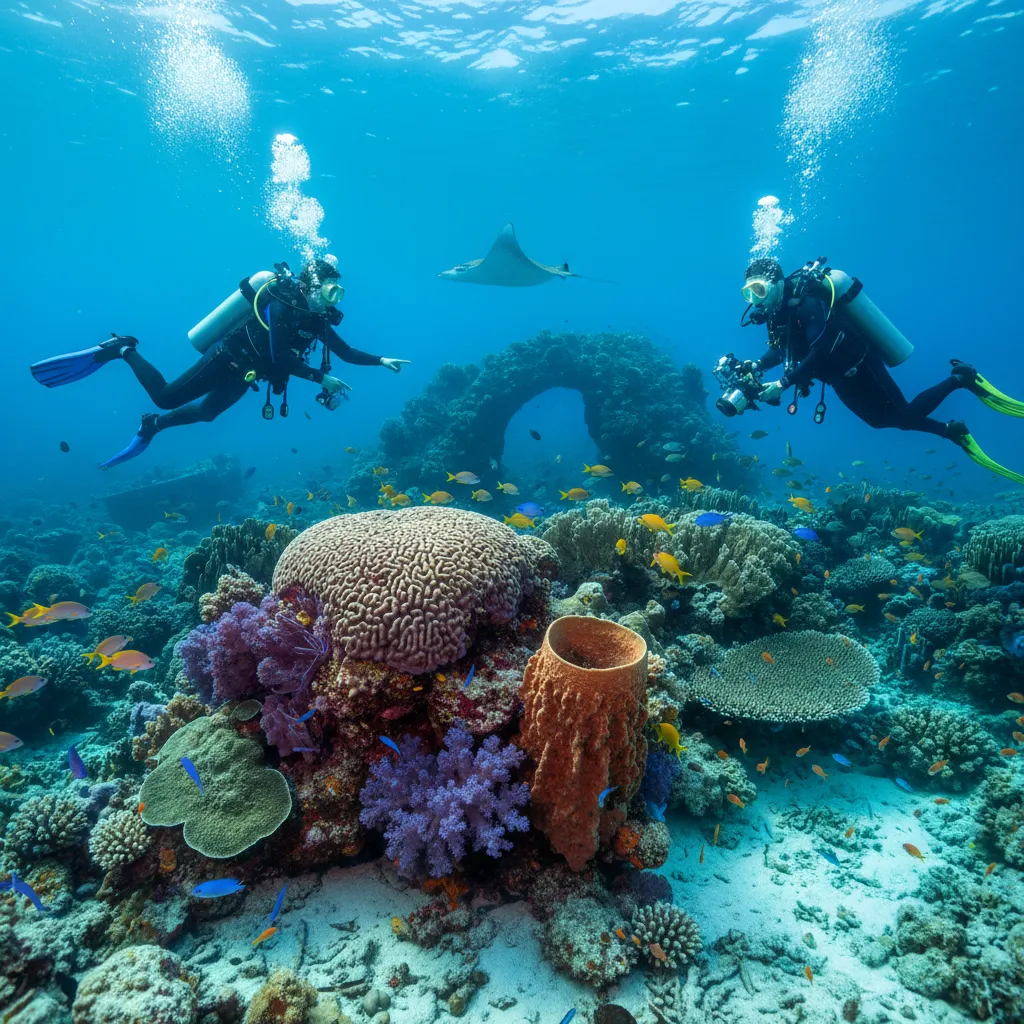
Virgin Gorda & Anegada offers some of British Virgin Islands's richest diving, with 449+ marine species recorded in the area - including barracuda, blacktip reef sharks, dolphins, dwarf minke whales and eagle rays. Water ranges 27-30°C, warmest August, September, October.
Virgin Gorda and Anegada offer a split personality to BVI diving, and we love them both for different reasons. Virgin Gorda’s dive sites often mirror its famous Baths, with impressive granite boulders creating swim-throughs and canyons underwater. It feels like navigating a submerged labyrinth, with schools of grunts and snappers congregating in the shadowy pockets. Our favourite moments here involve just hovering in those sun-dappled corridors, watching the light play on the rock faces. Anegada, by contrast, is all about the Horseshoe Reef, a sprawling, shallow barrier reef that’s unlike anything else in the Caribbean. We’d suggest dedicating a full day, maybe even two, to Anegada if you can swing it. The currents here can be a lively drift, carrying you past huge brain corals and vibrant sponges where you’ll spot clown wrasse and longfin blennies darting in and out. It’s a completely different rhythm of diving, a wide-open feel compared to Virgin Gorda's more intimate geology. Visibility is usually solid, often pushing past 20 meters, making those long drifts particularly enjoyable. Just keep an eye on your depth here, as it can be easy to get distracted by the sheer scale of the reef.
Virgin Gorda & Anegada Dive Site Map
Dive sites and dive centres in Virgin Gorda & Anegada
Virgin Gorda & Anegada Dive Sites
22 dive sites in Virgin Gorda & Anegada
Anegada
Anegada is a bit of a journey out, but that’s part of its charm. You’re trading crowds for quiet, and the reefs here definitely benefit from it. We’ve found some really healthy coral formations, especially along the outer edges of Horseshoe Reef. Visibility can be excellent, and you'll often see schools of snapper and grunt, plus a good chance of spotting a cruising eagle ray or a sleepy nurse shark tucked under a ledge. It’s perfect for divers who appreciate a more untouched feel and don't mind the extra boat ride.
ANNE E. ANDERSON
The Anne E. Anderson, she's a proper little time capsule, sitting upright in about five metres of water just off Mountain Point. We love this site for its sheer accessibility and the sense of history it offers, all without needing to go deep. You’re essentially swimming around a century-old schooner that sank back in 1894, and it’s remarkable how much of her wooden hull is still intact. What you'll experience here is a gentle drift over her deck, watching parrotfish nibble at the growth, and sometimes we spot a curious barracuda eyeing us from the bow. The shallow depth means sunlight penetrates everything, illuminating the details of her ribs and the vibrant sponges now clinging to her. It’s perfect for a relaxed dive, a long snorkel, or even a try-dive, and our favourite time to visit is mid-morning before any wind picks up, when the water is often like glass. This isn't a site for big pelagics, but for an intimate look at a wreck and the small reef fish that call it home, it’s spot on.
Bronco Billy
Bronco Billy, off George Dog, is one of those spots we always try to hit when we're in the BVI. It’s got these fantastic boulder formations, a real geological jumble, that create channels and overhangs, almost like a miniature labyrinth. We love drifting through the colourful canyon, where the sunlight plays off the rocks, revealing all sorts of creatures tucked into crevices. Keep an eye out for sharpnose pufferfish peeking from under ledges and plenty of blennies darting around. It’s a shallower site, maxing out around 13 metres, so it’s a perfect multi-level dive and great for photographers who want to spend time hunting for macro life. We’d suggest going early to catch the best light filtering through the rocks. The visibility here is usually very good, around 16 metres, making it easy to spot even the tiniest ruby brittle stars clinging to the rocks. It’s a site that rewards a slow pace, letting you really appreciate the intricate details of the reef.
Bronco Billy
Bronco Billy, off George Dog, is one of those spots we always try to hit when we're in the BVI. It’s got these fantastic boulder formations, a real geological jumble, that create channels and overhangs, almost like a miniature labyrinth. We love drifting through the colourful canyon, where the sunlight plays off the rocks, revealing all sorts of creatures tucked into crevices. Keep an eye out for sharpnose pufferfish peeking from under ledges and plenty of blennies darting around. It’s a shallower site, maxing out around 13 metres, so it’s a perfect multi-level dive and great for photographers who want to spend time hunting for macro life. We’d suggest going early to catch the best light filtering through the rocks. The visibility here is usually very good, around 16 metres, making it easy to spot even the tiniest ruby brittle stars clinging to the rocks. It’s a site that rewards a slow pace, letting you really appreciate the intricate details of the reef.
CAPTAIN ROKOS (ROCUS)
The Captain Rokos is a proper old-school wreck, no mucking about. She was a steamship, went down in 1931, and what’s left of her sits in just 5 metres of water, spread out across the seabed. It’s an easy dive, barely a swim really, but fascinating because you’re looking at history. You can trace the outline of her hull, pick out ribs and plating, and the prop shaft is still visible, which we think is pretty cool. Over the decades, the ocean has taken over. We love spotting the resident parrotfish nibbling algae off the metal, and nurse sharks sometimes snooze under the larger sections. Schools of snapper often hold tight to the superstructure. Because it's so shallow, you get fantastic light penetration, making it a great spot for photographers and really long bottom times. It’s a perfect chill-out dive, especially if you’ve had a few days of deeper, more demanding sites. Our favourite time to visit is mid-morning, before any strong thermals might stir up the sand a bit.
CHIKUZEN
The Chikuzen is a classic for a reason. This 74-meter steel trawler, sunk after a fire back in '81, lies flat on a sandy bottom at 23 meters. It's not a complicated wreck penetration, but that’s part of its charm. You can swim the whole length, admiring the sheer scale of it, the bow and stern still largely intact. What we love about the Chikuzen is the sheer volume of fish. We're talking tarpon that shadow you, nurse sharks lounging under ledges, and schools of horse-eye jacks so thick they dim the light. On a good day, the visibility can be 20 meters, letting you see the whole ship from above. It’s a photographer’s dream, particularly with the sun glinting off the metal and the fish swirling. Our tip: go slow, particularly around the mast and the bridge section. That’s where the bigger critters often hang out. This site is a proper Caribbean wreck dive, raw and unadorned, perfect for divers who appreciate history and an abundance of marine life.
Chimney
The Chimney, tucked away in the Dog Islands, feels a bit like a secret handshake among divers. We love this site for its playful topography, a real contrast to some of the deeper, more serious walls in the BVI. Dropping down, you’re greeted by this narrow slot, maybe two divers wide, that descends gently. Light filters down in shimmering shafts, illuminating schools of tiny silversides that flicker like scattered glitter. Our favourite part is navigating the actual 'chimney' itself, a vertical swim-through that starts at about 10 meters and opens out onto a sandy patch at 15 meters. It’s not a dark crawl, more like a natural skylight, and we often find ourselves pausing to watch the Red Clingfish clinging upside down to the rock, or spotting a shy Long-snout Seahorse camouflaged on the gorgonians. Keep an eye out for Dusky Jawfish peeking from their burrows in the sand flats just outside the main structure. It’s a site that suits divers who enjoy a bit of exploration and don't mind a leisurely pace; it's less about big pelagics and more about the smaller, intricate reef life. Bring a good torch to really bring out the vivid purples and oranges inside the crevices.
Coral Gardens, Great Dog, BVI
Coral Gardens, off Great Dog Island, is one of those places that completely reinvents itself. We remember it as a pleasant, if unremarkable, reef. Now, though, the additions here really make it shine. We’re talking about three airplane wrecks that have been cleverly configured to look like sharks, resting on the sandy bottom at around 14m. The whole setup has a wonderfully art-project feel, especially with "The Cathedral", an archway made from old mooring lines, now encrusted with sponges, that hovers gently in the water column. It’s an interesting contrast to the natural reef, and the marine life seems to love the new structures. We’ve spotted everything from curious barracudas patrolling the wing sections to shy garden eels poking their heads out of the sand nearby. Keep an eye out for the Red Clingfish, clinging to the corals, and the tiny Nine-lined goby tucked away. It’s a site that suits everyone, particularly those who appreciate a bit of creative flair mixed with their reef exploration. Visibility usually hovers around 17m, making for clear views of this evolving underwater landscape.
Corridors
Corridors has that classic BVI feel, a gentle slope of coral fingers reaching out towards the sand. We usually drop in around the ten-foot mark, letting the soft corals and sea fans just sway us down. It’s not a deep dive, maxing out around 16m, which means plenty of bottom time to really look for things. Our favourite part has to be the sandy patches where we often find stingrays just chilling, sometimes even an eagle ray gliding past in the blue. Keep an eye out for lobsters tucked away under coral heads and the sheer volume of staghorn coral on the way back towards the boat. It’s some of the healthiest we’ve seen in the area. Visibility averages around 11m, which is decent enough to appreciate the intricate coral structures and the schools of small reef fish flitting about. This site is brilliant for newer divers or those who just want a relaxing dive without strong currents. It’s a great spot to practice buoyancy and really enjoy the smaller stuff.
Flintstones
Flintstones is our pick when we're around Virgin Gorda and fancy something a bit different. It’s a jumble of massive boulders, like a giant spilled a bag of rocks, and we love drifting through the natural swim-throughs and around the formations. You’re never really deep, maybe 19 metres at most, but the action is all about those nooks and crannies. Bring a good torch, because every overhang and small cave could hold a Green Finger Sponge or a shy Onestripe Eel. We often spot Eyed Flounder perfectly camouflaged on the sand patches between the rocks, and there are always plenty of Sharpnose Pufferfish darting about. Keep an eye out for the smaller stuff too; we’ve found American Crested Pipefish tucked away in the weed. Visibility averages 12 metres, which is decent enough to appreciate the scale of the rocks as you glide past. This site is excellent for divers who enjoy exploring structure and have an eye for the smaller, more unusual reef residents.
Invisibles
The Invisibles off Virgin Gorda feels like a proper secret, even if it’s been on the maps for ages. Two pinnacles just punch up from the sand, shallowing right out to a couple of metres, then dropping to about 19m. We love the feeling of swimming around these structures, especially when the light hits just right and the corals on the top glow. It’s a good spot for Nassau grouper, and we often spot big schools of grunts and bar jacks swirling around the rocks – you get that Pacific vibe with the sheer volume of fish, but with clear Caribbean water. Our favourite part is always the end of the dive, navigating under that huge rock formation that genuinely looks like a frozen wave. It’s a tight squeeze in some spots, so good buoyancy is key, but the payoff is worth it. Look for lobsters tucked into the crevices. Invisibles is a fantastic site for anyone who appreciates dramatic topography and plenty of fish action, a rewarding dive for those comfortable with shallow navigation around rock formations.
Kodiak Queen
The Kodiak Queen is a proper art project, and we love it. This isn't just another sunken ship; it's a former WWII tanker, a real survivor, that’s been transformed into an artificial reef and marine sculpture. It sits upright at 15 metres, shallow enough for comfortable no-decompression dives, and it's absolutely bristling with life. What makes it so special? Well, aside from the history, there are the massive kraken-like art installations wrapped around its bow and stern. These structures are now home to schools of snapper and barracuda that glide through the metal arms. You can swim through the open cargo holds, seeing the light filter down from the surface, and peer into smaller compartments where angelfish flit about. The sheer scale is impressive, and the transformation from war relic to vibrant habitat is truly something to witness. It suits divers who appreciate a blend of history, art, and thriving marine ecosystems. We’d suggest a morning dive here; the light penetration is just beautiful.
Show all 22 dive sites in Virgin Gorda & Anegada
Virgin Gorda & Anegada Dive Centres
2 dive shops and operators in Virgin Gorda & Anegada
Ocean Wildlife in Virgin Gorda & Anegada
449 species recorded in Virgin Gorda & Anegada
Virgin Gorda & Anegada Daylight & Sunrise/Sunset
Sunrise and sunset times for Virgin Gorda & Anegada, calculated from coordinates
Today - Sunday 11 October
Sunrise
06:11
Sunset
18:00
Daylight
11h 49m
Golden Hour
17:31
First light (dawn) at 05:49 · Last light (dusk) at 18:22
Monthly Averages
| Month | Sunrise | Sunset | Daylight |
|---|---|---|---|
| Jan | 06:53 | 18:01 | 11h 8m |
| Feb | 06:47 | 18:19 | 11h 32m |
| Mar | 06:28 | 18:28 | 12h 0m |
| Apr | 06:02 | 18:35 | 12h 33m |
| May | 05:45 | 18:44 | 12h 59m |
| JunLongest | 05:42 | 18:56 | 13h 14m |
| Jul | 05:50 | 18:58 | 13h 9m |
| Aug | 06:00 | 18:47 | 12h 47m |
| Sep | 06:06 | 18:22 | 12h 16m |
| OctNow | 06:12 | 17:57 | 11h 45m |
| Nov | 06:25 | 17:41 | 11h 17m |
| DecShortest | 06:42 | 17:44 | 11h 2m |
Times are approximate local times based on longitude. Actual times may vary slightly depending on the exact timezone observed in Virgin Gorda & Anegada.
Where to Stay near Virgin Gorda & Anegada
Prices from Booking.com. We may earn a commission at no extra cost to you.
Marine Protected Areas near Virgin Gorda & Anegada
52 protected areas near Virgin Gorda & Anegada - please respect local regulations when diving
Horseshoe Reef
Virgin Gorda
Virgin Gorda north
The Dogs
Virgin Gorda South
Dead Chest Island
Anegada Island
Tobagos
Anegada west
Peter Island
Green Cay, Sandy Cay, Sandy Spit
Tortola
Showing 12 largest of 52
Getting to Virgin Gorda & Anegada
Spanish Town
Beef Island
Charlotte Amalie
Plan & book
Ways to dive Virgin Gorda & Anegada, from day trips to liveaboards.
Day trips & courses
via GetYourGuideGuided dives, courses and snorkel trips with instant booking.
Find dive trips in Virgin Gorda & AnegadaPlaces to stay
via Booking.comHotels and dive resorts near Virgin Gorda & Anegada.
Search stays in Virgin Gorda & AnegadaDive insurance
Most travel insurance excludes or limits scuba. Check what you need before you go.
Dive insurance explainedPartner links: we may earn a commission if you book, at no extra cost to you. How we make money