Jan Thiel baai
Protected Area
Spanish Water Inner Bay Park
Why dive here
With 310+ marine species recorded in the area - including barracuda, octopuses, orcas, sea turtles and sperm whales - Jan Thiel baai offers some of Curaçao Southeast's richest wreck diving. Water ranges 27-30°C, warmest September, October, November.
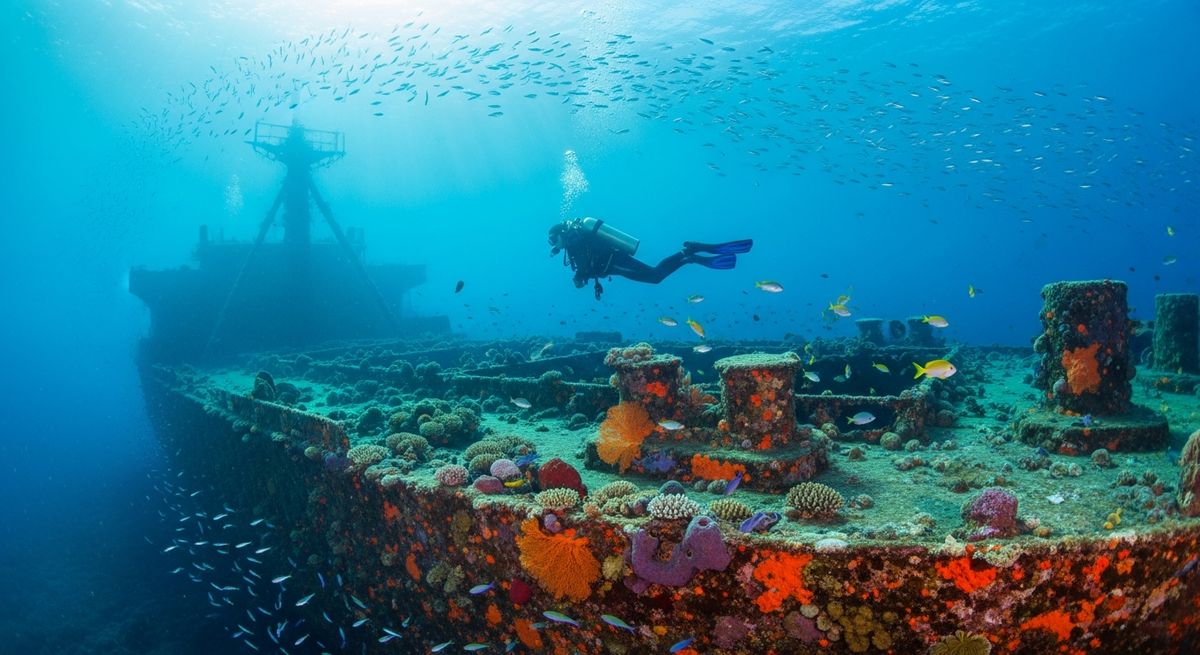
Jan Thiel baai feels different from a lot of Curaçao's shore dives. You're right off a busy beach, which means easy entry but also more activity topside. Below the surface, it’s a surprisingly good spot for a relaxed dive, especially if you've got family waiting. The star here is definitely the wreck, a small tugboat we think, sitting upright on the sandy bottom at about 10-12m. It’s got an open wheelhouse you can poke your head into, and we always find a good few Orangespotted Filefish darting around its superstructure. What we really love about Jan Thiel is the sandy bottom around the wreck. It's not just barren; spend some time looking closely and you’ll spot movement. We’ve had excellent luck finding gobies, particularly the Bridled and Smallmouth, peering out from their little burrows. Keep an eye out for Green Razorfish burying themselves in the sand with a flick of a tail if you get too close. There’s also an artificial platform nearby that acts as another little habitat, attracting everything from Slippery Dicks to juvenile Doctorfish. This site suits divers looking for an easy, no-fuss wreck dive, with a focus on smaller, sand-dwelling critters that often get overlooked on the big reef dives.
Safety Notes
Wreck site - avoid penetration without wreck diving certification. Watch for sharp metal and entanglement hazards.
Nearest Dive Centres to Jan Thiel baai
Dive shops near Jan Thiel baai
Dive Center Scuba Do
Papagayo Beach
Jan Thiel Diving
Curious 2 Dive N.V.
Ocean Encounters
BLVD Divers
Reviews for Jan Thiel baai
Conditions
Ocean conditions, forecast and tides for Jan Thiel baai
Jan Thiel baai Ocean Conditions
Monthly averages for Jan Thiel baai, sourced from Open-Meteo marine data + Copernicus Marine (EU) - nearest station: Open-Meteo marine grid (12.15, -68.97) (2km away)
October Averages
Sea Temperature
30°C
86°F · Range: 29.4–31.4°C
Current Speed
3.61 cm/s
Direction: NW (326.3°)
Chlorophyll-a
0.068 mg/m³
Very clear (oligotrophic)
Salinity
34.91 PSU
Based on 4 years of monitoring data · Data sources: Open-Meteo marine data + Copernicus Marine (EU)
Plan & book
Ways to dive Curaçao Southeast, from day trips to liveaboards.
Day trips & courses
via GetYourGuideGuided dives, courses and snorkel trips with instant booking.
Find dive trips in Curaçao SoutheastPlaces to stay
via Booking.comHotels and dive resorts near Curaçao Southeast.
Search stays in Curaçao SoutheastDive insurance
Most travel insurance excludes or limits scuba. Check what you need before you go.
Dive insurance explainedPartner links: we may earn a commission if you book, at no extra cost to you. How we make money
Where to Stay near Jan Thiel baai
Prices from Booking.com. We may earn a commission at no extra cost to you.