Parasasa Beach / Crash Site
Protected Area
Spanish Water Inner Bay Park
Why dive here
With 310+ marine species recorded in the area - including barracuda, octopuses, orcas, sea turtles and sperm whales - Parasasa Beach / Crash Site offers some of Curaçao Southeast's richest reef diving. Water ranges 27-30°C, warmest September, October, November.
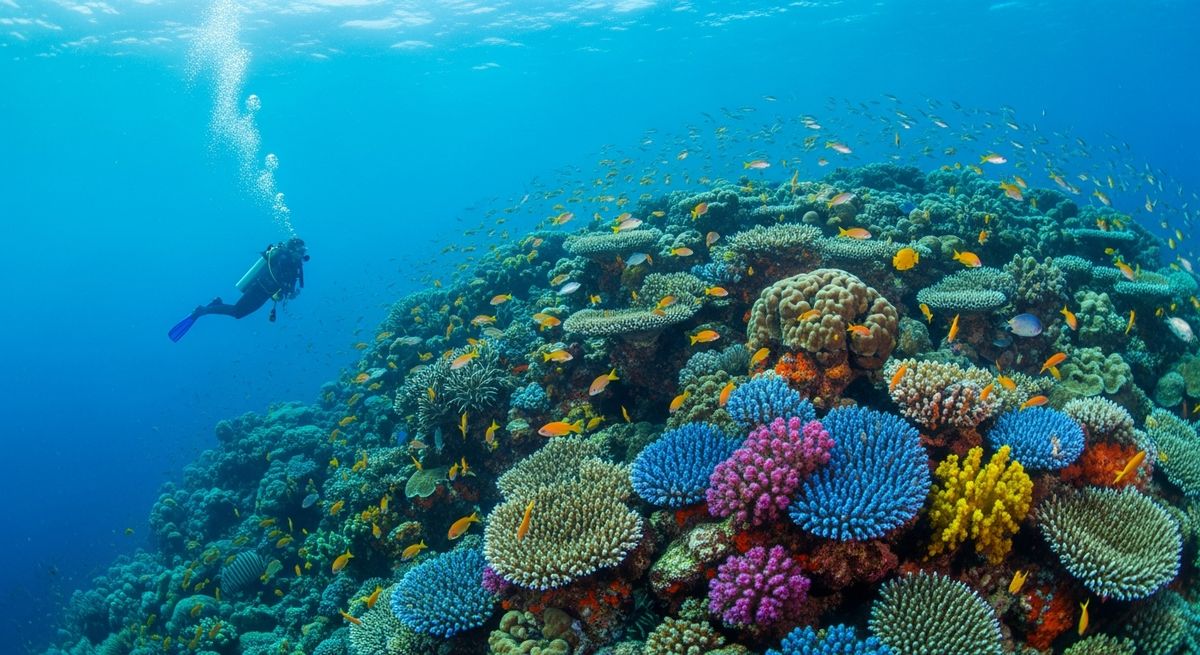
Parasasa Beach, or the Crash Site as most divers know it, always delivers a relaxed afternoon dive, especially if you’re staying nearby. It’s an easy entry right off the beach, and you’re quickly on the sand slope leading out to the small aircraft wreckage. We love how the Kingfisher plane, ditched from the torpedoed USS Erie back in ‘42, feels like a forgotten toy on the seafloor. You can poke around the bent propeller and remnants of the fuselage, which are now completely encrusted. Look closely and you’ll find camouflaged Pacific spotted scorpionfish hunkering down, or maybe a curious hogfish nosing through the debris. The maximum depth of 18m makes it perfect for a long bottom time, letting you really soak in the details. Keep an eye out for hawksbill turtles gliding past; we often see them here. While the main ship is long gone, the plane provides a surprisingly intimate piece of history with plenty of critters to keep you engaged.
Typical Parasasa Beach / Crash Site Dive Profile
Illustrative profile based on site depth and type. Actual dive profiles vary - always follow your dive computer and training.
Safety Notes
Always perform a 3-minute safety stop at 5m before surfacing.
Nearest Dive Centres to Parasasa Beach / Crash Site
Dive shops near Parasasa Beach / Crash Site
THE DIVESHOP
The Little Green Boat
Groove Diving
Blue Bay Dive and Watersports
ResQpro
ELITE DIVING CURACAO
Reviews for Parasasa Beach / Crash Site
Conditions
Ocean conditions, forecast and tides for Parasasa Beach / Crash Site
Parasasa Beach / Crash Site Ocean Conditions
Monthly averages for Parasasa Beach / Crash Site, sourced from Open-Meteo marine data + Copernicus Marine (EU) - nearest station: Open-Meteo marine grid (12.15, -68.97) (2km away)
October Averages
Sea Temperature
30°C
86°F · Range: 29.4–31.4°C
Current Speed
3.61 cm/s
Direction: NW (326.3°)
Chlorophyll-a
0.068 mg/m³
Very clear (oligotrophic)
Salinity
34.91 PSU
Based on 4 years of monitoring data · Data sources: Open-Meteo marine data + Copernicus Marine (EU)
Plan & book
Ways to dive Curaçao Southeast, from day trips to liveaboards.
Day trips & courses
via GetYourGuideGuided dives, courses and snorkel trips with instant booking.
Find dive trips in Curaçao SoutheastPlaces to stay
via Booking.comHotels and dive resorts near Curaçao Southeast.
Search stays in Curaçao SoutheastDive insurance
Most travel insurance excludes or limits scuba. Check what you need before you go.
Dive insurance explainedPartner links: we may earn a commission if you book, at no extra cost to you. How we make money
Where to Stay near Parasasa Beach / Crash Site
Prices from Booking.com. We may earn a commission at no extra cost to you.