St. Marie Reef
Protected Area
Shete Boka Park
Why dive here
With 310+ marine species recorded in the area - including barracuda, octopuses, orcas, sea turtles and sperm whales - St. Marie Reef offers some of Curaçao Southeast's richest wreck diving. Water ranges 27-30°C, warmest September, October, November.
St. Marie Reef, down on Curaçao's southeast coast, is one of those spots we always look forward to. It’s a proper wall dive, starting shallow and dropping to a healthy 40 meters, though we tend to spend most of our time above 20m. You’ll check in at the local dive school at Coral Estate, which keeps things organized. What we really love here is the sheer density of life clinging to the wall. Keep an eye out for the smaller stuff – Nodulose Miters tucked into crevices, and those striking Spotted Lanternfish hanging out in shaded areas. We've often seen Hawksbill Turtles cruising the reef edge, and the schools of Surgeonfish can be so thick they almost block out the sun in the shallows. The corals, particularly the Rose Coral and Lettuce Coral, are thriving. We'd suggest going early; the light hitting the wall creates some beautiful contrasts. This site is great for divers who appreciate a healthy reef with a good mix of macro and pelagic encounters, without being too challenging.
Typical St. Marie Reef Dive Profile
Illustrative profile based on site depth and type. Actual dive profiles vary - always follow your dive computer and training.
Safety Notes
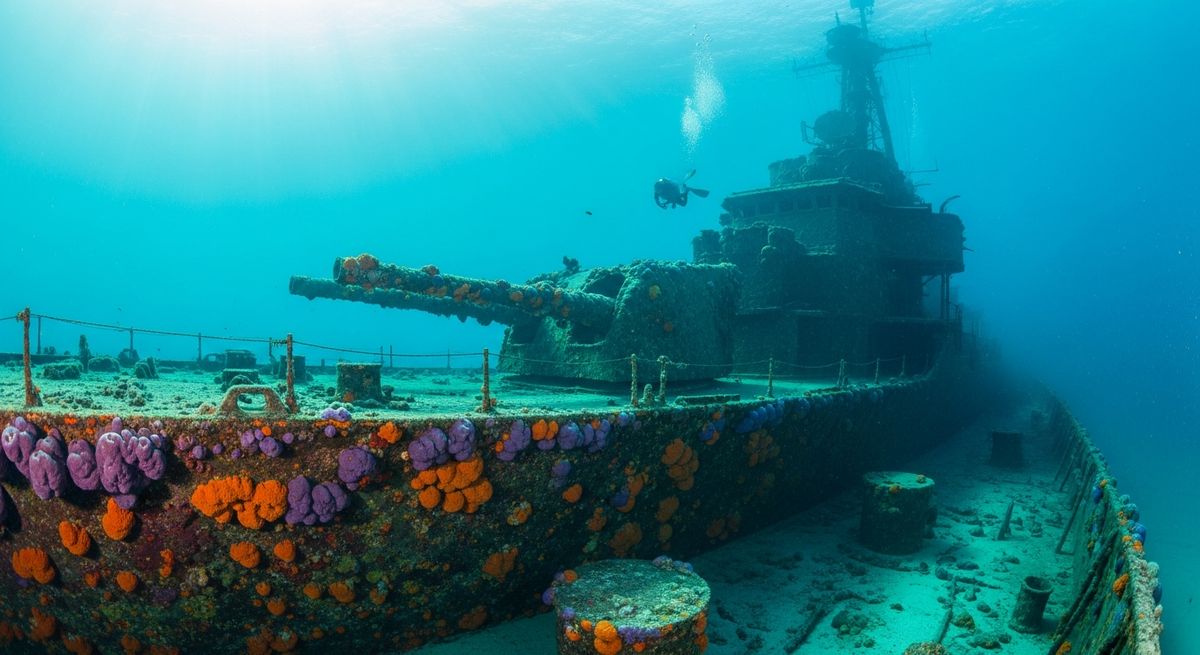
Wreck site - avoid penetration without wreck diving certification. Watch for sharp metal and entanglement hazards.
Nearest Dive Centres to St. Marie Reef
Dive shops near St. Marie Reef
Coral Divers Curacao
Divers Republic
Porto Mari Dive Center
Relaxed Guided Dives
Duikstudio Leon
Curaçao Divers
Reviews for St. Marie Reef
Conditions
Ocean conditions, forecast and tides for St. Marie Reef
St. Marie Reef Ocean Conditions
Monthly averages for St. Marie Reef, sourced from Open-Meteo marine data + Copernicus Marine (EU) - nearest station: Open-Meteo marine grid (12.15, -68.97) (2km away)
October Averages
Sea Temperature
30°C
86°F · Range: 29.4–31.4°C
Current Speed
3.61 cm/s
Direction: NW (326.3°)
Chlorophyll-a
0.068 mg/m³
Very clear (oligotrophic)
Salinity
34.91 PSU
Based on 4 years of monitoring data · Data sources: Open-Meteo marine data + Copernicus Marine (EU)
Plan & book
Ways to dive Curaçao Southeast, from day trips to liveaboards.
Day trips & courses
via GetYourGuideGuided dives, courses and snorkel trips with instant booking.
Find dive trips in Curaçao SoutheastPlaces to stay
via Booking.comHotels and dive resorts near Curaçao Southeast.
Search stays in Curaçao SoutheastDive insurance
Most travel insurance excludes or limits scuba. Check what you need before you go.
Dive insurance explainedPartner links: we may earn a commission if you book, at no extra cost to you. How we make money
Where to Stay near St. Marie Reef
Prices from Booking.com. We may earn a commission at no extra cost to you.