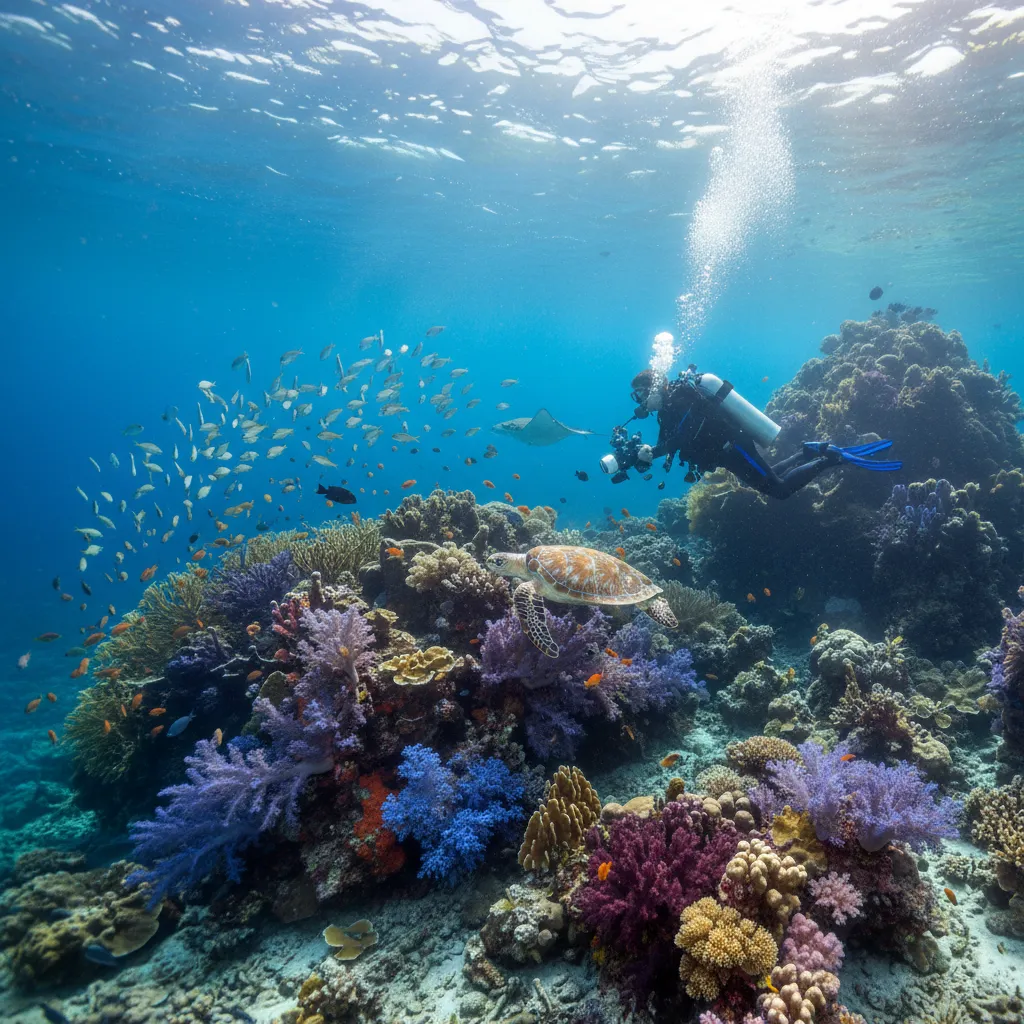
Diving in Tobago Cays
Why dive here
Tobago Cays offers some of St. Vincent & the Grenadines's richest diving, with 252+ marine species recorded in the area - including dolphins, humpback whales, nurse sharks, orcas and sea turtles. Water sits around 28°C.
Tobago Cays isn't about dive shops and crowded boats. It's about anchoring your own catamaran and rolling off the transom directly into the big blue. We love that freedom. The reef here, especially around Mayreau Gardens, feels genuinely untouched, dropping gently to about 15-20 meters. You can spend an entire afternoon finning alongside green turtles munching on seagrass, so close you can hear the crunch. We’ve seen schools of bluestriped grunt so thick they momentarily block out the sun, and the massive starlet corals are just enormous, like underwater apartment blocks. Our favourite is spotting the smaller stuff, though - a flat needlefish hanging motionless, or the elusive American pugnose pipefish tucked away. The currents are generally mild within the protected marine park, making it a dream for relaxed drift dives. Go in the morning before the day charter boats arrive; it’s just you and the fish. It’s an easy spot to fall in love with.
Tobago Cays Dive Site Map
Dive sites and dive centres in Tobago Cays
Tobago Cays Dive Sites
4 dive sites in Tobago Cays
FEDERAL QUEEN
The Federal Queen, just north of Mayreau in the Tobago Cays, isn't your usual massive wreck. This 9.8-meter sailing vessel sank back in 1968, and time has turned her into a scattered collection of ribs and hull plates. We love it for its simplicity and the way the reef has simply enveloped what's left. It’s a shallower wreck, usually around 20-30 meters, making it accessible for a longer bottom time, which we always appreciate. What you'll find here is less about penetration and more about exploring the nooks and crannies of the disintegrating wood. Look closely, because the structure is a magnet for juvenile fish – we've often spotted tiny drum fish hiding in the shadows and squadrons of sergeant majors darting through the remains. The soft corals and sponges have grown beautifully over everything, painting the old boat in shades of purple and orange. This site suits divers who enjoy a more relaxed pace and appreciate the smaller details, rather than those seeking a grand, intact wreck. It’s a peaceful dive, often with gentle currents, making it a perfect second dive of the day in the Cays.
HMS PURUNI
The HMS Puruni, sitting at a comfortable 9 meters, offers a gentle introduction to wreck diving. She was a trawler, pressed into service during WWI, and found her final resting place off Mayreau’s western point. What we love about the Puruni is her accessibility; no deep dives needed to explore her bones. You’ll find her relatively intact, especially the stern section, with a good chunk of the hull still standing proud from the sand. Swim through the open deck spaces, where schools of glassy sweepers shimmer in the shafts of sunlight. The prop is still there, too, often visited by curious trumpetfish. Look for the resident green moray eel that sometimes pokes its head from a pipe near the bow. We’d suggest going in the morning; the light plays beautifully off the structure, making for some excellent photo opportunities. There’s usually a gentle current, making for an easy drift along the wreck, but it rarely gets troublesome. This site is perfect for newer wreck divers or anyone looking for a relaxed dive with a bit of history.
Horseshoe Reef
Horseshoe Reef is a classic for a reason. Its calm, shallow water inside the lagoon feels like a giant, natural aquarium, making it our top pick for a relaxed afternoon drift. The max depth of 15m means more bottom time, and you’ll want it. We’ve spent hours here, just letting the gentle current carry us over the sandy patches and coral bommies. We especially love the sheer abundance of green sea turtles here. Seriously, you can spot them munching on seagrass almost everywhere you look. Look closely too, because among the waving gorgonians, you’ll often find Banded Blennies peering out, or the almost comical Shortnose Batfish waddling across the sand. On one dive, we even found a couple of Shy Brotulas tucked away in a crevice. It’s a gentle dive, perfect for beginners, or frankly, anyone who wants to just slow down and soak it all in. We always recommend going early in the morning before any crowds arrive; the light is softer and the reef feels truly yours.
Petit Tabac
Petit Tabac, for us, is all about that easy Caribbean drift. You drop in, usually somewhere north of the island, and the current just carries you gently along a sloping wall. It’s not a dramatic drop, more a coral-covered incline that bottoms out around 20 metres. We love how relaxed it feels, like the reef is putting on a show just for you as you glide past. You’ll spot plenty of blennies popping their heads out of coral, especially the Pearl and Redlip varieties. Keep an eye out for Dusky Flounder blending into the sand patches at the base of the wall, they’re masters of disguise. Nurse sharks are a frequent sight, usually snoozing under ledges, and we’ve often seen barracuda hanging motionless in the blue. It’s a site that really rewards a slow pace and a keen eye. Our favourite way to dive it is first thing in the morning before any other boats arrive. The light is softer then, and the reef feels quieter, more intimate. It’s perfect for intermediate divers who enjoy a low-effort, high-reward drift, offering great photo opportunities and a chance to really soak in the smaller details of a healthy Caribbean reef.
Tobago Cays Dive Centres
No dive centres listed in Tobago Cays yet. Browse all dive centres.
Ocean Wildlife in Tobago Cays
252 species recorded in Tobago Cays
Tobago Cays Daylight & Sunrise/Sunset
Sunrise and sunset times for Tobago Cays, calculated from coordinates
Today - Sunday 11 October
Sunrise
05:56
Sunset
17:51
Daylight
11h 55m
Golden Hour
17:22
First light (dawn) at 05:34 · Last light (dusk) at 18:12
Monthly Averages
| Month | Sunrise | Sunset | Daylight |
|---|---|---|---|
| Jan | 06:31 | 17:59 | 11h 27m |
| Feb | 06:29 | 18:12 | 11h 43m |
| Mar | 06:14 | 18:17 | 12h 2m |
| Apr | 05:54 | 18:18 | 12h 24m |
| May | 05:42 | 18:24 | 12h 42m |
| JunLongest | 05:41 | 18:32 | 12h 52m |
| Jul | 05:48 | 18:36 | 12h 48m |
| Aug | 05:54 | 18:28 | 12h 33m |
| Sep | 05:56 | 18:08 | 12h 13m |
| OctNow | 05:56 | 17:48 | 11h 52m |
| Nov | 06:04 | 17:37 | 11h 33m |
| DecShortest | 06:19 | 17:43 | 11h 23m |
Times are approximate local times based on longitude. Actual times may vary slightly depending on the exact timezone observed in Tobago Cays.
Where to Stay near Tobago Cays
Prices from Booking.com. We may earn a commission at no extra cost to you.
Marine Protected Areas near Tobago Cays
26 protected areas near Tobago Cays - please respect local regulations when diving
Tobago Cays-Mayreau MP/MR/Wildlife Reserve
Tobago Cays-Mayreau MP/MR/Wildlife Reserve
Union-Palm Island Marine Conservation Area
Canouan Marine Reserve / Marine Conservation Area
Mustique Marine Reserve
Bequia Marine Conservation Area
South Coast Marine Park
Isle Quatre Marine Reserve / Marine Conservation Area
Petit St. Vincent Wildlife Reserve
Battowia Island Wildlife Reserve
Petit Canouan Wildlife Reserve
Chateaubelair Islet Wildlife Reserve
Showing 12 largest of 26
Getting to Tobago Cays
Canouan
Kingstown
Saint George's
Plan & book
Ways to dive Tobago Cays, from day trips to liveaboards.
Day trips & courses
via GetYourGuideGuided dives, courses and snorkel trips with instant booking.
Find dive trips in Tobago CaysPlaces to stay
via Booking.comHotels and dive resorts near Tobago Cays.
Search stays in Tobago CaysDive insurance
Most travel insurance excludes or limits scuba. Check what you need before you go.
Dive insurance explainedPartner links: we may earn a commission if you book, at no extra cost to you. How we make money