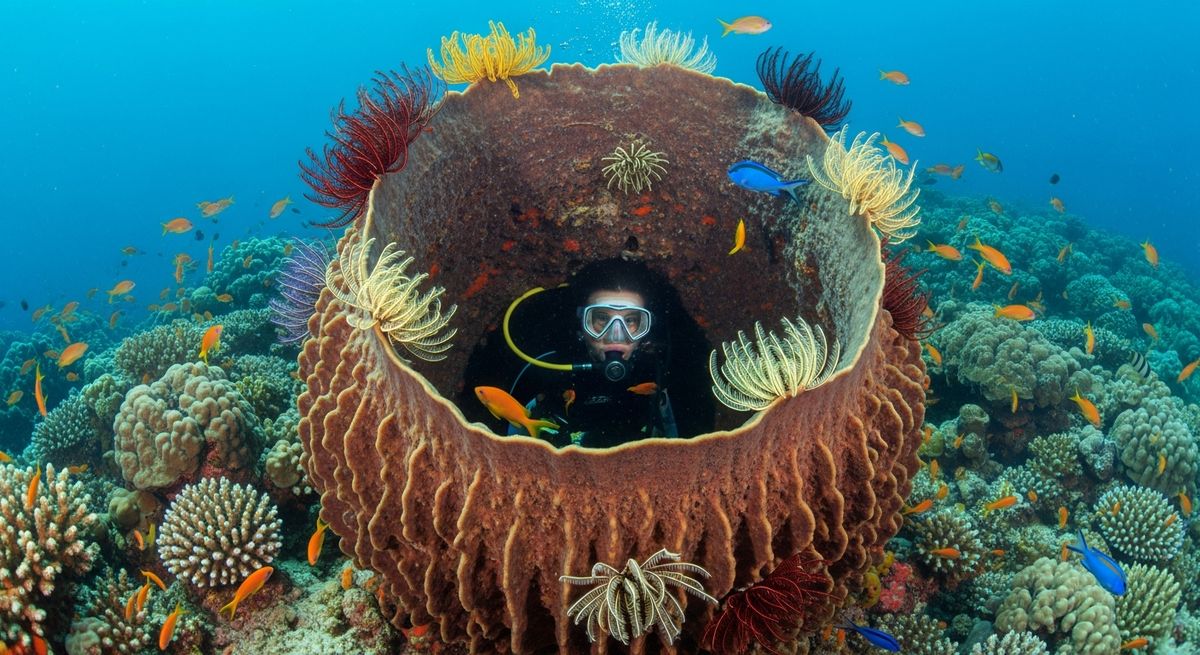
Horseshoe Reef
Protected Area
Tobago Cays-Mayreau MP/MR/Wildlife Reserve
Why dive here
With 252+ marine species recorded in the area - including dolphins, humpback whales, nurse sharks, orcas and sea turtles - Horseshoe Reef offers some of Tobago Cays's richest reef diving. Water ranges 27-30°C, warmest August, September, October.
Horseshoe Reef is a classic for a reason. Its calm, shallow water inside the lagoon feels like a giant, natural aquarium, making it our top pick for a relaxed afternoon drift. The max depth of 15m means more bottom time, and you’ll want it. We’ve spent hours here, just letting the gentle current carry us over the sandy patches and coral bommies. We especially love the sheer abundance of green sea turtles here. Seriously, you can spot them munching on seagrass almost everywhere you look. Look closely too, because among the waving gorgonians, you’ll often find Banded Blennies peering out, or the almost comical Shortnose Batfish waddling across the sand. On one dive, we even found a couple of Shy Brotulas tucked away in a crevice. It’s a gentle dive, perfect for beginners, or frankly, anyone who wants to just slow down and soak it all in. We always recommend going early in the morning before any crowds arrive; the light is softer and the reef feels truly yours.
Typical Horseshoe Reef Dive Profile
Illustrative profile based on site depth and type. Actual dive profiles vary - always follow your dive computer and training.
Reviews for Horseshoe Reef
Conditions
Ocean conditions, forecast and tides for Horseshoe Reef
Horseshoe Reef Ocean Conditions
Monthly averages for Horseshoe Reef, sourced from Open-Meteo marine data - nearest station: Open-Meteo marine grid (12.63, -61.35) (4km away)
October Averages
Sea Temperature
30°C
86°F · Range: 29–31.3°C
Air Temperature
28°C
83°F
Wind Speed
8.11 m/s
15.8 knots
Atmospheric Pressure
1011.6 hPa
Based on 4 years of monitoring data · Data sources: Open-Meteo marine data
Plan & book
Ways to dive Tobago Cays, from day trips to liveaboards.
Day trips & courses
via GetYourGuideGuided dives, courses and snorkel trips with instant booking.
Find dive trips in Tobago CaysPlaces to stay
via Booking.comHotels and dive resorts near Tobago Cays.
Search stays in Tobago CaysDive insurance
Most travel insurance excludes or limits scuba. Check what you need before you go.
Dive insurance explainedPartner links: we may earn a commission if you book, at no extra cost to you. How we make money
Where to Stay near Horseshoe Reef
Prices from Booking.com. We may earn a commission at no extra cost to you.