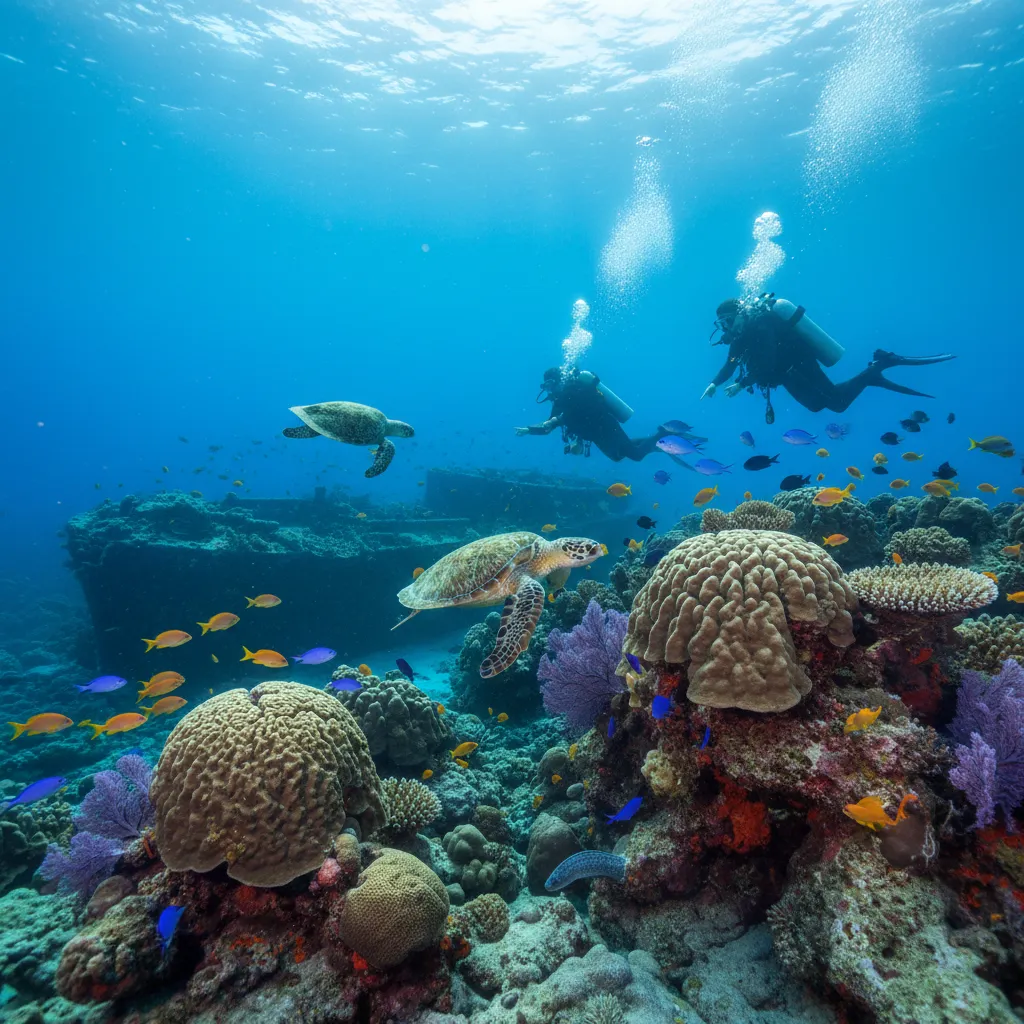
Diving in St. Croix
Why dive here
St. Croix offers some of US Virgin Islands's richest diving, with 458+ marine species recorded in the area - including barracuda, eagle rays, humpback whales, nurse sharks and oceanic whitetip sharks. Water sits around 27°C.
St. Croix offers some seriously compelling Caribbean diving. What we really love is the sheer variety for an island this size. You’ve got the famous wall, plunging dramatically off the north shore, and then the more gentle, sprawling reefs around Buck Island. The wall dives are often drift dives, and we’d suggest trying to get on an early boat to catch the wall waking up, before the bigger boats arrive. Visibility here is generally good, often pushing 25 meters, and the water stays bathtub warm all year. We've had fantastic encounters with trumpetfish hanging vertically, perfectly camouflaged, and the subtle beauty of orangeside gobies perched on corals. Keep an eye out for mimic blennies, they’re masters of disguise and a real treat if you spot one. The wreck of the Rosaomaira, or Butler Bay Wreck as it’s often called, is a fun penetration dive for those with the right certs, but even swimming over the top of it is cool. It’s got a classic Caribbean vibe, laid-back with proper dive ops. We’d recommend heading out to Buck Island for a snorkel or a shallow dive; the elkhorn coral formations are truly something special and often overlooked.
St. Croix Dive Site Map
Dive sites and dive centres in St. Croix
St. Croix Dive Sites
16 dive sites in St. Croix
Alien Nation
Alien Nation, sitting at 23m, is a solid introductory dive in St. Croix. It’s got that classic Caribbean vibe without being overly dramatic. We’ve found good numbers of schooling grunts here, often hanging out in the gentle current, and the occasional spotted drum flitting about. It's a nice easygoing spot, perfect if you’re looking to get comfortable in the water or just want a relaxed dive after a few more strenuous ones.
Armageddon
Armageddon offers an intermediate dive to 26 meters, suitable for those comfortable with deeper profiles. We found a healthy reef here, with plenty of small reef fish like grunts and snappers tucked into the nooks. Keep an eye out for green morays often spotted lurking in the coral heads. It’s a solid afternoon dive, straightforward and generally calm.
Butler Bay Wrecks
Butler Bay isn't just one wreck, it's a whole collection, practically stacked on top of each other, and that's why we love it. You’ve got a tugboat, a barge, and a couple of old trawlers, all sunk intentionally over the years to create an artificial reef. Our favourite is probably the Rosaomaira, the deepest at around 30 metres. Dropping down, you feel the cooler thermocline hit, then the silhouette of the wreck emerges, covered in rough cactus coral and home to big schools of margates. We've seen nurse sharks napping under the bow of the Suffolk Maid and trumpetfish posing for photos by the wheelhouse. The beauty of Butler Bay is its accessibility for a proper multi-wreck dive. The wrecks range from 10 to 30 metres, so you can spend your whole dive exploring different vessels. We'd suggest going on a calm morning, as the bay can get a bit surge-y in the afternoons, which makes navigating between them a little less enjoyable. It’s a site that suits intermediate divers who are comfortable with depth and want to spend some quality time exploring man-made structures that have become natural habitats. Keep an eye out for the smaller stuff too; banded blennies poke their heads from every crevice, and we've even spotted shortnose batfish walking on the sand nearby.
Cables
Cables is an easy dive to 19m, perfect for beginners or those wanting a relaxed second dive. You’ll find a sandy bottom with scattered coral heads and a surprising number of smaller creatures hiding amongst them. We’ve spotted plenty of juvenile reef fish here, along with the occasional queen conch making its way across the sand. It’s a gentle introduction to St. Croix’s shallower reefs.
Cane Bay Wall
Cane Bay Wall. It’s a name that gets a nod of recognition from pretty much any Caribbean diver, and for good reason. We’ve done this dive countless times, both by boat and shore, and it never disappoints. The immediate drop-off, just a short swim from the beach, is genuinely dramatic. One minute you’re finning over sandy flats and then, boom, a sheer face plummets into the blue. We often hit it early morning for the best light, casting incredible shadows down the wall. Look close in the overhangs for giant gobies, and we’ve spotted a few dusky blennies camouflaged against the sponges. The wall itself is riddled with crevices, perfect for French grunts to hide in during the day. Our favourite part? Drifting along at around 20-25 metres, watching ocean triggerfish zip by, and keeping an eye on the deep blue for Caribbean reef sharks. We've even been lucky enough to see swordfish pass through. Just remember, the wall goes *deep*, so keep an eye on your depth and bottom time. It’s an intermediate dive, mainly because of the potential for currents and the sheer verticality. This is definitely a spot for divers who appreciate dramatic topography and don't mind a bit of depth.
CUMULUS
Cumulus isn't your typical St. Croix dive, and we love that about it. This isn't a deep dive, not even close, topping out at a maximum of two metres. What it is, though, is a fantastic wreck for snorkelers and even freedivers looking to explore a piece of history right from the surface. The Cumulus, a motor vessel from 1959, went hard aground in 1977, carrying a cargo of construction equipment – think cranes, dump trucks, and a concrete pump. Today, those pieces of machinery are fused into a low-lying, broken-up hull. You'll see the skeletal remains of what was once a substantial ship. We particularly enjoy poking around the twisted metal, imagining the chaos as it settled. Schools of small grunts often shelter within the deeper pockets, and we've spotted some surprisingly colourful parrotfish grazing on the algae-covered structure. It's a shallow, sun-drenched site that’s perfect for a lazy afternoon; you can spend ages just floating above it, watching the light play on the rusting metal below. If you're looking for an easy, accessible wreck with a cool story, this is our pick.
Emerald Gardens St Croix USVI
Emerald Gardens is a good pick for a relaxed afternoon dive off St. Croix, particularly if you’re newer to the sport. The maximum depth of 23 meters keeps things comfortable, and we’ve found the conditions here generally very calm. We often spot green sea turtles munching on the seagrass beds near the reef’s edge, and the occasional southern stingray glides past. It’s a pleasant, easy dive, perfect for getting back in the water or for a less strenuous day.
Frederiksted Pier
The Frederiksted Pier. Ah, the pier. We have a real soft spot for this spot, especially after the sun goes down. During the day, it's a pleasant, easy dive, maxing out around 12 meters, perfect for those new to diving or just looking for a relaxed swim-through beneath the pylons. You'll definitely spot schools of Brown Chromis flitting between the Yellow Pencil Coral, and if you look closely, those shy Red Clingfish are often tucked away. But the night? That’s when the pier truly comes alive. The muck underfoot, which looks a bit plain by day, becomes a stage for critters you just don't see anywhere else. We’ve spent hours here, shining our lights into every crevice, hoping for a glimpse of a seahorse or an octopus stretching out a tentacle. The bioluminescence is something else, too; wave your hand in the dark and watch the water light up around you. It’s not your typical vibrant reef, and that’s precisely why we love it. It’s a slow, deliberate dive, rewarding patience with incredible, often tiny, finds. Ideal for photographers, muck diving enthusiasts, or anyone who wants a completely different kind of Caribbean dive.
King’s Alley
King’s Alley in St. Croix is a solid little shore dive, perfect if you’re looking for an easy entry and a relaxed pace. We tend to drop in and follow the sand channel that leads out to about 19 meters. You’ll usually find plenty of the usual Caribbean suspects here: parrotfish chomping on the reef, maybe a curious snapper or two peeking out from under a ledge. It’s not a place for big pelagics, but for a casual dive, perhaps a refresher, or just to stretch your fins, it works. Good for beginner divers who want to explore without any fuss.
King’s Corner
King's Corner in St. Croix is a solid choice for a relaxing afternoon dive. It’s got a comfortable depth, topping out around 23 meters, which makes it an easy run for newer divers or anyone just wanting to take it slow. You’ll drift past some nice coral formations here, with plenty of nooks and crannies for sergeant majors and parrotfish to hang out. We’ve often spotted eagle rays cruising by in the deeper sections, a real bonus if you catch them. It’s a good, straightforward dive, perfect for getting a feel for the Caribbean without any big surprises.
North Star
North Star sits on St. Croix’s north shore, a gentle sloping reef maxing out around 25m. We often find nurse sharks resting under ledges here, and the resident southern stingrays are usually easy to spot in the sand channels. It's a relaxed dive, perfect for newer divers looking for a straightforward Caribbean experience without strong currents.
Shallow Wrecks at Butler Bay
Butler Bay offers a relaxed introduction to wreck diving, with four distinct vessels resting in about 21 metres. We’re talking a tugboat, a barge, an old oil rig support vessel, and a small trawler. They're all pretty intact and close enough together for an easy swim-through. Keep an eye out for schooling jacks circling the mast of the tug, and plenty of squirrelfish hiding in the darker crevices. This site is ideal for newer divers looking to get comfortable exploring sunken structures without any strong currents or deep penetration.
Show all 16 dive sites in St. Croix
St. Croix Dive Centres
3 dive shops and operators in St. Croix
Ocean Wildlife in St. Croix
458 species recorded in St. Croix
St. Croix Daylight & Sunrise/Sunset
Sunrise and sunset times for St. Croix, calculated from coordinates
Today - Sunday 11 October
Sunrise
06:12
Sunset
18:02
Daylight
11h 50m
Golden Hour
17:33
First light (dawn) at 05:50 · Last light (dusk) at 18:24
Monthly Averages
| Month | Sunrise | Sunset | Daylight |
|---|---|---|---|
| Jan | 06:54 | 18:04 | 11h 10m |
| Feb | 06:48 | 18:21 | 11h 33m |
| Mar | 06:29 | 18:30 | 12h 1m |
| Apr | 06:05 | 18:36 | 12h 31m |
| May | 05:48 | 18:45 | 12h 57m |
| JunLongest | 05:45 | 18:56 | 13h 11m |
| Jul | 05:53 | 18:59 | 13h 6m |
| Aug | 06:03 | 18:47 | 12h 45m |
| Sep | 06:08 | 18:24 | 12h 16m |
| OctNow | 06:13 | 17:59 | 11h 46m |
| Nov | 06:25 | 17:44 | 11h 19m |
| DecShortest | 06:43 | 17:47 | 11h 5m |
Times are approximate local times based on longitude. Actual times may vary slightly depending on the exact timezone observed in St. Croix.
Where to Stay near St. Croix
Prices from Booking.com. We may earn a commission at no extra cost to you.
Marine Protected Areas near St. Croix
30 protected areas near St. Croix - please respect local regulations when diving
St. Croix East End Marine Park
Buck Island Reef National Monument
Virgin Islands Coral Reef National Monument
Virgin Islands Coral Reef
Virgin Islands National Park
Virgin Islands
St. Thomas East End R Reserve
St. James Marine Reserve and Wildlife Sanctuary
Buck Island Reef
Salt River Bay National Historic Park and Ecological Preserve
Cas Cay-Mangrove Lagoon Marine Reserve & Wildlife Sanctuary
Whistling Cay
Showing 12 largest of 30
Getting to St. Croix
Christiansted
Charlotte Amalie
Beef Island
Plan & book
Ways to dive St. Croix, from day trips to liveaboards.
Day trips & courses
via GetYourGuideGuided dives, courses and snorkel trips with instant booking.
Find dive trips in St. CroixPlaces to stay
via Booking.comHotels and dive resorts near St. Croix.
Search stays in St. CroixDive insurance
Most travel insurance excludes or limits scuba. Check what you need before you go.
Dive insurance explainedPartner links: we may earn a commission if you book, at no extra cost to you. How we make money