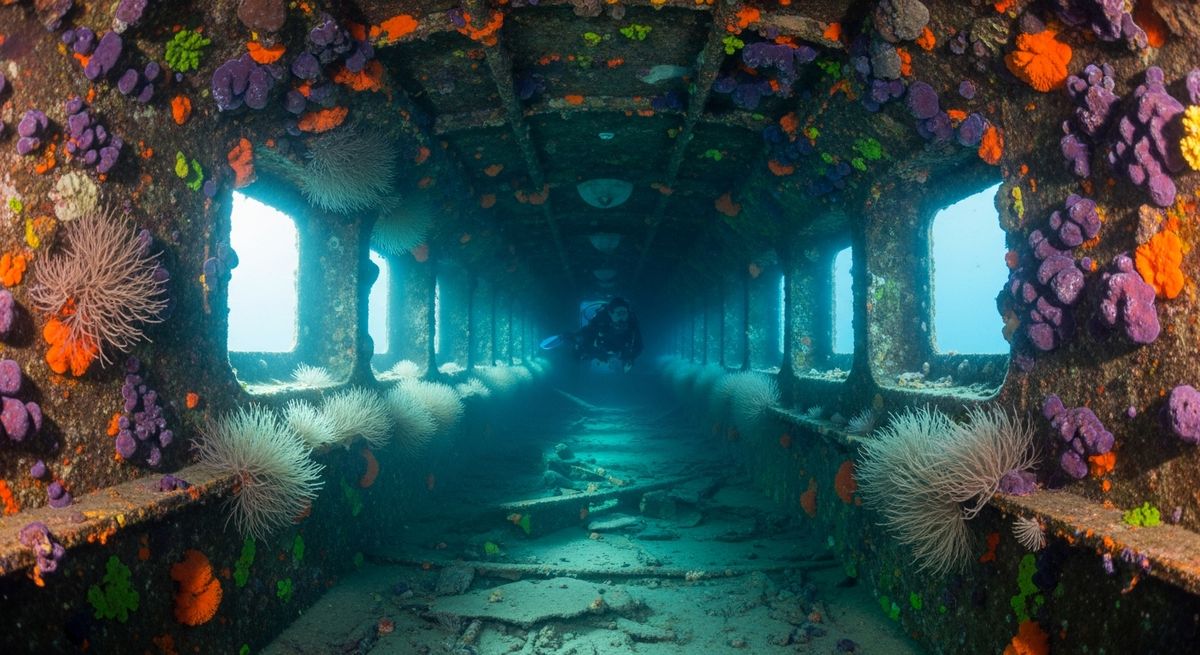
Butler Bay Wrecks
Protected Area
Salt River Bay National Historic Park and Ecological Preserve
Why dive here
With 458+ marine species recorded in the area - including barracuda, eagle rays, humpback whales, nurse sharks and oceanic whitetip sharks - Butler Bay Wrecks offers some of St. Croix's richest wreck diving. Water ranges 27-30°C, warmest August, September, October.
Butler Bay isn't just one wreck, it's a whole collection, practically stacked on top of each other, and that's why we love it. You’ve got a tugboat, a barge, and a couple of old trawlers, all sunk intentionally over the years to create an artificial reef. Our favourite is probably the Rosaomaira, the deepest at around 30 metres. Dropping down, you feel the cooler thermocline hit, then the silhouette of the wreck emerges, covered in rough cactus coral and home to big schools of margates. We've seen nurse sharks napping under the bow of the Suffolk Maid and trumpetfish posing for photos by the wheelhouse. The beauty of Butler Bay is its accessibility for a proper multi-wreck dive. The wrecks range from 10 to 30 metres, so you can spend your whole dive exploring different vessels. We'd suggest going on a calm morning, as the bay can get a bit surge-y in the afternoons, which makes navigating between them a little less enjoyable. It’s a site that suits intermediate divers who are comfortable with depth and want to spend some quality time exploring man-made structures that have become natural habitats. Keep an eye out for the smaller stuff too; banded blennies poke their heads from every crevice, and we've even spotted shortnose batfish walking on the sand nearby.
Typical Butler Bay Wrecks Dive Profile
Illustrative profile based on site depth and type. Actual dive profiles vary - always follow your dive computer and training.
Safety Notes
Wreck site - avoid penetration without wreck diving certification. Watch for sharp metal and entanglement hazards.
Butler Bay Wrecks Wreck History
Vessel Type
unknown
Cause
scuttled
Butler Bay on the west end of St. Croix is a veritable playground for wreck divers, often called a 'wreck graveyard' for the collection of vessels sunk in close proximity. This site isn't the result of a single maritime disaster, but rather a purpose-built artificial reef composed of five distinct wrecks, creating a unique and varied underwater landscape. The ships were intentionally scuttled over the years, some after being damaged beyond repair by hurricanes like Hugo in 1989.
Divers can explore a diverse fleet on a single trip. The lineup includes the Rosaomaira, a 176-foot freighter; the Coakley Bay, a large tugboat; the Suffolk Maid, a trawler; a retired oil refinery barge; and the Northwind, a former research vessel. They rest at depths ranging from a shallow 10 meters to a more advanced 30 meters, offering something for every experience level.
Today, these wrecks are teeming with life. Their steel hulls, now draped in vibrant corals and sponges, have become a bustling metropolis for schools of horse-eye jacks, barracuda, sea turtles, and the occasional reef shark. Exploring the swim-throughs of the Rosaomaira or circling the imposing wheelhouse of the Coakley Bay provides an unforgettable dive that perfectly blends maritime history with thriving marine biology.
Nearest Dive Centres to Butler Bay Wrecks
Dive shops near Butler Bay Wrecks
Nep2une Scuba Diving
Sweet Bottom Dive Center
St. Croix Ultimate Bluewater Adventures
Reviews for Butler Bay Wrecks
Conditions
Ocean conditions, forecast and tides for Butler Bay Wrecks
Butler Bay Wrecks Ocean Conditions
Monthly averages for Butler Bay Wrecks, sourced from Open-Meteo marine data - nearest station: Open-Meteo marine grid (17.75, -64.87) (1km away)
October Averages
Sea Temperature
30°C
86°F · Range: 29.1–31.2°C
Air Temperature
27°C
81°F
Wind Speed
5.97 m/s
11.6 knots
Atmospheric Pressure
1012.8 hPa
Based on 4 years of monitoring data · Data sources: Open-Meteo marine data
Plan & book
Ways to dive St. Croix, from day trips to liveaboards.
Day trips & courses
via GetYourGuideGuided dives, courses and snorkel trips with instant booking.
Find dive trips in St. CroixPlaces to stay
via Booking.comHotels and dive resorts near St. Croix.
Search stays in St. CroixDive insurance
Most travel insurance excludes or limits scuba. Check what you need before you go.
Dive insurance explainedPartner links: we may earn a commission if you book, at no extra cost to you. How we make money
Where to Stay near Butler Bay Wrecks
Prices from Booking.com. We may earn a commission at no extra cost to you.