Caye Caulker Marine Reserve
Protected Area
Caye Caulker
Why dive here
With 192+ marine species recorded in the area - including barracuda, dolphins, lemon sharks, nurse sharks and sea turtles - Caye Caulker Marine Reserve offers some of Ambergris Caye's richest reef diving. Water ranges 27-31°C, warmest August, September, October.
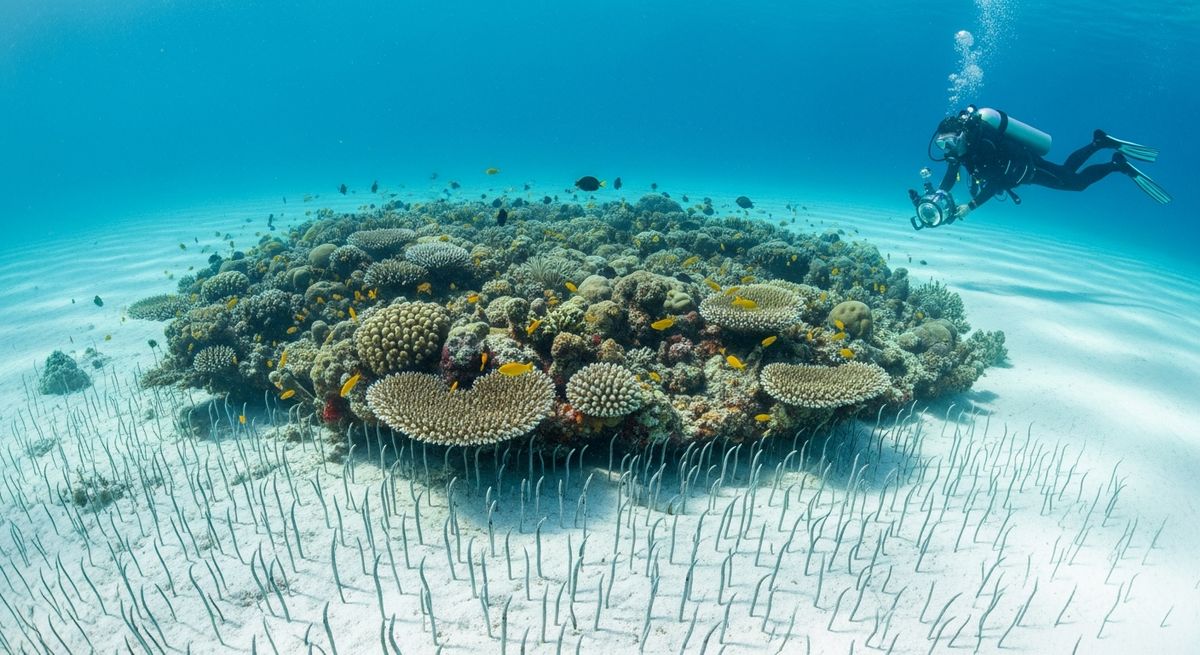
We usually head to Caye Caulker Marine Reserve when we want a relaxed dive with plenty to look at without having to work for it. It’s a shallow spot, topping out around 17 meters, which makes for long bottom times and great natural light. Sunlight filters through the water column, hitting big formations of great star coral and grooved brain coral, making them glow. We’ve had incredible luck with juvenile fish here – tiny blue doctorfish darting amongst the polyps, little hogfish hovering near the sand. It’s not a place for huge pelagics, though we did once spot a very curious barracuda following us for a good ten minutes. What you’ll find are healthy reefscapes, some impressive elkhorn, and a steady stream of Caribbean regulars like parrotfish and small groupers. We’d suggest this site for anyone looking for an easy, pleasant dive, maybe even a nice second dive after something deeper. Visibility is usually consistent, around 17 meters, which is plenty to soak in the details.
Typical Caye Caulker Marine Reserve Dive Profile
Illustrative profile based on site depth and type. Actual dive profiles vary - always follow your dive computer and training.
Nearest Dive Centres to Caye Caulker Marine Reserve
Dive shops near Caye Caulker Marine Reserve
Blue Dive Center
Belize Diving Services
Sunrise Scuba
Frenchie's Diving
Scuba Sensation
Suya Tours and Dive Center
Reviews for Caye Caulker Marine Reserve
Conditions
Ocean conditions, forecast and tides for Caye Caulker Marine Reserve
Caye Caulker Marine Reserve Ocean Conditions
Monthly averages for Caye Caulker Marine Reserve, sourced from Open-Meteo marine data + Copernicus Marine (EU) - nearest station: Open-Meteo marine grid (17.98, -87.92) (0km away)
October Averages
Sea Temperature
30°C
86°F · Range: 28.6–31.5°C
Current Speed
4 cm/s
Direction: N (0°)
Chlorophyll-a
0.045 mg/m³
Very clear (oligotrophic)
Salinity
35.42 PSU
Based on 4 years of monitoring data · Data sources: Open-Meteo marine data + Copernicus Marine (EU)
Plan & book
Ways to dive Ambergris Caye, from day trips to liveaboards.
Day trips & courses
via GetYourGuideGuided dives, courses and snorkel trips with instant booking.
Find dive trips in Ambergris CayePlaces to stay
via Booking.comHotels and dive resorts near Ambergris Caye.
Search stays in Ambergris CayeDive insurance
Most travel insurance excludes or limits scuba. Check what you need before you go.
Dive insurance explainedPartner links: we may earn a commission if you book, at no extra cost to you. How we make money
Where to Stay near Caye Caulker Marine Reserve
Prices from Booking.com. We may earn a commission at no extra cost to you.