Diving in Ambergris Caye
Why dive here
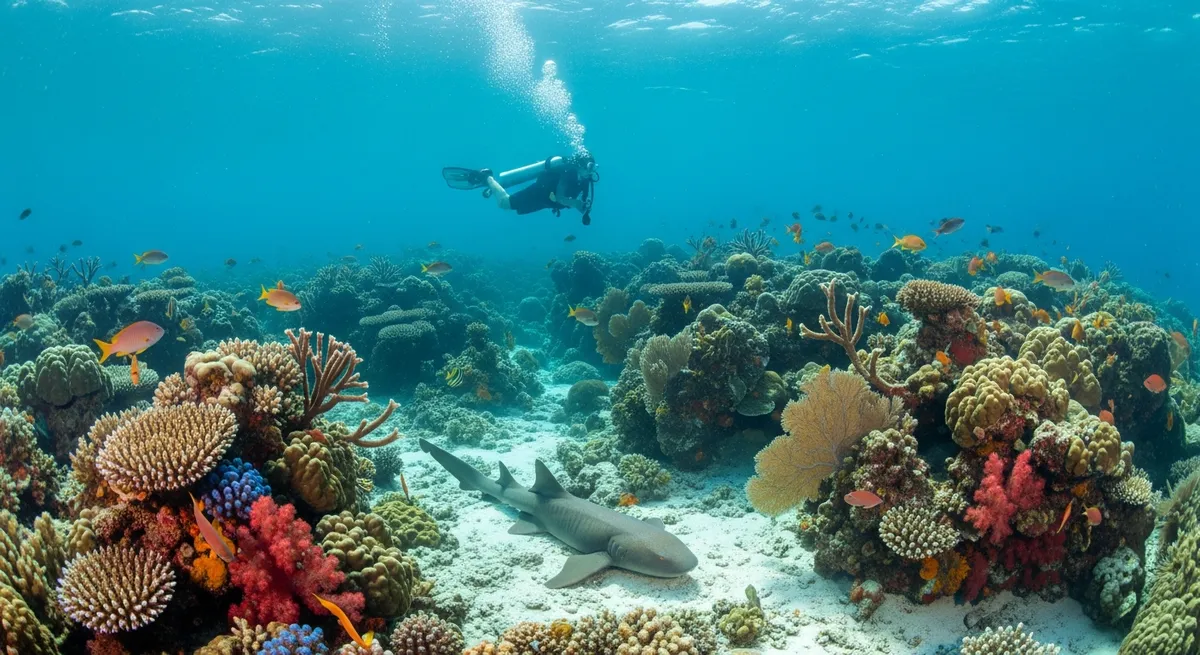
Ambergris Caye offers some of Belize's richest diving, with 192+ marine species recorded in the area - including barracuda, dolphins, lemon sharks, nurse sharks and sea turtles. Water ranges 27-31°C, warmest August, September, October.
Ambergris Caye is where many divers get their first taste of Belize, and it’s easy to see why. We love it for its sheer accessibility, especially Hol Chan Marine Reserve and Shark Ray Alley. Imagine diving amongst schools of sergeant-major and doctorfish, then surfacing to find yourself surrounded by friendly nurse sharks - it’s a rush, even after you’ve seen it a dozen times. Diving here is generally pretty mellow, great for easing back into things or for newer divers. The currents are typically mild, making for relaxed drift dives over healthy reefs. Look out for the subtle beauty of a reticulated brittle star tucked into a coral crevice, or a majestic tarpon gliding past in the blue. For something a little different, the wreck dives are surprisingly good, offering a cool contrast to the natural reefs. We’d suggest an early morning dive at Hol Chan to beat the crowds; the light is often spectacular, highlighting the shimmering scales of yellowjacket and angelfish as they feed.
Ambergris Caye Dive Site Map
Dive sites and dive centres in Ambergris Caye
Ambergris Caye Dive Sites
60 dive sites in Ambergris Caye
Amigo s Wreck
Amigos Wreck, just off Ambergris Caye, is a real character. It’s an old fishing boat, deliberately sunk in the 1980s, so it’s had plenty of time to get comfortable on the seabed. We love how the wreck now sits upright, almost posing for you, with the pilot house still largely intact – great for some swim-throughs. The real draw here isn’t its historical significance, it’s the marine life that has truly made it home. Expect to fin past massive green morays peeking out from every crevice, their heads swaying gently in the slight current. Look closer and you’ll spot scorpionfish perfectly camouflaged against the barnacle-encrusted metal, and often a few curious nurse sharks cruising by. Our favourite time to dive it is late morning; the sun angle really brings out the blues and greens of the surrounding reef and the fish activity is usually at its peak. It’s a pretty easy dive, suitable for Open Water divers looking for a mellow wreck experience with plenty of photographic opportunities.
Basil Jones Canyons
Basil Jones Canyons, north of Ambergris Caye, is one of those sites we always make a point of revisiting. It's a shallow dive, maxing out around 12 meters, making it incredibly relaxed. You’ll drift past these wide sand flats interspersed with lens-shaped coral stacks, almost like little coral islands. What really sets Basil Jones apart, though, is its location. It's far enough from the usual boat traffic that we often encounter larger pelagics cruising by – we’ve had some fantastic reef shark encounters here. It’s a great spot for an easy dive with the potential for something special.
Belize Diving: The Highlight of the Caribbean
Diving around Ambergris Caye often feels like a well-choreographed drift, the currents guiding you along healthy reef walls. We've had some memorable encounters here, particularly with green sea turtles gliding past and the sheer density of schooling fish that can sometimes dim the sun. Beyond the larger pelagics, the macro life here is surprisingly good, so keep an eye out in the crags and crevices. It's a forgiving place to dive, whether you're just starting out or have plenty of logbook stamps, and the non-diving activities on the Caye mean you're never bored when the tanks are empty.
Boca Chica Canyons
Boca Chica Canyons offers a series of swim-throughs and small caves that wind through the reef, making it a fun exploration dive. We’ve seen nurse sharks resting in the sandy bottoms of the canyons and often find green morays peeking from crevices. It’s a good spot for divers who enjoy navigating tighter spaces and want a break from open reef diving. Visibility can be a bit variable, but generally decent.
Boca Ciega
Boca Ciega sits just a short boat ride from San Pedro, a quick jaunt. The moorings start you in about 45 feet of water, right amongst a thick stand of purple sea fans and other branching gorgonians. From there, the reef plunges down beyond 100 feet, cut by broad sand chutes. We’ve often been shadowed by a couple of chunky black groupers here, they’re quite the characters, and it’s a good spot to find nurse sharks tucked away. Keep an eye out for Caribbean reef sharks cruising the deeper parts. Look under the overhangs for lobsters and morays, and closer to the top of the spurs, you’ll see plenty of parrotfish, angelfish, and schools of blue chromis. This is a solid, easy dive for most skill levels, offering that classic Belizean reef vibe without having to venture too far.
Buena Vista Canyons
Buena Vista Canyons offers a good drift dive along a spur and groove system. You’ll weave through coral canyons, keeping an eye out for nurse sharks tucked into crevices and parrotfish grazing on the reef. It’s a comfortable dive, suitable for most skill levels, and a reliable spot for a relaxed afternoon dip. We find it’s best when you're looking for a low-key dive without too much fuss.
Caroba canyons
Caroba Canyons, off Ambergris Caye, offers a series of swim-throughs carved into the reef, creating a maze-like feel. We often spot nurse sharks tucked into the overhangs and plenty of snapper schooling through the channels. It's a fun drift dive, best for divers comfortable with overhead environments and moderate currents. You'll likely enjoy it if you like exploring reef architecture.
Catalan Rocks
Catalan Rocks offers a reliable Ambergris Caye dive when you're looking for something a bit different than the usual spur-and-groove formations. We often find the visibility here to be surprisingly good, especially on a calm morning. Look closely among the coral heads for the Gulf Toadfish, they're surprisingly well camouflaged but worth the patient search. We’ve also spotted the Northern Neon Goby darting in and out of the crevices. It’s a good spot for a relaxed dive, suitable for those who enjoy taking their time and observing the smaller stuff.
Caye Caulker Marine Reserve
We usually head to Caye Caulker Marine Reserve when we want a relaxed dive with plenty to look at without having to work for it. It’s a shallow spot, topping out around 17 meters, which makes for long bottom times and great natural light. Sunlight filters through the water column, hitting big formations of great star coral and grooved brain coral, making them glow. We’ve had incredible luck with juvenile fish here – tiny blue doctorfish darting amongst the polyps, little hogfish hovering near the sand. It’s not a place for huge pelagics, though we did once spot a very curious barracuda following us for a good ten minutes. What you’ll find are healthy reefscapes, some impressive elkhorn, and a steady stream of Caribbean regulars like parrotfish and small groupers. We’d suggest this site for anyone looking for an easy, pleasant dive, maybe even a nice second dive after something deeper. Visibility is usually consistent, around 17 meters, which is plenty to soak in the details.
Christ of the abyss
The Christ of the Abyss site near Ambergris Caye features an iconic underwater statue, a bronze replica of the original found in the Mediterranean. It’s a good spot for some unique underwater photography, drawing divers who appreciate a bit of history or artistry with their reef dive. While the statue itself is the main draw, you'll still encounter typical Caribbean reef fish and the occasional turtle in the surrounding area. It's a fairly straightforward dive, suitable for most experience levels.
Coral Garden
Coral Garden, just off Ambergris Caye, is a pleasant, shallow drift perfect for less experienced divers or those looking for a relaxed second dive. The main draw here is the extensive, healthy hard coral formations that give the site its name, along with plenty of smaller reef fish. We often spot nurse sharks tucked under ledges and graceful eagle rays gliding past in the gentle current. Visibility is usually excellent, making it a great spot for underwater photography, too.
Cypress Canyon
Cypress Canyon is one of our favourite wreck dives on Ambergris Caye. It’s not a purpose-sunk spectacle, but a fishing trawler that met its end many years ago, and that’s precisely its charm. The boat lies broken in sections, really, and nature has done its best to reclaim it. We love easing our way through the main cabin, where schools of glassy sweepers often pulse in the dim light, or peeking into the engine room, now home to moray eels and the occasional nurse shark napping in the shadows. Look for the resident parrotfish, their vibrant scales a stark contrast against the encrusted metal, and the delicate gorgonians swaying gently from what used to be the deck. This is a dive for those who appreciate history and the slow creep of the ocean reasserting itself. The wreck isn’t massive, so it’s perfect for a relaxed exploration, suitable for advanced open water divers who enjoy poking around and discovering the small details.
Show all 60 dive sites in Ambergris Caye
- Cypress Canyons
- Cypress Garden
- Daradanellos Cut
- Eagle Ray Canyon
- Entrada San Pedro Cut
- Esmeralda Canyon
- Esmeralda Canyons
- GLENVIEW
- Hol Chan Cut
- Hol Chan Marine Reserve
- Hol Chan (The Cut), Hol Chan Marine Reserve
- La China Nómada
- La Poza, Xcalak
- Mata Canyons
- Mayan Princess House Reef
- Mermaid layer
- Mermaid’s Lair
- Mexico Canyons
- Mexico Rocks
- Mexico Rocks
- Mexico Rocks
- NO.1 & NO.12
- NO.3
- Palmero Canyons
- Paradise Canyon
- Paradise Canyons
- Piedras de Mato
- Punta Arena Caverns
- Punta Arenas (Small Cut)
- Punta Azul Canyons
- Robles Point
- Rocky Point Canyons
- San Pedro - Belize
- San Pedro Canyons - Belize
- Santa Rita Canyons
- Shark and Ray Alley
- Tackle Box
- Tackle Box Canyons
- Toffee Canyons
- Tortuga Canyons
- Tres Cocos
- Tres Cocos Canyons
- Tres Cocos Cut
- TROPIC TRADER
- Tuckle Bucket Canyon
- Tuffy Canyon
- Tuffy Canyon
- Xcalak
Ambergris Caye Dive Centres
26 dive shops and operators in Ambergris Caye
Ambergris Divers Dive Shop
Ambergris Divers Dive Shop
Amigo's del Mar
Aqua Scuba Belize
Belize Diving Services
Belize Pro Dive Center
Blue Dive Center
Chuck & Robbie's Scuba Diving + Instruction
Show all 26 dive centres in Ambergris Caye
- Coral Divers Limited
- Doctor Dive
- Frenchie's Diving
- Island Divers
- MAR ADENTRO DIVING
- Ramon's Beach Divers
- San Pedro Water Sports
- Scuba School And Family Dive Center Belize
- Scuba School Belize
- Scuba Sensation
- Sea Star Belize
- Sunrise Scuba
- Suya Tours and Dive Center
- Takata Experience
- Tritones
- Tuff E Nuff Tours & Dive Center
- Whiet Sands Dive Shop
- White Sands Dive Shop
Ocean Wildlife in Ambergris Caye
192 species recorded in Ambergris Caye
Ambergris Caye Daylight & Sunrise/Sunset
Sunrise and sunset times for Ambergris Caye, calculated from coordinates
Today - Sunday 11 October
Sunrise
05:44
Sunset
17:34
Daylight
11h 50m
Golden Hour
17:05
First light (dawn) at 05:23 · Last light (dusk) at 17:56
Monthly Averages
| Month | Sunrise | Sunset | Daylight |
|---|---|---|---|
| Jan | 06:27 | 17:36 | 11h 9m |
| Feb | 06:20 | 17:53 | 11h 33m |
| Mar | 06:01 | 18:02 | 12h 1m |
| Apr | 05:37 | 18:08 | 12h 32m |
| May | 05:20 | 18:18 | 12h 58m |
| JunLongest | 05:17 | 18:29 | 13h 12m |
| Jul | 05:25 | 18:32 | 13h 7m |
| Aug | 05:35 | 18:20 | 12h 45m |
| Sep | 05:40 | 17:56 | 12h 16m |
| OctNow | 05:45 | 17:31 | 11h 46m |
| Nov | 05:58 | 17:16 | 11h 18m |
| DecShortest | 06:15 | 17:19 | 11h 4m |
Times are approximate local times based on longitude. Actual times may vary slightly depending on the exact timezone observed in Ambergris Caye.
Where to Stay near Ambergris Caye
Prices from Booking.com. We may earn a commission at no extra cost to you.
Marine Protected Areas near Ambergris Caye
33 protected areas near Ambergris Caye - please respect local regulations when diving
Réseau de réserves du récif de la barrière du Belize
Corozal Bay
Zone 7
Glover's Reef
Zone 3
Glover's Reef
Zone 4
Zone 5
Gladden Spit and Silk Cayes
Zone 6
Zone 1
Zone 2
Showing 12 largest of 33
Getting to Ambergris Caye
San Pedro
Belize City
Coxen Hole
Plan & book
Ways to dive Ambergris Caye, from day trips to liveaboards.
Day trips & courses
via GetYourGuideGuided dives, courses and snorkel trips with instant booking.
Find dive trips in Ambergris CayePlaces to stay
via Booking.comHotels and dive resorts near Ambergris Caye.
Search stays in Ambergris CayeDive insurance
Most travel insurance excludes or limits scuba. Check what you need before you go.
Dive insurance explainedPartner links: we may earn a commission if you book, at no extra cost to you. How we make money