Ship wreck
Protected Area
Cabo Blanco
Why dive here
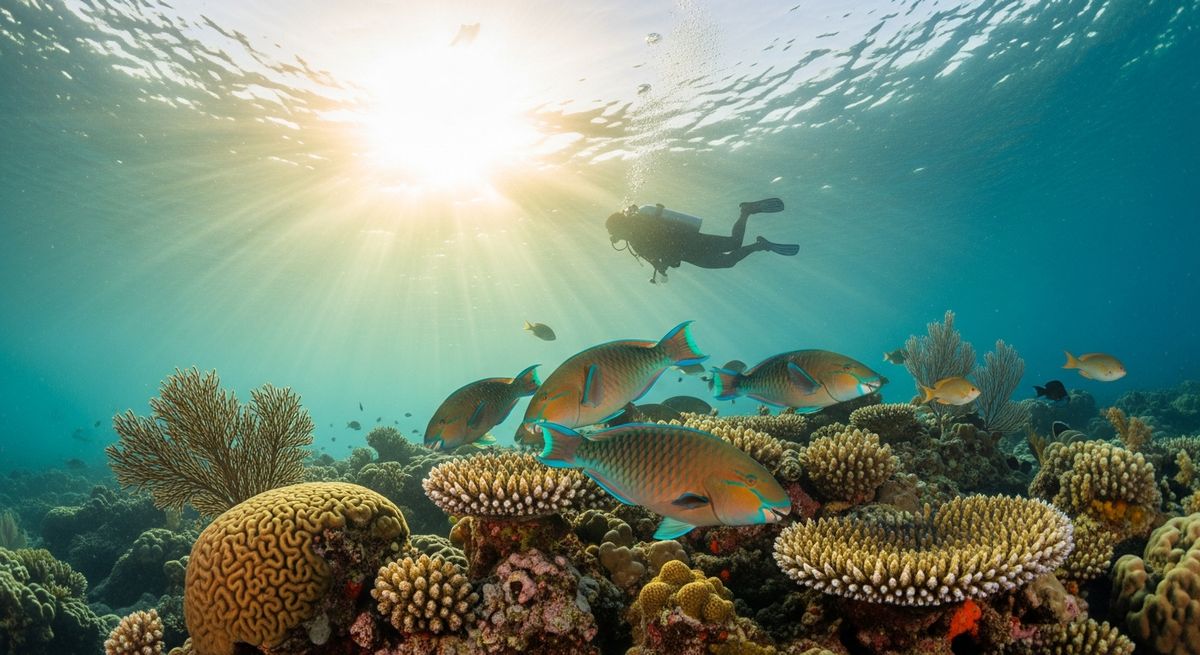
With 217+ marine species recorded in the area - including dolphins, humpback whales, orcas, sea turtles and pufferfish - Ship wreck offers some of Caribbean Coast's richest reef diving. Water ranges 29-31°C, warmest March, April, May.
The Shipwreck on Costa Rica's Caribbean coast is one of those sites we always make time for. It’s a shrimp trawler, sunk decades ago, now sitting upright on a sandy bottom at 22m. We love how the structure is still largely intact, giving you a real sense of its former life. You can poke around the bow, explore what used to be the wheelhouse, and marvel at how quickly the sea reclaims things. Visibility averages 12m, sometimes less, which just adds to the atmospheric gloom of a wreck dive. You’ll often spot a keen-eyed Giant Hawkfish perched on the deck, almost camouflaged, or a Freckled Moray peeking out from a dark crevice. Our favourite moments here are drifting past schools of Herring, their silver scales catching the limited light, and scanning the sand for the bizarre Foureye Flounder. Keep an eye out for Goliath Groupers lurking in the deeper sections of the wreck, they get impressively big here. This site is definitely best for advanced divers comfortable with overhead environments and lower visibility.
Nearest Dive Centres to Ship wreck
Dive shops near Ship wreck
Ananda DNF S.A.
Dive Costa Rica
Okeanos Aggressor II
Reviews for Ship wreck
Conditions
Ocean conditions, forecast and tides for Ship wreck
Ship wreck Ocean Conditions
Monthly averages for Ship wreck, sourced from Open-Meteo marine data + Copernicus Marine (EU) - nearest station: Open-Meteo marine grid (9.78, -84.89) (48km away)
October Averages
Sea Temperature
29°C
85°F · Range: 27.9–31.1°C
Current Speed
5 cm/s
Direction: N (0°)
Chlorophyll-a
0.142 mg/m³
Clear water
Salinity
28.81 PSU
Based on 4 years of monitoring data · Data sources: Open-Meteo marine data + Copernicus Marine (EU)
Plan & book
Ways to dive Caribbean Coast, from day trips to liveaboards.
Day trips & courses
via GetYourGuideGuided dives, courses and snorkel trips with instant booking.
Find dive trips in Caribbean CoastPlaces to stay
via Booking.comHotels and dive resorts near Caribbean Coast.
Search stays in Caribbean CoastDive insurance
Most travel insurance excludes or limits scuba. Check what you need before you go.
Dive insurance explainedPartner links: we may earn a commission if you book, at no extra cost to you. How we make money
Where to Stay near Ship wreck
Prices from Booking.com. We may earn a commission at no extra cost to you.