Twin caves
Protected Area
'Utungake SMA
Why dive here
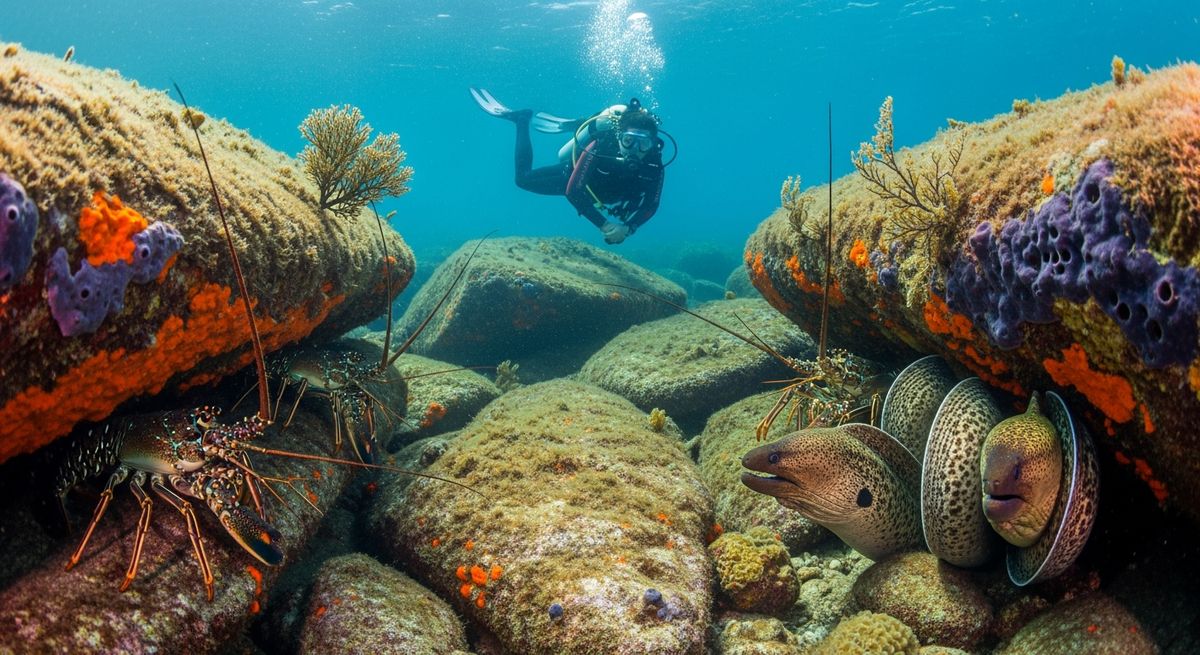
With 312+ marine species recorded in the area - including barracuda, giant moray eels, humpback whales, sperm whales and whitetip reef sharks - Twin caves offers some of Vava'u Group's richest diving. Water ranges 25-29°C, warmest January, February, March.
Twin Caves in Vava’u gives us that perfect blend of cave exploration and vibrant reef action. We love starting over the sun-drenched coral garden, letting our eyes adjust as we fin towards the first, wider opening. Inside, the light plays off the walls in mesmerizing ways, and the air pocket above offers a fleeting chance to surface and hear the jungle sounds from above. Exiting that first cave, you’re greeted by a wall absolutely plastered with soft corals. It’s here we often see schools of Pacific Half-and-half Chromis darting, and if you’re patient, a flash of silver might be a Humphead Unicornfish gliding past. The second cave is where the macro magic truly happens. It’s darker, more intimate, and we always take our time, running a finger (carefully, of course!) along the cracks to spot those tiny nudibranchs, maybe even a Carnelian Cowry clinging to the rock. Visibility averages around 15m, which is plenty for navigating the spaces. This site is a great pick for divers who enjoy a bit of overhead environment combined with some excellent critter hunting. It suits those who appreciate topography and don’t mind slowing down to look for the small stuff.
Nearest Dive Centres to Twin caves
Dive shops near Twin caves
View all dive centres in Vava'u GroupReviews for Twin caves
Conditions
Ocean conditions, forecast and tides for Twin caves
Twin caves Ocean Conditions
Monthly averages for Twin caves, sourced from Open-Meteo marine data - nearest station: Open-Meteo marine grid (-18.66, -174.06) (1km away)
October Averages
Sea Temperature
26°C
78°F · Range: 24.4–27°C
Air Temperature
25°C
77°F
Wind Speed
9.32 m/s
18.1 knots
Atmospheric Pressure
1014.3 hPa
Based on 4 years of monitoring data · Data sources: Open-Meteo marine data
Plan & book
Ways to dive Vava'u Group, from day trips to liveaboards.
Day trips & courses
via GetYourGuideGuided dives, courses and snorkel trips with instant booking.
Find dive trips in Vava'u GroupPlaces to stay
via Booking.comHotels and dive resorts near Vava'u Group.
Search stays in Vava'u GroupDive insurance
Most travel insurance excludes or limits scuba. Check what you need before you go.
Dive insurance explainedPartner links: we may earn a commission if you book, at no extra cost to you. How we make money
Where to Stay near Twin caves
Prices from Booking.com. We may earn a commission at no extra cost to you.