HMS HILDASAY
Protected Area
Diani Chale Marine
Why dive here
With 408+ marine species recorded in the area - including barracuda, blacktip reef sharks, giant moray eels, humpback whales and octopuses - HMS HILDASAY offers some of Diani Beach & South Coast's richest wreck diving. Water ranges 26-30°C, warmest March, April, December.
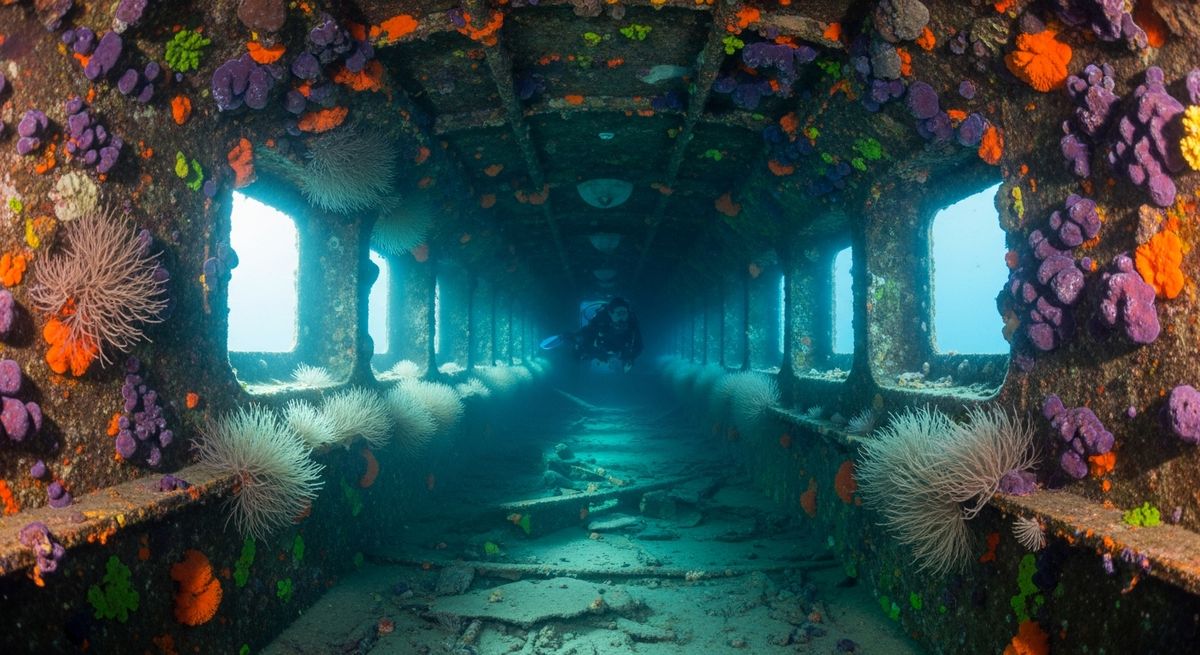
The HMS Hildasay sits in a wonderfully shallow five metres, making it an ideal spot for a long, relaxed dive or even a snorkel if the conditions are calm. This isn't one of those wrecks where you’re just looking at a few scattered ribs; the Hildasay still has a real sense of its former self, a trawler from 1941 that met its end in 1945. We love how the light plays on the remaining structure, picking out the colours of the corals and anemones that have completely taken over. You can spend ages here poking around the superstructure, which is now a bustling mini-reef. We've seen everything from lionfish tucked into shadowed corners, their fins fanned out, to busy schools of snapper darting in and out of the old deck plating. It’s perfect for photographers wanting to capture both the historical feel of the wreck and the lively macro life. Visibility here can sometimes be a bit variable, especially after heavy rains, but on a good day, with the sun high, it’s a brilliant, easy dive that truly shows how quickly the ocean reclaims its own.
Typical HMS HILDASAY Dive Profile
Illustrative profile based on site depth and type. Actual dive profiles vary - always follow your dive computer and training.
Safety Notes
Wreck site - avoid penetration without wreck diving certification. Watch for sharp metal and entanglement hazards.
Nearest Dive Centres to HMS HILDASAY
Dive shops near HMS HILDASAY
Calico Jacks Diani
ReefoDivers Diani
ABDU Scuba Divers
Diving Center
Ocean Tribe
Diving The Crab
Reviews for HMS HILDASAY
Conditions
Ocean conditions, forecast and tides for HMS HILDASAY
HMS HILDASAY Ocean Conditions
Monthly averages for HMS HILDASAY, sourced from Open-Meteo marine data - nearest station: Open-Meteo marine grid (-4.27, 39.61) (1km away)
October Averages
Sea Temperature
27°C
81°F · Range: 25.3–28.7°C
Air Temperature
26°C
79°F
Wind Speed
5.22 m/s
10.1 knots
Atmospheric Pressure
1013.7 hPa
Based on 4 years of monitoring data · Data sources: Open-Meteo marine data
Plan & book
Ways to dive Diani Beach & South Coast, from day trips to liveaboards.
Day trips & courses
via GetYourGuideGuided dives, courses and snorkel trips with instant booking.
Find dive trips in Diani Beach & South CoastPlaces to stay
via Booking.comHotels and dive resorts near Diani Beach & South Coast.
Search stays in Diani Beach & South CoastDive insurance
Most travel insurance excludes or limits scuba. Check what you need before you go.
Dive insurance explainedPartner links: we may earn a commission if you book, at no extra cost to you. How we make money
Where to Stay near HMS HILDASAY
Prices from Booking.com. We may earn a commission at no extra cost to you.