Diving in Diani Beach & South Coast
Why dive here
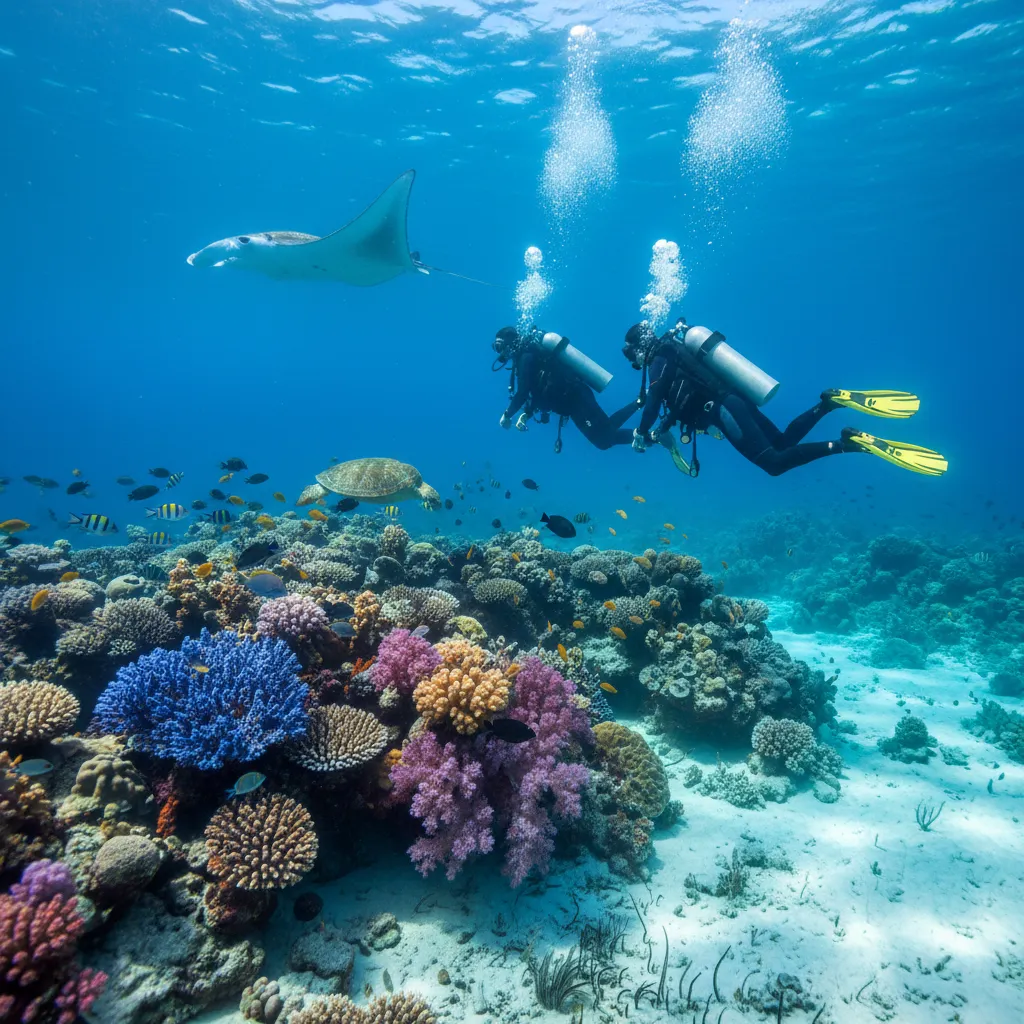
Diani Beach & South Coast offers some of Kenya's richest diving, with 408+ marine species recorded in the area - including barracuda, blacktip reef sharks, giant moray eels, humpback whales and octopuses. Water ranges 26-30°C, warmest March, April, December.
Diani’s South Coast diving might not scream “remote adventure,” but it consistently delivers solid, enjoyable dives, especially for those who appreciate accessibility without sacrificing interesting encounters. We love that it’s all so easy to get to, with a good number of centres ready to get you in the water. Head out to the reefs and you’ll find yourself drifting gently past fields of hard coral, with staghorn everywhere you look. Schools of blue-lined surgeonfish zip past, and we often spot dusky parrotfish chomping away, leaving their tell-tale sand trails. Keep an eye out for yellowmargin triggerfish; their colours really pop against the blue. Visibility is generally good, often giving you that comforting feeling of endless ocean ahead. We’d suggest an early morning dive if you can swing it. The light is softer, and the reefs feel a little less disturbed. The wrecks here are fantastic too, offering a different vibe, with things like bigeye tuna sometimes circling. It’s a great spot for beginners and intermediates to build confidence, with enough to keep even seasoned divers happy for a few days. Don’t expect ripping currents or massive pelagics every time, but do expect consistent, colourful reef life and a relaxed atmosphere.
Diani Beach & South Coast Dive Site Map
Dive sites and dive centres in Diani Beach & South Coast
Diani Beach & South Coast Dive Sites
32 dive sites in Diani Beach & South Coast
AGIA MARINA
The Agia Marina wreck sits upright in 18 metres of water, a carrier vessel that went down in the late 70s. She’s a decent size at 71 metres long, built in Germany back in '56, and we love how intact she remains. You can still make out the mast structure, and the holds are easy to penetrate if you're comfortable with that. We often find big groupers hanging around the cargo holds, and the deck plates are carpeted in soft corals, purple and orange, which really come alive in the afternoon light. Schools of snapper and fusiliers swirl around the superstructure, so thick sometimes they almost block the sun. For photographers, the bow section offers some dramatic shots, especially when there’s a bit of current bringing in the nutrients. Visibility here averages 15-20 metres, and it’s a site that suits anyone comfortable with a bit of a boat ride and a slightly deeper dive.
ALPHA COMMANDER
The Alpha Commander is one of our favourite wrecks in Diani, a proper old trawler that went down in 1980 after a run-in with something big and unseen. It sits upright at 25 metres, and you can see the sheer scale of it as you descend, the deck guns (or what's left of them) looming out of the blue. We love poking around the engine room, picturing the chaos when it took on water. It’s a fantastic site for advanced open water divers who appreciate a wreck with a bit of history and a lot of character. Expect to see schools of snappers schooling around the bow, lionfish tucked into every crevice, and the resident moray eels peeking out from behind corroded bulkheads. The hull is completely encrusted in colourful sponges and soft corals now, a real contrast to the rusty metal. We'd suggest getting there early in the morning before any stronger currents pick up, which can sometimes sweep across the deck. It’s a proper dive, one that leaves you thinking about the stories it could tell.
Chale
Chale, just off Chale Island, really is a standout. We love that it’s got that relaxed island feel, a perfect spot to spend a surface interval. Down below, to 18 metres, it’s all about the reef. We’ve had some fantastic dives here, the coral is pretty healthy, and you often find big schools of bullethead and raggedtooth parrotfish munching away, completely oblivious. Keep an eye out for ghost pipefish camouflaged amongst the bubble algae, they’re masters of disguise and a real treat to spot. We usually see a few red lionfish too, looking rather dramatic against the reef. For something a bit different, the agujon and hound needlefish glide just above the coral, long and elegant. It’s a pretty gentle dive, suitable for most levels, especially if you’re looking for a relaxed afternoon exploring the reef. We’d suggest going in the morning; the light can be lovely through the shallower sections.
DERNA
The Derna offers a straightforward wreck dive right off Diani Beach. This old trawler, originally the Dewsland, went down in 1954 and now sits in just 6 metres of water, making it a perfect spot for newer divers or those looking for a relaxed second dive. We’ve found her to be quite broken up after all these years, but the bow and stern sections are still distinct. You’ll weave through the scattered hull plates, spotting moray eels tucked into crevices and schools of snapper moving through the structure. It’s a gentle introduction to wreck diving, with plenty of resident reef fish making the most of the artificial reef.
Dzinani
Dzinani is our go-to when we want a proper drift. It’s got that classic Diani mix of deep coral ridges and stretches of open sand, but here the current often picks up just enough to give you a real ride. We’ve found the best approach is to let yourself go, gliding over the corals, then dipping into those sandy channels where white-tip reef sharks sometimes just rest, unbothered. You'll often see schools of barracuda shimmering in the blue, or giant trevallies tearing through smaller fish. Visibility here can sometimes be a bit variable, averaging 13m, but when it’s good, the light plays beautifully through the water, making the corals glow. We’d suggest this one for divers comfortable with a bit of pace, it’s not for faffing about.
FATIH MUBARAK
The Fatih Mubarak isn't your typical deep-water wreck. We love it because it’s a living monument to Diani’s maritime history, sitting right on the reef near Shimoni village. Forget deep dives, this sailing vessel ran aground back in '71, and now it’s an incredible shallow wreck dive, sometimes even snorkelable at low tide. What you get here is a unique blend of wreck and reef. Coral has steadily taken over the timbers, creating a habitat for all sorts of reef fish. You'll see parrotfish grazing right alongside the barnacle-encrusted hull, and we've often spotted moray eels peeking out from beneath collapsed sections. The bow is still quite recognisable, and there are plenty of nooks to poke around in, perfect for spotting crabs and nudibranchs without needing to go deep. It’s a fantastic site for newer divers or anyone who appreciates a relaxed, historically rich exploration. Our tip? Go at high tide for the best visibility over the wreck itself, but low tide gives you a clearer view of its immense scale from above the water.
Galu
Galu is one of our go-to spots in Diani for a relaxed, easy dive. It’s got that classic Indian Ocean feel, with sandy patches breaking up the coral bommies, and the depth usually hangs around 12-15m, making it perfect for a long, unhurried bottom time. We love drifting along here, keeping an eye out for the resident green turtles – they’re surprisingly unfazed by divers. What really stands out for us at Galu, especially when the light is good, are the schools of Blackspot Surgeonfish, often weaving through the coral, and the flashes of Longfin Bannerfish against the blue. You’ll also find plenty of those smaller reef fish tucked into the crevices, like the Black-back Butterflyfish. Conditions here are generally mild, so it’s a great site if you're looking for an uncomplicated dive where you can just soak it all in. We often recommend it for photographers who want to take their time setting up a shot, or for anyone who just wants to glide and observe.
GLOBE STAR
The Globe Star sits in barely two metres of water, right off the beach. Don't expect dramatic depths or technical challenges here. Instead, think of it as a historical relic, a big old chunk of steel from 1952, now slowly dissolving back into the ocean. We love it for a casual, easy dive, especially if you're keen to spend time really looking. The main appeal is the sheer scale of the wreck itself, 137 metres long. You can follow its length, seeing the massive ribs and plates that once formed its hull. We’ve spotted parrotfish grazing on the algae, and occasionally a small reef shark cruises past the shadows it creates. It’s an ideal site for snorkelers, but even with tanks, you can take your time, watching the sunlight dapple through the shallow water, illuminating pockets where small moray eels might be hiding. Our favourite tip? Go early in the morning before the day boats arrive. The visibility tends to be at its best, and you get the wreck mostly to yourself.
HIGHLAND LASSIE
There’s something truly evocative about diving a wreck with history, and the Highland Lassie certainly delivers. This isn’t a massive cargo ship, but a graceful wooden schooner, built in 1865 and sunk in 1879. You really feel that age when you descend onto her. At 20 meters, it’s an easy dive, perfect for most certified divers looking for a bit of maritime archaeology. What we love is the way the Indian Ocean has reclaimed her. The wooden hull is well broken down now, but the ribs and framework are still visible, especially the bow and stern sections, creating these fantastic nooks and crannies. Look for lionfish tucked into the shadows, and we’ve often seen big grouper patrolling the perimeter. Schools of snapper and fusiliers are usually swirling around the main structure. It’s not about penetration here, but about appreciating the skeletal remains and the life that thrives on them. Our favourite part is often finding fragments of old pottery or glass bottles half-buried in the sand nearby, little clues to her past life. It’s a peaceful dive, often with good visibility, making it a great spot for photographers too.
HMS HILDASAY
The HMS Hildasay sits in a wonderfully shallow five metres, making it an ideal spot for a long, relaxed dive or even a snorkel if the conditions are calm. This isn't one of those wrecks where you’re just looking at a few scattered ribs; the Hildasay still has a real sense of its former self, a trawler from 1941 that met its end in 1945. We love how the light plays on the remaining structure, picking out the colours of the corals and anemones that have completely taken over. You can spend ages here poking around the superstructure, which is now a bustling mini-reef. We've seen everything from lionfish tucked into shadowed corners, their fins fanned out, to busy schools of snapper darting in and out of the old deck plating. It’s perfect for photographers wanting to capture both the historical feel of the wreck and the lively macro life. Visibility here can sometimes be a bit variable, especially after heavy rains, but on a good day, with the sun high, it’s a brilliant, easy dive that truly shows how quickly the ocean reclaims its own.
HMS SHAPINSAY OR HILDASAY
The HMS Shapinsay, or Hildasay as she was renamed, is a fascinating old girl. This 50-metre trawler, built in 1941, met her end grounded on the reef near Kilindini, leaving us with a pretty compelling dive site. We love the way she’s just draped herself over the coral, creating these amazing nooks and crannies for marine life. Dropping down onto her, you immediately feel that sense of history. The bow points out to sea, and you can explore the superstructure, which still holds a lot of its shape. Schools of fusiliers often swirl around the bridge, so thick they almost block the light, and we’ve seen some hefty groupers tucked into her deeper sections. Look closely for moray eels peering out from rusted portholes and the vibrant soft corals that have colonised every available surface. This site is a great pick for wreck enthusiasts who also appreciate a lively reef, offering a blend of history and biology. It’s not a deep dive, making it accessible to most, but the currents can pick up, so check conditions before you go.
Igloo
Igloo is a weird, wonderful little spot off Diani, and we absolutely love it for that. Forget your natural reefs for a minute; this site is all about an abandoned underwater habitat, a concrete dome that looks like it dropped out of a sci-fi movie. We've heard it called an igloo, or even the Death Star, and it really does have that stark, almost alien feel. What makes it special, though, is how nature has completely reclaimed it. The structure itself is a magnet for life, with nooks and crannies absolutely crammed with fusiliers and schooling snapper. At a maximum depth of 18 meters, it’s a chilled-out dive, perfect for a relaxed afternoon. The average visibility hovers around 12 meters, which is plenty to appreciate the details. We often find ourselves circling the main dome, peering into crevices for moray eels – the undulated morays are quite common here. Lionfish are usually perched on top, posing for photos, and if you’re lucky, you might even spot a marbled spinefoot grazing on the algae that now coats the concrete. It’s a site that suits anyone looking for something a bit different, a dive with a story, and a chance to see how quickly the ocean embraces man-made structures.
Diani Beach & South Coast Dive Centres
12 dive shops and operators in Diani Beach & South Coast
ABDU Scuba Divers
Calico Jacks Diani
Diving and Watersports Center
Diving Center
Diving The Crab
Diving the Crab by Blue Wave Ltd.
Ocean Tribe
Papamanyota Diving Center Kenya
Show all 12 dive centres in Diani Beach & South Coast
Ocean Wildlife in Diani Beach & South Coast
408 species recorded in Diani Beach & South Coast
Diani Beach & South Coast Daylight & Sunrise/Sunset
Sunrise and sunset times for Diani Beach & South Coast, calculated from coordinates
Today - Sunday 11 October
Sunrise
06:04
Sunset
18:15
Daylight
12h 11m
Golden Hour
17:47
First light (dawn) at 05:43 · Last light (dusk) at 18:35
Monthly Averages
| Month | Sunrise | Sunset | Daylight |
|---|---|---|---|
| Jan | 06:21 | 18:42 | 12h 20m |
| Feb | 06:29 | 18:44 | 12h 15m |
| Mar | 06:27 | 18:35 | 12h 8m |
| Apr | 06:22 | 18:23 | 12h 1m |
| May | 06:21 | 18:17 | 11h 55m |
| JunShortest | 06:27 | 18:19 | 11h 53m |
| Jul | 06:31 | 18:25 | 11h 54m |
| Aug | 06:28 | 18:26 | 11h 58m |
| Sep | 06:15 | 18:20 | 12h 5m |
| OctNow | 06:02 | 18:14 | 12h 12m |
| Nov | 05:58 | 18:16 | 12h 18m |
| DecLongest | 06:06 | 18:28 | 12h 22m |
Times are approximate local times based on longitude. Actual times may vary slightly depending on the exact timezone observed in Diani Beach & South Coast.
Where to Stay near Diani Beach & South Coast
Prices from Booking.com. We may earn a commission at no extra cost to you.
Marine Protected Areas near Diani Beach & South Coast
10 protected areas near Diani Beach & South Coast - please respect local regulations when diving
Mombasa
Malindi
Diani Chale Marine
Kisite
Mombasa
Mpunguti
Watamu
Malindi
Wasini
Malindi-Watamu
Getting to Diani Beach & South Coast
Mombasa
Zanzibar
Dar es Salaam
Plan & book
Ways to dive Diani Beach & South Coast, from day trips to liveaboards.
Day trips & courses
via GetYourGuideGuided dives, courses and snorkel trips with instant booking.
Find dive trips in Diani Beach & South CoastPlaces to stay
via Booking.comHotels and dive resorts near Diani Beach & South Coast.
Search stays in Diani Beach & South CoastDive insurance
Most travel insurance excludes or limits scuba. Check what you need before you go.
Dive insurance explainedPartner links: we may earn a commission if you book, at no extra cost to you. How we make money