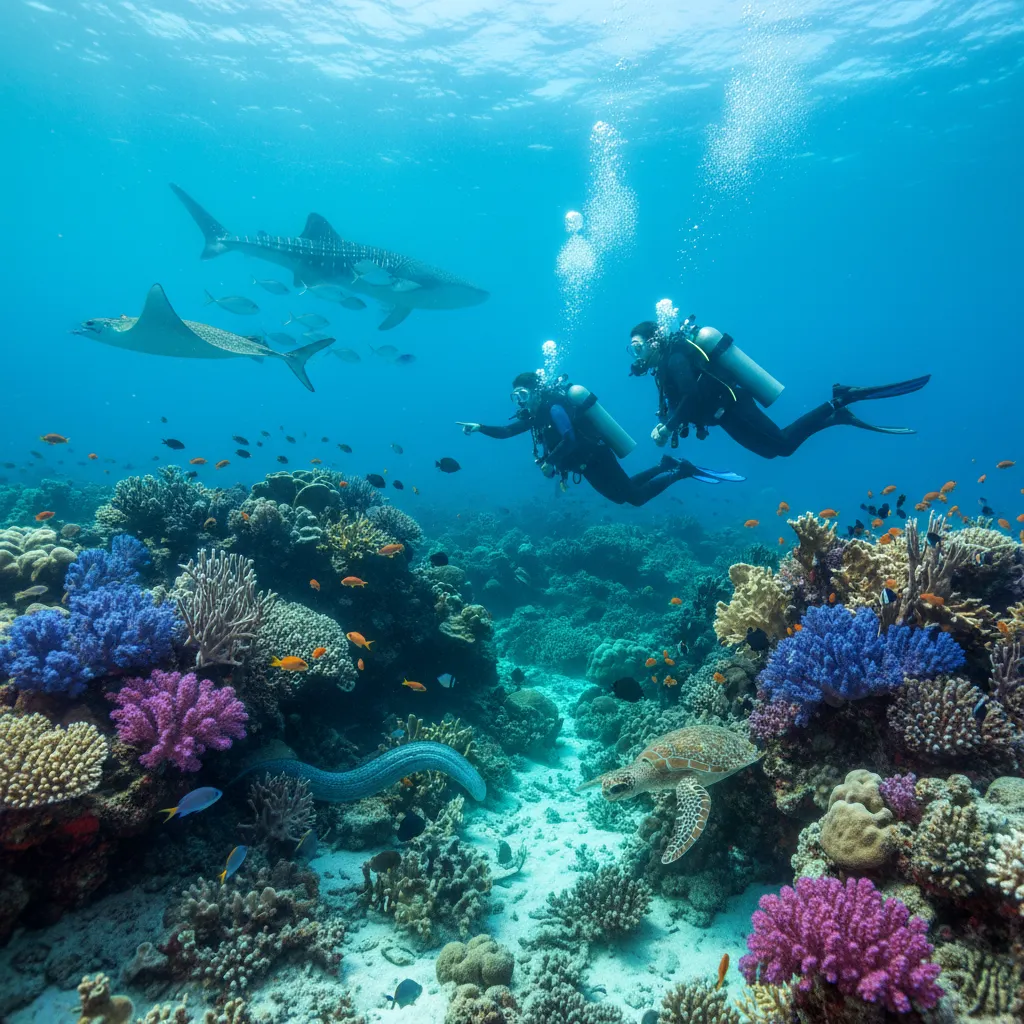

Diving in Kenya
Why dive here
Kenya offers rich diving, with 457+ marine species recorded in its waters - including barracuda, blacktip reef sharks, blue-spotted stingrays, giant moray eels and great white sharks. Water ranges 26-30°C, warmest March, April, December.
Kenya often gets overlooked for its safari, but the diving along its Indian Ocean coast is genuinely worth a look. We’ve found the reefs here to be surprisingly healthy, particularly within the protected marine parks around Watamu and Diani Beach. Think big schools of fusiliers, the flash of parrotfish, and a good chance of spotting something larger cruising past, like a whale shark if you’re there between October and March. Dive sites like the Canyon at Watamu offer dramatic topography, while the fringing reefs off Diani are perfect for slow drifts among the hard corals. It’s a solid choice for combining a land-based adventure with some quality time underwater.
Kenya Dive Regions Map
Kenya Dive Regions
2 diving areas in Kenya
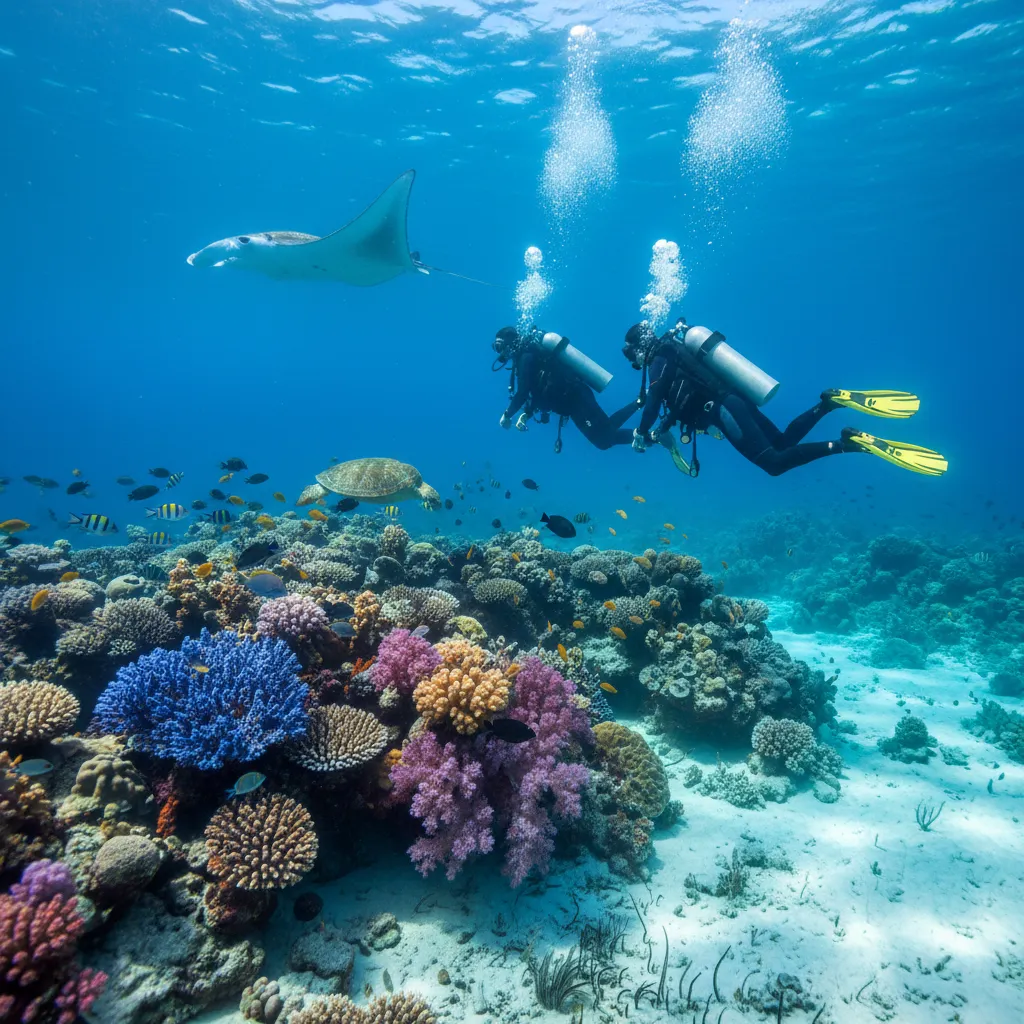
Diani Beach & South Coast
Diani’s South Coast diving might not scream “remote adventure,” but it consistently delivers solid, enjoyable dives, especially for those who appreciate accessibility without sacrificing interesting encounters. We love that it’s all so easy to get to, with a good number of centres ready to get you in the water. Head out to the reefs and you’ll find yourself drifting gently past fields of hard coral, with staghorn everywhere you look. Schools of blue-lined surgeonfish zip past, and we often spot dusky parrotfish chomping away, leaving their tell-tale sand trails. Keep an eye out for yellowmargin triggerfish; their colours really pop against the blue. Visibility is generally good, often giving you that comforting feeling of endless ocean ahead. We’d suggest an early morning dive if you can swing it. The light is softer, and the reefs feel a little less disturbed. The wrecks here are fantastic too, offering a different vibe, with things like bigeye tuna sometimes circling. It’s a great spot for beginners and intermediates to build confidence, with enough to keep even seasoned divers happy for a few days. Don’t expect ripping currents or massive pelagics every time, but do expect consistent, colourful reef life and a relaxed atmosphere.
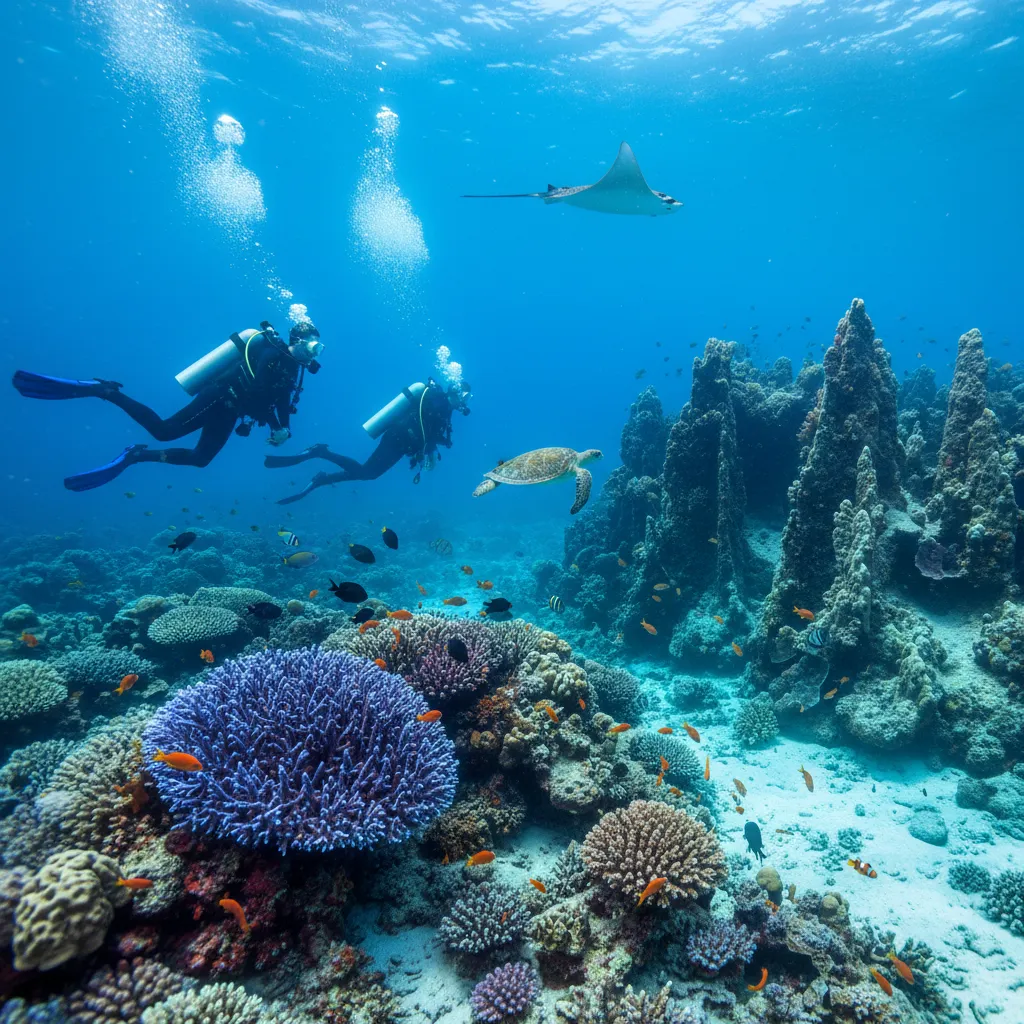
Watamu & Malindi
Watamu and Malindi deliver quintessential Indian Ocean diving, but with a uniquely Kenyan flavour. We’re talking shallow, colourful reef dives within the protected marine park - no crazy depths needed to see the good stuff. Think dense coral gardens, big schools of fusiliers, and the occasional frogfish tucked amongst the bommies if you’ve got a good guide and a sharp eye. Our favourite time to dive here is between November and March, when the water is warm and calm, and those whale sharks cruise through. You won’t always spot them, but the possibility adds a real buzz. Beyond the gentle reef exploration, there’s a small wreck, the MV Dania, which is a fun, easy dive for beginners and a decent photography subject. We’d suggest focusing your time on the outer reefs for the best chance at pelagics, especially around dawn. The currents can pick up a bit there, so it’s worth checking conditions if you’re not a fan of drift dives. Overall, it’s a solid pick for relaxed, colourful diving without the crowds you might find elsewhere.
Ocean Wildlife in Kenya
457 species recorded in Kenya
Kenya Visa Requirements
Check if you need a visa to dive in Kenya
Plan & book
Ways to dive Kenya, from day trips to liveaboards.
Day trips & courses
via GetYourGuideGuided dives, courses and snorkel trips with instant booking.
Find dive trips in KenyaPlaces to stay
via Booking.comHotels and dive resorts near Kenya.
Search stays in KenyaDive insurance
Most travel insurance excludes or limits scuba. Check what you need before you go.
Dive insurance explainedPartner links: we may earn a commission if you book, at no extra cost to you. How we make money