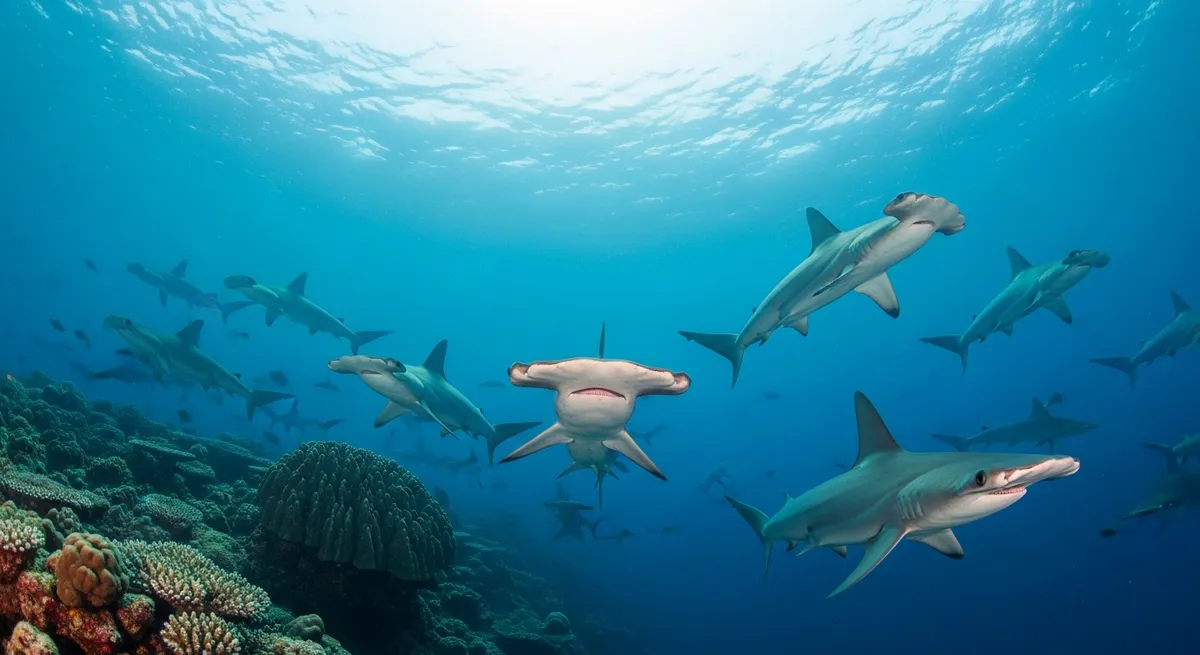
Diving in Rasdhoo Atoll
Why dive here
Rasdhoo Atoll offers some of Maldives's richest diving, with 98+ marine species recorded in the area - including blue sharks, sea turtles, spinner dolphins and whale sharks. Water ranges 29-31°C, warmest April, May, July.
Rasdhoo Atoll, tucked away in the Alif Alif Atoll, is a real favourite of ours, mostly because it delivers on those early morning promises. We love the drift dives here, particularly along the outer reef walls, where the current often just… *pushes* you along, saving your fins for when you need to tuck in close to a coral head. The real draw, of course, is the hammerhead action at Rasdhoo Madivaru - getting up before dawn, dropping into that dim blue, and waiting for the shadows to materialise. It’s always a gamble with pelagics, but when it pays off, it’s magic. Beyond the sharks, the reefs here are solid. We’ve had some fantastic encounters with schools of fusiliers and trevally hunting, and the two-tone wrasse are everywhere, adding pops of colour. Our pick for an easier dive is somewhere like Hammerhead Point (ironically, not for hammerheads but for reef life), where you can really slow down and look for bloodspot pipefish or the charming hermit crabs tucked away. Be ready for some strong currents on the deeper dives; they’re what bring in the big stuff, but they demand respect. Visibility is generally excellent, but we’d suggest going in the dry season for the calmest surface conditions.
Rasdhoo Atoll Dive Site Map
Dive sites and dive centres in Rasdhoo Atoll
Rasdhoo Atoll Dive Sites
62 dive sites in Rasdhoo Atoll
Ari Atoll
Ari Atoll, specifically the Rasdhoo channels, is where we head when we're chasing big pelagics in the Maldives. It’s a reliable spot, not a guarantee, but your odds of seeing hammerheads at sunrise, or a passing manta ray during the day, are some of the best in the country. We’ve had some cracking dives here with grey reef sharks cruising along the drop-off and big schools of blacktail barracuda swirling in the blue. Keep an eye out for Napoleon wrasse, they’re practically residents on some of the deeper coral patches. It's a site that often has a bit of current, so it’s more for divers comfortable moving with the water.
Bathalaamaagaa Kanthila
Bathalaamaagaa Kanthila is one of those pinnacles in Rasdhoo Atoll where you’re really in for a current ride. It’s not always a gentle drift, so we’d suggest having a few dives under your belt before dropping in. You’ll find some very healthy staghorn coral here, almost a forest of it in places, along with patches of table and wrinkle coral. If you settle in on the leeward side, the fusiliers often come in thick, creating a shimmering wall of fish. It's a good spot to just hang out and watch the ocean do its thing.
Bathala Maga Khan Faru
Bathala Maga Khan Faru in Rasdhoo Atoll offers a straightforward reef dive, perfect for newer divers getting comfortable in the Maldivian current. We found the coral cover decent, a mix of table and brain corals, with plenty of small reef fish flitting about-damselfish, fusiliers, and the usual parrotfish. It’s a gentle introduction to the region’s diving, generally calm at 24 metres, without the stronger currents some of the other channels are known for. Come here for a relaxed swim-through, a chance to really slow down and observe the smaller stuff.
Bathala Maga Khan Thila
Bathala Maga Khan Thila in Rasdhoo Atoll offers a solid pinnacle dive, dropping to about 25 metres. We usually find ourselves circling the main structure, keeping an eye on the blue for grey reef sharks patrolling the edges. Inside the reef, there are often schooling fusiliers and snapper, sometimes so thick it feels like swimming through a curtain of silver. It’s an intermediate dive, best for those comfortable with a bit of current, which can pick up and bring in the bigger stuff.
Bidu Thila
Bidu Thila is a solid pinnacle dive in Rasdhoo Atoll. It’s a good spot to settle in, maybe your first thila dive, offering plenty of Staghorn corals across its slopes. We often find ourselves just hanging out, watching the wrasse dart through the reef, and the table corals provide a nice backdrop. The currents here are generally pretty manageable, making it a good choice for newer divers looking to get a feel for Maldivian pinnacles without being pushed too hard. While it might not blow your mind, it’s a consistently pleasant dive.
Bojaha Madi (Moofushi Rock)
Bojaha Madi, or Moofushi Rock, is a solid intermediate dive in Rasdhoo Atoll, especially if you're looking for something reliable without a lot of fuss. We usually find it’s a drift along a submerged rock, dropping to about 25 metres. Keep an eye out for grey reef sharks patrolling the deeper sections and often some hefty napoleon wrasse cruising through. It's a good pick for a second dive of the day, a relaxed pace and generally rewarding without being overly demanding.
Divebase
Divebase in Rasdhoo Atoll serves up a decent afternoon dive, often with a gentle current. We've found the reef slopes here are home to some surprisingly robust staghorn coral, a nice change from some of the more bleached areas you sometimes see. Keep an eye out for the Granular Frog Shells tucked amongst the rubble, they're always a cool find. This spot is generally a relaxed drift, good for working on your buoyancy or getting some nice wide-angle shots.
Dive base Albatros House Reef
The Albatros House Reef is an easy dive straight from shore, ideal for checking gear or a relaxed afternoon dip. We’ve found plenty of reef fish going about their day – parrotfish, snappers, and the usual suspects. It’s a convenient spot for new divers to get comfortable or for anyone wanting to maximise their bottom time without a boat trip. Visibility can vary, but it's generally good enough for a pleasant dive.
Ellaidhoo Chaaya Reef
Ellaidhoo Chaaya Reef offers a relaxed dive, a pleasant way to spend an afternoon in the water. The reef itself is dominated by staghorn corals, lots of them, creating a textured landscape. You'll also spot good examples of table corals and wrinkle corals interspersed throughout. It's a nice, easy dive, comfortable for those looking for less current and a calmer pace, often with plenty of small reef fish darting between the coral branches.
Ellaidhoo house reef
The Ellaidhoo house reef offers a comfortable dive right from the shore, making it super convenient for a relaxed afternoon. We're talking plenty of staghorn corals here, forming dense thickets that shelter small reef fish. You'll spot schools of fusiliers darting in and out, and if you’re patient, a few wrasse picking through the coral. It’s a gentle introduction to Maldivian diving, perfect for shaking off the travel dust or for those just getting comfortable in the water.
Etheremadivaru house reef
Etheremadivaru house reef in Rasdhoo Atoll offers a straightforward wall dive, perfect for a relaxed afternoon. The corals here lean into the vibrant side, reds and oranges catching the light, with plenty of little overhangs to peek into. We've often found Red Squirrelfish tucked away, along with the curious Coral Blenny. It’s a good spot for macro enthusiasts, less about the big pelagics and more about the smaller details, like the stripes of a Multi-barred Cardinalfish or the patterns on a Honeycomb Grouper. A nice, easy dive to unwind with, especially if you enjoy taking your time with a camera.
Fesdhoo
Fesdhoo, in Rasdhoo Atoll, often offers a comfortable drift, letting us relax and take in the scenery. We’ve found the hard coral formations here particularly striking, with massive table corals and abundant staghorn varieties creating some impressive architecture. Keep an eye out for the small stuff too, like little post horn squid lurking in the crevices. It’s a solid dive for those who appreciate good reef structure and aren't chasing big pelagics on every outing.
Show all 62 dive sites in Rasdhoo Atoll
- Fesdhoo thila
- Fesdu Wreck
- Fish Head
- Fish Head
- Fushifaru Medu Giri
- Fushifaru South
- Gangehi Kandu
- Gangehi North Kandu - manta cleaning station
- Hafsa Thila
- Hafusa Thila
- Halaveli
- Halaveli Wreck
- Himandhoo Thila
- Himendhoo Thila
- HimendhooThila West
- Hohola Thila
- House Reef
- House Reef
- House Reef
- Huge wahoo fish
- Hukurudhoo reef
- Kandholhudhoo Thila
- Kandolhu House Reef
- Kari Beyru Thila
- Kuramathi house reef
- Kuramathi North
- Maalhos Thila
- Maaya Lagoon
- Maaya Thila
- Manta Passe
- Moofushi
- Moofushi
- Moofushi Kandu
- Mushimasmigili
- Orimas Thila
- Pineapple Island Hausriff
- Ran Faru
- Rangali Madivaru
- Rangali manta point
- Rasdhoo Madivaru Corner
- Reach reef with fishes and sometimes one manta ray
- Rimas Thila
- Safari Island House Reef
- Saw whale shark on 26m depth only once here
- STINGRAYS
- ? thila
- Ukulhas Thila
- Velidhoo coral gardens
- Velidhu Hausriff
- Veligandu east
Rasdhoo Atoll Dive Centres
41 dive shops and operators in Rasdhoo Atoll
Alihura Rasdhoo Dive Center
AriUthuru Dive Centre
Atoll Dives
Bubbles Dive Center
Dhigurah divers
Dive Aetas
Dive Base
Dive Club
Show all 41 dive centres in Rasdhoo Atoll
- DiveOceanus
- Dive Ukulhas
- Diving Center
- Diving Center
- Diving Centers Werner Lau Bathala
- Drift Divers
- Drop Dive Maldives
- Ellaidhoo Chaaya Reef
- Euro-Divers
- Family Divers Maldives
- Fathu dives
- Goby dive center
- Go Divers Maldives
- iDive Athuruga
- IDive Thudufushi
- Island Divers Dive Center
- Joy Dive Safari Island
- Maldivica Divers Thoddoo
- Murakabay Dive Center
- Nakai Maayafushi Diving Center
- Noohiri Diving & Water Sport Center
- Noovilu Sports
- Ocean dive and watersports Rasdhoo
- Oceanholic Dive Center
- Papa Fish Maldives
- Rasdhoo dive and water sports
- Scuba divine
- Scuba Himandhoo
- Scuba Therapy Dive center
- Sea Soul by Omadhoo dive
- TGI Maldives Halaveli Diving
- Thoddoo Diving Center
- Thoddoo Diving Center
Ocean Wildlife in Rasdhoo Atoll
98 species recorded in Rasdhoo Atoll
Rasdhoo Atoll Daylight & Sunrise/Sunset
Sunrise and sunset times for Rasdhoo Atoll, calculated from coordinates
Today - Sunday 11 October
Sunrise
05:55
Sunset
17:58
Daylight
12h 3m
Golden Hour
17:30
First light (dawn) at 05:34 · Last light (dusk) at 18:18
Monthly Averages
| Month | Sunrise | Sunset | Daylight |
|---|---|---|---|
| Jan | 06:21 | 18:16 | 11h 55m |
| Feb | 06:24 | 18:23 | 12h 0m |
| Mar | 06:16 | 18:21 | 12h 5m |
| Apr | 06:03 | 18:15 | 12h 12m |
| May | 05:57 | 18:15 | 12h 18m |
| JunLongest | 05:59 | 18:20 | 12h 21m |
| Jul | 06:05 | 18:25 | 12h 20m |
| Aug | 06:07 | 18:22 | 12h 15m |
| Sep | 06:01 | 18:09 | 12h 8m |
| OctNow | 05:54 | 17:56 | 12h 2m |
| Nov | 05:56 | 17:52 | 11h 56m |
| DecShortest | 06:08 | 18:01 | 11h 53m |
Times are approximate local times based on longitude. Actual times may vary slightly depending on the exact timezone observed in Rasdhoo Atoll.
Where to Stay near Rasdhoo Atoll
Prices from Booking.com. We may earn a commission at no extra cost to you.
Marine Protected Areas near Rasdhoo Atoll
59 protected areas near Rasdhoo Atoll - please respect local regulations when diving
Vattaru Kan'du
South Ari Marine Protected Area
V.Fussaufaru Sarahahdhu
K.Rasfari Sarahahdhu
Fushi Kan'du
B.Maahuravalhi Faruge Sarahahdhu
Lh.Maagandu (Anemone) Thila
Lh.Fusheefaru Thila
V.Miyaru Kan'du
Karibeyru Thila
Aa.Orimas Thila
V.Hin'gaakulhee Finolhu Sarahahdhu
Showing 12 largest of 59
Getting to Rasdhoo Atoll
Maamigili
Malé
Noonu Atoll
Plan & book
Ways to dive Rasdhoo Atoll, from day trips to liveaboards.
Day trips & courses
via GetYourGuideGuided dives, courses and snorkel trips with instant booking.
Find dive trips in Rasdhoo AtollPlaces to stay
via Booking.comHotels and dive resorts near Rasdhoo Atoll.
Search stays in Rasdhoo AtollDive insurance
Most travel insurance excludes or limits scuba. Check what you need before you go.
Dive insurance explainedPartner links: we may earn a commission if you book, at no extra cost to you. How we make money