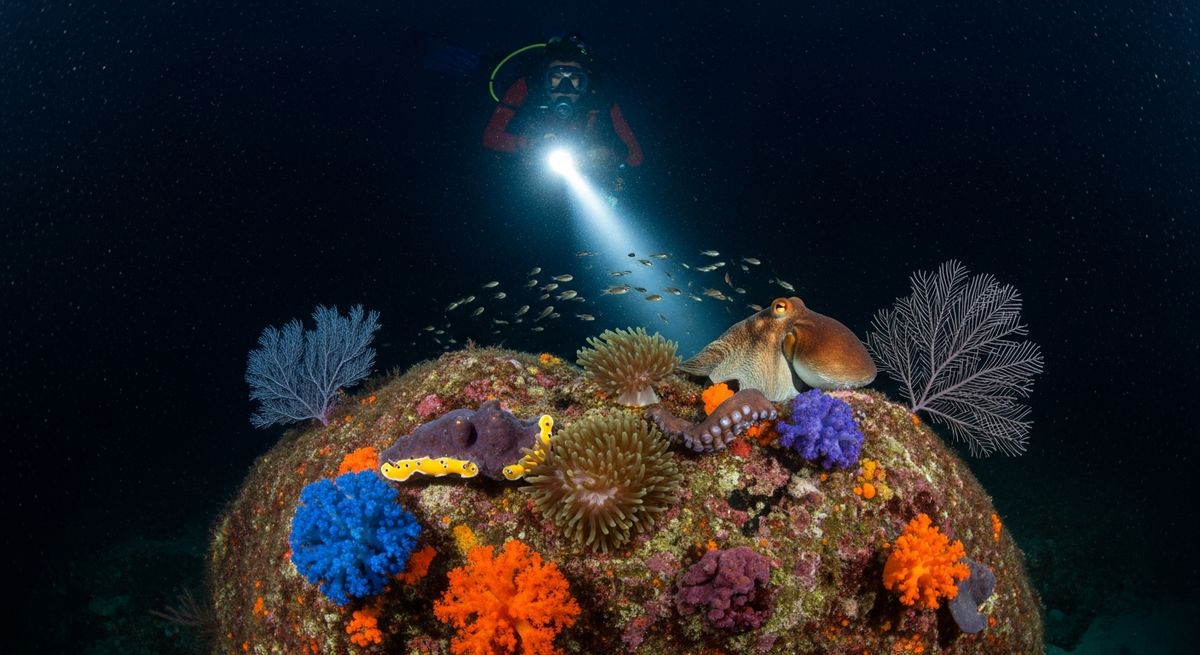
Ari Atoll - Rasdhoo Atoll

Ari Atoll, specifically the Rasdhoo channels, is where we head when we're chasing big pelagics in the Maldives. It’s a reliable spot, not a guarantee, but your odds of seeing hammerheads at sunrise, or a passing manta ray during the day, are some of the best in the country. We’ve had some cracking dives here with grey reef sharks cruising along the drop-off and big schools of blacktail barracuda swirling in the blue. Keep an eye out for Napoleon wrasse, they’re practically residents on some of the deeper coral patches. It's a site that often has a bit of current, so it’s more for divers comfortable moving with the water.

Location
Rasdhoo Atoll, Maldives, Indian Ocean & East Africa
Coordinates
3.950000, 72.850000

Marine Protected Area: Mushimasmigili Thila

Best Time to Dive in Rasdhoo Atoll

The warmest water temperatures in Rasdhoo Atoll occur in April, averaging 30.7°C. The coolest conditions are in January at 28.6°C.

Monthly Water Temperatures

  • January: 28.6°C
  • February: 28.8°C
  • March: 29.6°C
  • April: 30.7°C
  • May: 30.1°C
  • June: 29.7°C
  • July: 29.8°C
  • August: 29.8°C
  • September: 29.6°C
  • October: 29.3°C
  • November: 29.4°C
  • December: 29.1°C

Nearby Dive Sites in Rasdhoo Atoll

Nearest Dive Centres to Ari Atoll

Marine Life in Rasdhoo Atoll

Home to 104 recorded species including 42 hard corals, 42 reef fish, 6 sea snails & nudibranchs, 4 seagrass & algae, 2 sharks & rays, 2 other.

Notable Species

Recommended Packing List for Ari Atoll

Based on average water temperature of 29.5°C, currents 16 cm/s.

  • Shorty or Rashguard - warm 30°C water needs minimal exposure protection
  • Mask - essential for every dive
  • Fins
  • BCD - buoyancy compensator
  • Regulator - your most safety-critical piece of gear
  • Dive Computer - tracks depth, time, and NDL
  • Surface Marker Buoy (SMB) - essential for boat pickups
  • Dive Torch - useful for crevices and colour at depth
  • Underwater Camera - capture your diving memories

Frequently Asked Questions

What are the typical diving depths at Ari Atoll dive sites?
The specific typical diving depths for Ari Atoll dive sites are not detailed in the available information. However, as a prominent reef diving destination, depths can vary significantly depending on the specific site and dive plan. Divers should always consult with local dive operators for precise depth profiles.
What kind of marine life, especially large pelagics like whale sharks and manta rays, can I expect to see when diving in Ari Atoll?
When diving in Ari Atoll, you can reliably expect to encounter an impressive array of marine life, particularly large pelagics. Frequently seen passing big fish include whale sharks, mantas, hammerheads, and eagle rays. Additionally, you'll likely spot large resident species such as Napoleon wrasse, grey reef and white tip sharks, and vast schools of blacktail barracuda and batfish.
Is diving in Ari Atoll suitable for beginner divers, or is it mostly for advanced levels?
Diving in Ari Atoll is generally classified as intermediate difficulty. While some sites may be suitable for less experienced divers, many of the more renowned dives, especially those with strong currents or deeper profiles, will require a higher level of skill and experience. Beginners should consult with local dive centers to find appropriate sites or consider further training.
When is the best time of year to dive in Ari Atoll for optimal conditions and marine life sightings?
The provided data for Ari Atoll does not specify the best time of year for optimal diving conditions or marine life sightings. For detailed seasonal information, including specific currents, visibility, and peak times for pelagic encounters, divers should refer to comprehensive when-to-dive guides or consult local Maldivian dive operators.
What scuba diving certifications are typically required for the dive sites in Ari Atoll?
Given that diving in Ari Atoll is categorized as intermediate difficulty, divers will typically need at least an Advanced Open Water certification or equivalent. This ensures you have the necessary skills and experience for potential deeper dives, currents, and more challenging conditions often found when seeking pelagic encounters. Always confirm specific certification requirements with your chosen dive operator.
What are the typical water conditions, including currents and visibility, when diving in Ari Atoll?
The available data for Ari Atoll does not provide specific details regarding typical water conditions, including currents and visibility. However, as a renowned destination for pelagic encounters in the Maldives, it is common for such sites to experience varying currents that attract large marine life. Divers should always check current conditions with local dive centers before planning their dives.