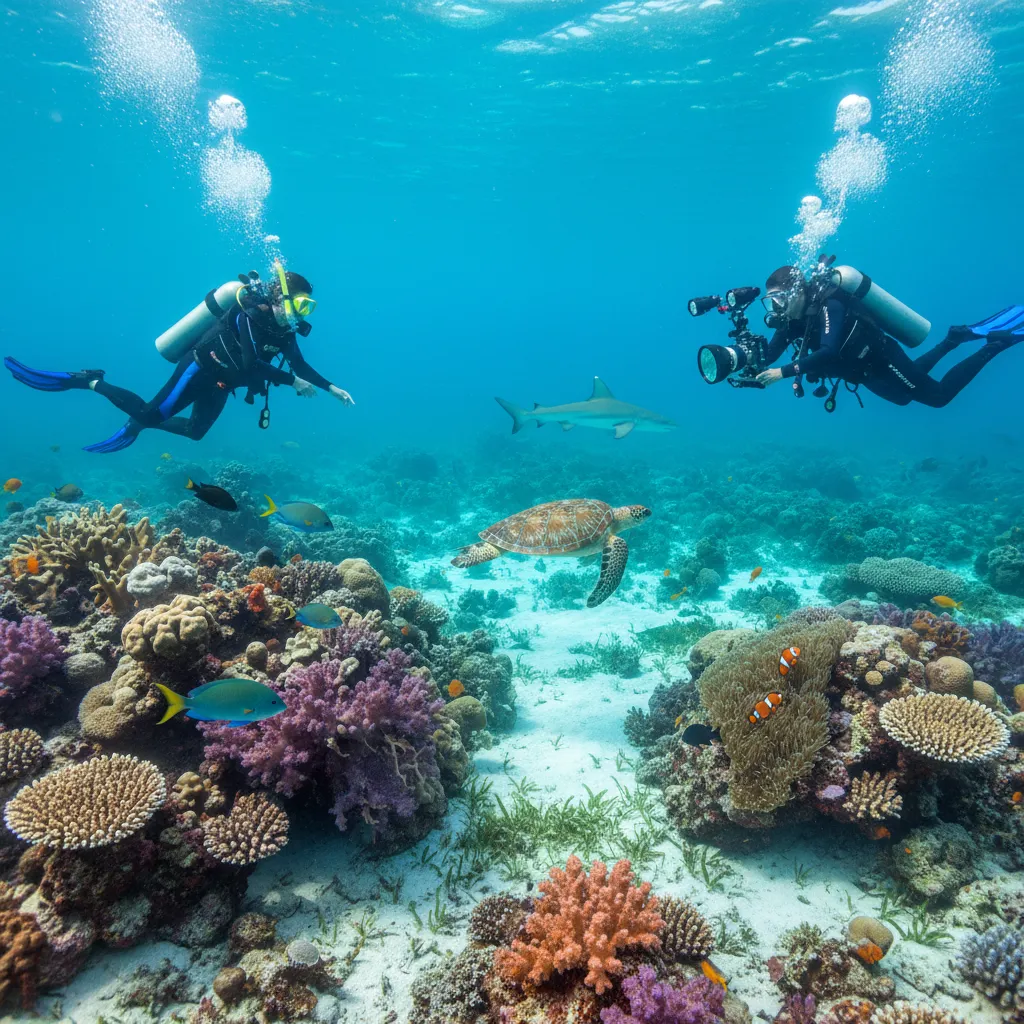
Diving in Mayotte Lagoon
Why dive here
Mayotte Lagoon offers some of Mayotte's richest diving, with 401+ marine species recorded in the area - including barracuda, blue sharks, blue-spotted stingrays, dolphins and dugongs. Water ranges 27-31°C, warmest February, March, April.
Mayotte Lagoon is a place we often talk about back at the office. We've dived it a few times, and it really sticks with you, a truly massive enclosed lagoon. It’s the sheer scale that gets you, stretching out, protected by this incredible double barrier reef. You can spend days here, dipping into the 37 different sites, and still feel like you’ve barely scratched the surface. Diving here is like stepping into a warm, calm bath most days, especially inside the lagoon itself. Visibility can hit a good 25 meters, letting you soak in the details. We love finding the Chiragra spider conch, a real oddity, just inching along the sandy patches. The Golden-Yellow Cone snails are also a favourite of ours; their colours are just so vivid against the coral. You’ll drift past walls thick with stony corals, and sometimes, you’ll find yourself in a school of Humphead Unicornfish, their distinctive noses poking out as they cruise by. Our advice? Head out early. The light hitting the shallows just after sunrise, filtering through the water, is magic. You’ll see the Day Sarpon and Blackspot pygmy wrasse really active then. For those who enjoy a bit of current, the drift dives along the outer barrier can be exhilarating, but always chat with the dive centre about conditions - they can vary. It’s not about big pelagics every time, but the consistent, calm beauty of the reef, the smaller, fascinating creatures, and that incredible feeling of being inside such a vast, natural aquarium.
Mayotte Lagoon Dive Site Map
Dive sites and dive centres in Mayotte Lagoon
Mayotte Lagoon Dive Sites
37 dive sites in Mayotte Lagoon
Abalone
Abalone in Mayotte Lagoon feels like dropping into an enormous, natural aquarium. We love this site for its sheer variety, but particularly for the table and staghorn corals that create these incredible, intricate structures. It’s not a deep dive, perfect for just floating along and really taking in the smaller stuff. The standout here is the sheer number of parrotfish – the Batavian and Eclipse are always around, chipping away at the coral. You’ll also spot the Flathead Sleeper, a surprisingly elegant fish, often perched on the sand. We usually find Dwarf Morays peeking out from crevices, and the Silver Moonies shimmer in the dappled light filtering through the lagoon. Keep an eye out for the Humpbacked conch moving slowly across the sandy patches. It’s a gentle current most days, which means you can really take your time observing the Sebae Anemonefish darting through their host anemones. This is a site we’d recommend for anyone who enjoys a relaxed dive with plenty to see, especially if you appreciate healthy coral gardens and a vibrant population of reef fish.
Banc du Geyser
Banc du Geyser is a compelling spot within the vast Mayotte Lagoon. Divers here often encounter oceanic manta rays cruising the reef, a definite highlight. We've also had incredible luck spotting melon-headed whales passing through. It's a site that rewards those comfortable with deeper lagoon diving and keen on pelagic encounters.
Chira Rani - Patate Bleue
Chira Rani, or Patate Bleue as some of the local guides call it, is a lovely, gentle introduction to Mayotte’s lagoon diving. Dropping down to about 18 meters, it’s a mellow drift over a sandy bottom dotted with some really impressive coral bommies. We usually find schools of surgeonfish cruising the edges and often spot a few robust moray eels peeking out from the coral heads. It’s perfect for newer divers or anyone looking for a relaxed, easy dive after a long day of travel.
chira rochi
Chira Rochi is a mellow dive, perfect for beginners looking for an easy introduction to Mayotte's lagoon. At a consistent 21 meters, you drift over sand and coral patches, spotting small reef fish like damselfish and parrotfish going about their day. It’s a good spot to get comfortable with your buoyancy or for a relaxed second dive.
îlot Bambo #1
Îlot Bambo #1 is a shallow lagoon dive, perfect for newer divers or those looking for a relaxed afternoon. The maximum depth of 21 metres means plenty of bottom time to explore the sandy patches and the scattered coral bommies. We often spot juvenile reef fish taking shelter here, along with a few friendly turtles grazing. It’s a gentle introduction to Mayotte’s inner lagoon.
îlot Bambo #2
Îlot Bambo #2 sits in the lagoon, a nice, shallow dive down to 23 metres. It’s ideal for newer divers or those looking for a relaxed afternoon drift. You'll find a good mix of smaller reef fish here, along with a decent chance of spotting turtles cruising by. It’s a gentle introduction to Mayotte’s calmer waters.
Îlot Bandrelé #1
Dropping onto the sand flats near Îlot Bandrelé, you're immediately struck by how shallow and calm it is here. At just 15 metres, it’s a lovely, relaxed drift over patches of sand and seagrass, punctuated by small coral heads. We often spot juvenile parrotfish nibbling away, and there's usually a turtle or two grazing in the seagrass, completely unbothered by divers. It’s an ideal spot for new divers to get comfortable with their buoyancy, or for anyone wanting a truly peaceful, easy dive with reliable turtle encounters.
Ilot Bandrelé #2
Ilot Bandrelé #2 is a gentle lagoon dive, staying shallow at 23m. It’s a good spot for newer divers looking for an easy experience. You'll likely see a range of smaller reef fish and perhaps a green sea turtle cruising by. It's a relaxed dive, no strong currents to worry about, making it ideal for checking your buoyancy.
La Barge Profonde (Wreck)
When we talk about wreck diving in Mayotte, our minds usually drift to the pinnacles, but La Barge Profonde is a proper, moody wreck that deserves its due. Down at 27 metres, this isn't a beginner's jaunt, but if you’ve got your advanced cert, you’re in for a treat. It’s an old fishing barge, sunk decades ago, now completely reclaimed by the sea. What we love here is the sheer density of glassfish that swarm the interior. They pour out of every opening as you approach, a shimmering, living curtain. Look closer and you'll spot scorpionfish perfectly camouflaged on the rusted hull, and we’ve often seen robust ghost pipefish clinging to the hydroids. The wreck itself is largely intact, with a clear outline of the wheelhouse and cargo holds, making for some great swim-throughs if you're comfortable with overhead environments. Our favourite part? Peering into the darkness of the engine room, often home to massive groupers. It's a deep dive, so watch your bottom time, but it's easily one of Mayotte’s most atmospheric wreck experiences.
L’arche de Bandrelé
L’arche de Bandrelé offers a good peek into Mayotte’s deeper lagoon structures. We’ve found the arch itself, sitting at about 22m, to be quite photogenic, especially when the light is right. It’s not a massive cave system, more of a swim-through, so it’s manageable for intermediate divers who want to explore something a bit different without needing advanced cave certs. Look for the usual reef fish sheltering in the nooks and crannies. It’s a solid dive for an afternoon, a nice break from the outer reef drift dives.
La Surprise
La Surprise is one of those spots in Mayotte that just delivers. We’ve had some truly fantastic dives here, the kind where you surface buzzing. It’s a pinnacle, dropping from about eight metres to a sandy bottom at 25m, and it's almost always a riot of activity. The site gets its name from the unexpected encounters you can have, and it really lives up to it. We’ve seen mantas glide past on multiple occasions, just cruising in the blue, completely unbothered. Turtles are pretty much a guarantee, often found resting on the coral ledges or slowly munching away. But for us, the real spectacle is the schooling barracuda. Sometimes there are so many of them, they form a shimmering wall that you can just hang out next to. It feels like swimming inside a silver tornado. Currents here can be mild to moderate, making it a good intermediate dive. We'd suggest going in the morning if you can swing it; the light on the schooling fish is something else. You’ll find healthy stony and soft corals, with big patches of staghorn and lettuce coral that provide plenty of nooks for whitetail surgeonfish and spotted toby to duck into. Keep an eye out for the colourful flashes of rainbowfish and the deep blue of dark-fin chromis against the coral. It’s a vibrant place, full of life, and it leaves you feeling pretty optimistic about the health of the lagoon. This site really suits divers who appreciate a good drift and the thrill of encountering larger pelagics alongside busy reef life.
Le Laminoir
Le Laminoir sits at a gentle 23 metres in the Mayotte Lagoon. It's a relaxed drift dive, perfect for intermediates looking for an easy cruise. You'll likely spot plenty of reef fish flitting through the corals and maybe a turtle gliding past. It's a nice, straightforward dive to enjoy the typical lagoon scenery.
Show all 37 dive sites in Mayotte Lagoon
- N'Gouja Beach Reef
- Passe Bandrelé
- Passe bateau nord
- Passe bateau sud
- Passe boueni nord - patate barracuda
- Passe Boueni sud
- Passe en S
- Passe en S #1
- Passe en S #10
- Passe en S #11
- Passe en S #1B
- Passe en S #2
- Passe en S #5
- Passe en S #6
- Passe en S #7
- Passe en S #7B
- Passe en S #8
- Passe en S #8B
- Passe en S #9
- Passe Sada Nord
- Passe Saziley
- Piste de ski - Mayotte
- Plage aux tortues
- Tombant Sakouli
- Yohan’s Wreck
Mayotte Lagoon Dive Centres
2 dive shops and operators in Mayotte Lagoon
Ocean Wildlife in Mayotte Lagoon
401 species recorded in Mayotte Lagoon
Mayotte Lagoon Daylight & Sunrise/Sunset
Sunrise and sunset times for Mayotte Lagoon, calculated from coordinates
Today - Sunday 11 October
Sunrise
05:37
Sunset
17:56
Daylight
12h 20m
Golden Hour
17:28
First light (dawn) at 05:15 · Last light (dusk) at 18:18
Monthly Averages
| Month | Sunrise | Sunset | Daylight |
|---|---|---|---|
| Jan | 05:45 | 18:33 | 12h 48m |
| Feb | 05:59 | 18:30 | 12h 31m |
| Mar | 06:04 | 18:15 | 12h 11m |
| Apr | 06:05 | 17:54 | 11h 49m |
| May | 06:11 | 17:42 | 11h 32m |
| JunShortest | 06:19 | 17:42 | 11h 22m |
| Jul | 06:23 | 17:49 | 11h 26m |
| Aug | 06:14 | 17:55 | 11h 41m |
| Sep | 05:55 | 17:56 | 12h 1m |
| OctNow | 05:34 | 17:57 | 12h 22m |
| Nov | 05:24 | 18:06 | 12h 42m |
| DecLongest | 05:29 | 18:21 | 12h 53m |
Times are approximate local times based on longitude. Actual times may vary slightly depending on the exact timezone observed in Mayotte Lagoon.
Where to Stay near Mayotte Lagoon
Prices from Booking.com. We may earn a commission at no extra cost to you.
Marine Protected Areas near Mayotte Lagoon
21 protected areas near Mayotte Lagoon - please respect local regulations when diving
Mayotte
N’Gouja
Littoral De Bandrele
Pointes Et Ilots Du Nord
Pointes Et Plages De Saziley Et Charifou
La Vasière des Badamiers
Baie De Boueni
Littoral De Mamoudzou
Bassin Versant De Tsingoni
Ilot Mbouzi
Littoral De Dembeni
Baie De Dzoumogne-Longoni
Showing 12 largest of 21
Getting to Mayotte Lagoon
Dzaoudzi
Moroni
Mahajanga
Plan & book
Ways to dive Mayotte Lagoon, from day trips to liveaboards.
Day trips & courses
via GetYourGuideGuided dives, courses and snorkel trips with instant booking.
Find dive trips in Mayotte LagoonPlaces to stay
via Booking.comHotels and dive resorts near Mayotte Lagoon.
Search stays in Mayotte LagoonDive insurance
Most travel insurance excludes or limits scuba. Check what you need before you go.
Dive insurance explainedPartner links: we may earn a commission if you book, at no extra cost to you. How we make money