CAPLIA
Protected Area
Fondali dello Zingaro
Why dive here
With 60+ marine species recorded in the area - including dolphins, sea turtles and sperm whales - CAPLIA offers some of Ustica's richest wreck diving. Water ranges 15-29°C, warmest July, August, September.
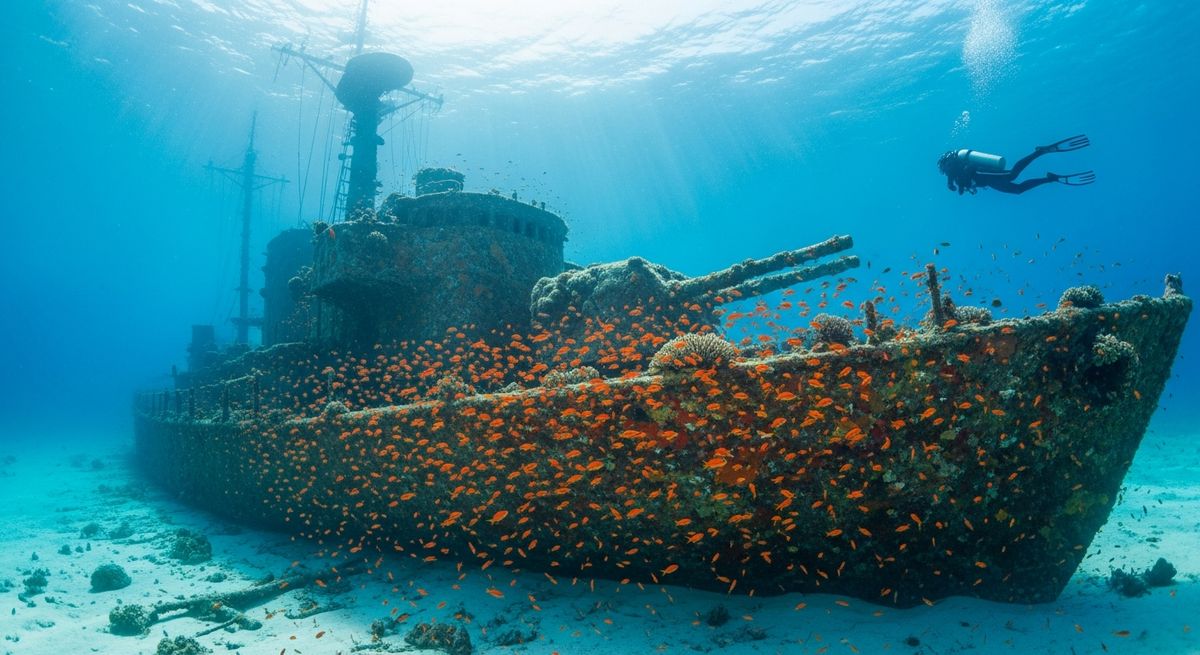
Caplia, for us, is a real character of a wreck. This old steamship, sunk in 1943, sits upright in just 10 metres of water, making it a fantastic dive for newer wreck enthusiasts or anyone looking for a relaxed second dive. You’ll spend your time exploring the bow section, the anchor chain still draped dramatically over the side, and the stern with its prop shaft. We love how much light floods the site; even on a cloudy day, the wreck feels illuminated, the metalwork taking on a soft, muted glow. It's a site that's been thoroughly colonised by the Mediterranean. Look closely and you’ll spot moray eels tucked into crevices, their heads poking out with that perpetually grumpy expression, while schools of damselfish flit above the decks. Our favourite detail is the way the light filters through the remaining structure, creating these shifting patterns on the sandy bottom. Go early in the morning if you can; the water is usually at its calmest, and you get to enjoy the wreck before any other boats arrive. While it's a dangerous wreck, the sections you can explore are open and forgiving, just be mindful of fishing lines.
Typical CAPLIA Dive Profile
Illustrative profile based on site depth and type. Actual dive profiles vary - always follow your dive computer and training.
Safety Notes
Wreck site - avoid penetration without wreck diving certification. Watch for sharp metal and entanglement hazards.
CAPLIA Wreck History
Year Sunk
1943
Vessel Type
cargo ship
Cause
torpedo
Tonnage
346 GRT
The SS Caplia is a tangible piece of World War II history resting in the tranquil waters of Ustica. This 346-ton Italian steamship was pressed into service during the war, transporting goods through the highly contested Mediterranean. Its final voyage took place on April 17, 1943, when it was spotted by the British submarine HMS Unshaken. A single, well-aimed torpedo from the submarine found its mark, and the Caplia was sent to the seafloor in a matter of minutes, becoming another casualty of the war at sea.
Because it sank in just 10 meters of water, the Caplia is an incredibly accessible wreck, perfect for divers of all certification levels. The shallow depth allows for long, relaxed dives with excellent visibility and vibrant colors from the abundant natural light. While the explosion and subsequent years underwater have broken the ship apart, its boiler and steam engine remain prominent and easily identifiable. The wreckage has transformed into a thriving artificial reef, teeming with octopus, moray eels, and colorful fish, offering a dive that is both historically significant and full of life.
Nearest Dive Centres to CAPLIA
Dive shops near CAPLIA
LUNA BLU DIVING CENTER
Centro Sub Atlantis
Sea Diver
DIVING CENTER SARACEN
Sailing Bubbles A.S.D.
Ditta Francesco Genchi
Reviews for CAPLIA
Conditions
Ocean conditions, forecast and tides for CAPLIA
CAPLIA Ocean Conditions
Monthly averages for CAPLIA, sourced from Open-Meteo marine data - nearest station: Open-Meteo marine grid (38.1, 14.46) (15km away)
October Averages
Sea Temperature
24°C
75°F · Range: 22.1–25.7°C
Air Temperature
22°C
71°F
Wind Speed
7.27 m/s
14.1 knots
Atmospheric Pressure
1018.1 hPa
Based on 4 years of monitoring data · Data sources: Open-Meteo marine data
Plan & book
Ways to dive Ustica, from day trips to liveaboards.
Day trips & courses
via GetYourGuideGuided dives, courses and snorkel trips with instant booking.
Find dive trips in UsticaPlaces to stay
via Booking.comHotels and dive resorts near Ustica.
Search stays in UsticaDive insurance
Most travel insurance excludes or limits scuba. Check what you need before you go.
Dive insurance explainedPartner links: we may earn a commission if you book, at no extra cost to you. How we make money
Where to Stay near CAPLIA
Prices from Booking.com. We may earn a commission at no extra cost to you.