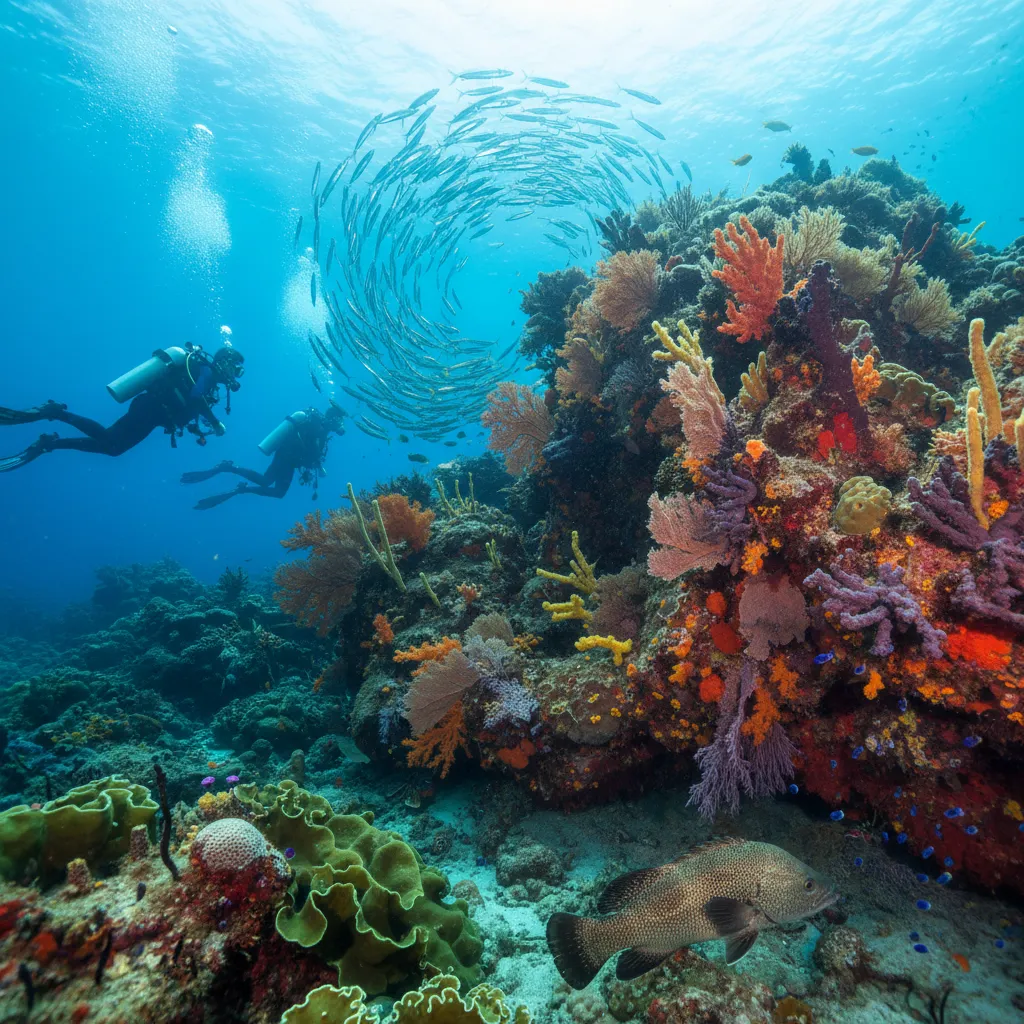
Diving in Ustica
Why dive here
Ustica offers some of Italy's richest diving, with 60+ marine species recorded in the area - including dolphins, sea turtles and sperm whales. Water ranges 15-29°C, warmest July, August, September.
Ustica holds a special place in our hearts; it was Italy's first marine protected area for good reason. Diving here feels like stepping back to a healthier Mediterranean. We love the intricate cave systems and the pinnacles that rise from the deep, often draped in Neptune's lace. You'll regularly spot schools of horse mackerel flashing past, and if you’re lucky, a curious Odd Bobtail Squid tucked into a crevice. The dive sites are a mix, from beginner-friendly reefs to more adventurous pinnacles, but it’s the sense of protection that really stands out. Visibility is generally excellent, often pushing 30 metres in summer, making the light rays in the grottos particularly dramatic. Our favourite site is the Grotta dei Gamberi, a shallow cave packed with red shrimp - look closely for them clustered on the roof. For something deeper, the Secchitello pinnacle is a real magnet for pelagics, especially in late summer when the water is warm and the baitfish are thick. We'd suggest visiting in early autumn; the crowds thin out, but the water is still bathtub warm, and the marine life remains active. Keep an eye out for Cuvier's Beaked Whales, though they’re shy, they do pass through these waters.
Ustica Dive Site Map
Dive sites and dive centres in Ustica
Ustica Dive Sites
122 dive sites in Ustica
ALMERIAN
The Almerian wreck off Ustica is less about big thrills and more about quiet exploration. It’s a shallow dive, maxing out at 16 meters, which we love for its accessibility and generous bottom time. What was once a British steamship, sunk by a torpedo in October 1918, is now a series of broken sections spread across a sandy seabed. You won't find an intact hull here, but that's part of its charm. We particularly enjoy tracing the debris field, imagining the moments of its sinking. The real draw, for us, is the way the Mediterranean has reclaimed it. Schools of damselfish shimmer over the metal plates, and every crack and crevice seems to host moray eels or nimble slipper lobsters. Keep an eye out for octopus, too; they often camouflage themselves so perfectly you only spot them when they decide to glide away. The scattered sections mean there’s always something new to investigate, making it a surprisingly engaging dive for all levels, even if you’re just getting comfortable with wreck sites. It's a gentle introduction to history underwater.
AMICIZIA
Amicizia isn't your average Mediterranean wreck. This old cargo ship, sunk intentionally in the 1980s, sits upright and largely intact at a comfortable 17 metres. It’s an ideal spot for anyone who wants a relaxed dive, maybe even their first wreck, without sacrificing character. We love how the deck is still open in places, letting you peer into what were once holds, now just dark pockets where groupers hide. The best time to dive Amicizia is mid-morning, just as the sun gets high enough to really illuminate the bridge and bow. You’ll often find schools of damselfish shimmering around the mast, and we’ve seen some surprisingly large moray eels tucked into crevices along the hull. Look closely at the deck plating; it's practically encrusted with colourful sponges and small anemones. The wreck also sits on a sandy bottom, so if you're patient, you might spot an octopus camouflaged near the stern. It's a gentle dive, perfect for just cruising around, soaking in the history, and enjoying the way the light plays through the structure.
Apogon
Apogon in Ustica offers a straightforward Mediterranean dive. You'll likely see schools of apogons, hence the name, tucked into rocky crevices, and often groupers patrolling the deeper sections. If you're lucky, a loggerhead turtle might pass through. It's a relaxed spot, good for a second dive or for divers looking for a calm exploration.
Arenata
Arenata isn't your typical wreck dive, and that's precisely why we love it. This is a shipwreck for snorkelers, a historical footnote found literally metres from shore, with its metal bones breaking the surface at points. It’s the remains of a small freighter, the Arenata, sunk in 1943. We often head there after a morning dive, just to splash around and explore the twisted metal structure. The shallowness means light plays beautifully over everything. You can watch the sun dance across the rust-coloured hull plates, and every nook and cranny seems to house something interesting. Little damselfish flit amongst the rebar, and we’ve spotted small octopus tucked into the crevices more than once. It’s a fantastic spot for photographers looking for something a bit different, or for families with younger snorkelers. While you won't be descending to explore engine rooms, you get a palpable sense of history, right there at the surface. Our favourite time to go is late afternoon, as the light softens and the water calms.
ARIADNE
Ariadne is our pick for a shallow wreck dive in Ustica, perfect for getting a feel for the island’s history without needing to go deep. She’s a motor vessel, ran aground in ’79 after her engine failed in rough seas, and now lies broken up across the seabed at a consistent 8 metres. What we love about her is how accessible she is; you can spend a full hour just poking around the scattered hull plates and machinery. The stern section, though fairly broken, still gives you enough structure to imagine her former shape, with some large beams creating swim-throughs you can easily navigate. Sunlight filters down, illuminating clouds of damselfish that dart in and out of the darker spaces. You’ll spot moray eels tucked into the crevices, their heads peeking out, and we’ve often seen schools of barracuda hanging just off the wreck, silhouetted against the surface. It’s a site that proves you don’t need extreme depths for a compelling wreck dive, and it’s a great spot for photographers keen on natural light.
ARIANNA
Arianna, now she's a different sort of wreck dive. You're not going deep here, she’s practically in a bathtub, sitting at a maximum of three metres. This ex-American minesweeper, later a motor vessel, caught fire and was beached just east of Palermo Harbour entrance back in 1980. Our favourite thing about her is the sheer accessibility – grab a mask and snorkel if you like, though we always prefer a tank for a closer look. What you'll find is a surprisingly intact hull, softened by decades of growth. Sunlight filters right through, illuminating schools of juvenile damselfish flitting through rusted portholes. We've spent ages just watching octopus disappear into crevices, their eyes following us as we fin gently by. It’s an incredibly tranquil experience, perfect for photographers wanting to play with ambient light or new divers getting their first taste of a genuine wreck. Just watch out for the occasional curious sea urchin clinging to the metal.
ARIS
The ARIS wreck, sitting just two metres deep off Ustica’s coast, is a lovely shallow dive, perfect for an afternoon when you want something a bit more relaxed. She went down back in '77 after a fire, and what’s left of the motor vessel is now well-encrusted. You can swim right over the top, spotting damselfish darting through the remains of the superstructure and sometimes a curious octopus peeking out from under a plate. It's an easy snorkel or a leisurely dive, ideal for photographers wanting to play with the shallow light, or for newer divers getting a feel for wrecks without the pressure of depth.
ARTURO VOLPE
The Arturo Volpe is a surprisingly accessible wreck, considering its size. She's a big old cargo steamer, 86 metres long, that ran aground in heavy weather back in '73. Now she sits with her bow in just ten metres of water, her stern pointing towards the deep. This shallow depth makes her a favourite of ours for a relaxed second dive or for divers who want the wreck experience without the nitrogen narcosis. We love finning along her deck, peering into the holds where schools of damselfish hover, glinting in the shafts of light. Her superstructure is still largely intact, offering easy penetration for those keen to explore – just be mindful of your buoyancy. Look out for moray eels tucked into crevices and big groupers patrolling the deeper sections of the stern. It's a proper shipwreck dive, but gentle enough for newer wreck enthusiasts. Go early to avoid the crowds, as it can get busy in summer.
ASO
The ASO wreck, a motor vessel that went down in 1979, lies upright at 30 meters. It’s a respectable size at nearly 60 meters long, and we’ve found it’s a good spot for a single dive, offering plenty to explore without feeling rushed. The hull is largely intact, though time and the sea have certainly taken their toll, opening up some interesting swim-throughs into the cargo holds. Around the bridge, you’ll usually find clouds of damselfish and small groups of barracuda hanging in the blue. It's a solid dive for anyone comfortable at depth and looking for a classic Mediterranean wreck.
ATALIA
Atalia, just off the coast of Ustica, is a beautiful, accessible wreck, perfect for divers who appreciate history without needing extreme depths. What you see now are the distributed remains of a steamship, sunk in 1917, scattered across a shallow seabed. It’s less about penetration and more about an archaeological wander through history, with fragments of the ship’s structure, plates, and machinery spread out in an almost artistic fashion. We love how the light plays on the metal, even at this shallow depth, and the way the sea has reclaimed it. You’ll find plenty of life making these metal bones their home. Expect to see vibrant damselfish darting between the pieces, small scorpionfish camouflaged against the rust, and often, a moray eel peeking from a sheltered spot. Because it’s so shallow, around 5 meters, it's a fantastic site for extended bottom times and ideal for photographers, or just for leisurely exploration. Our favourite part is spotting the unexpected, like an old porthole frame half-buried in the sand. We’d suggest going in the morning; the water is usually calmer then, and the light is just perfect for illuminating the wreck's every detail.
ATLA
The ATLA wreck off Ustica offers a solid dive, particularly if you’re keen on exploring a sunken vessel. Lying at 31 metres, it’s a fishing boat that went down some time ago, and the Mediterranean has certainly started reclaiming it. What we really like about the ATLA is the way groupers have made it their home; you’ll often spot them lurking in the deeper holds, alongside nudibranchs that graze the hull. It’s a comfortable dive for those with Advanced Open Water or equivalent, with currents usually quite mild, allowing for a good circuit around the deck and superstructure.
Atlantis Bay
Atlantis Bay on Ustica’s north coast offers a gentle introduction to Mediterranean diving. We usually find schools of damselfish flitting among the rocky ledges, with nudibranchs clinging to the walls. It's a nice easy dive, often calm, making it a good spot for those looking for a relaxed exploration rather than big thrills.
Show all 122 dive sites in Ustica
- AZZURRA SECONDA
- Baia Verde
- Bellatrix
- BIRILLO
- Bludive Salina
- Boe Capo Taormina
- Bowesfield
- BYBLOS
- Canaloni
- CAPITANO ANTONIO
- CAPLIA
- Capo Gallo
- Capo Mulini Wreck
- Capo Sant Andrea reef
- CARIDDI
- Ciccillo
- CITTA DI FANO
- CITTA DI SIRACUSA
- CITTA DI TRAPANI
- COLOMBO DO FARO
- EFISIA SERRA
- ELPIS 1
- ENOS
- ENRICA
- ENRICO COSTA
- Faraglione
- FEDE
- Ferdinandea volcano
- FISHPOOL
- Fiumarella
- FORT PELLY
- FULMAR TRADER (POSSIBLY)
- GAIA (PROBABLY)
- Galeotta
- German Lighter - Lazzaro
- GIORGIONE
- Golfo di Naxos
- Grotta Azzurra
- Grotta Cattedrale
- Grotta dei Gamberi
- Grotta del Formaggio
- Grotta della Ficarella
- Grotta delle Cipree
- Grotta Maltese
- Grotto Azurro
- HMS Thetis
- HMS Tribune
- HMT ARACARI
- Il Cristo di Mazara del Vallo
- Isola Bella
- JUPITER
- KENT
- KERKIS (POSSIBLY)
- La Cattedrale
- La Fossa del Monaco
- La Grande Montagna
- La Madonna della Misericordia
- La Marinella Tec
- La Mpaddata
- La Secca del Vatro
- LCT
- LCT 353
- Le Piramidi
- Le Vasche di Cassiodoro
- Lingua del gigante - ovest
- MARINETA
- MARZAMEMI
- MICHELINA
- Naxos pier
- Near Faraglioni
- Off San Pietro
- OMNIA BENE
- PALMAGOLA
- Panettoni
- Parete delle gorgonie
- PAVLOS (POSSIBLY)
- PAVLOS V (POSSIBLY)
- Percorso Archeologico Scopello
- PIRANO
- PORTO PALO
- PRUDENZIA
- Punta Castagna
- Relitto Capua
- Relitto del Kent
- Rigoletto Wreck
- RIMINI
- RINASCITA PRIMA
- Roman Columns
- ROSSO
- SAN GIOVANNI
- S ANTONIO
- Scilla
- SCIMITARRA
- Scoglio del bagno
- Scoglio del medico
- Scoglio del Medico
- Secca della Colombara
- Secca Emiliana
- Secchitella
- SIRACUSA (POSSIBLY)
- Sutta zà Lisa
- TESEO
- The Arch
- TOMMASEO
- TOSCA
- TRABIA
- Tropea Jetty
- Ustica Island Marine Reserve
- VETOR SECONDO
- Zio Gennaro
Ustica Dive Centres
53 dive shops and operators in Ustica
Altamarea Diving Center
AQUATICA DIVING CENTER
Argonauta Cala Gonone
Argonauta La Maddalena
Asd Capo Milazzo Diving Center
ASD DNA Divertiamoci Negli Abissi
A.S.D. EVOLUTION DIVER
A.S.D. JONICA DIVING SCHOOL
Show all 53 dive centres in Ustica
- A.S.D. SUBAMICI
- A.S.D The Frogmen team
- Barone Blu
- Bluassoluto Diving
- Blue Diving Academy
- Blue Sea Diving Center
- Bluforia
- BLUNAUTA DIVING CENTER MILAZZO
- Cento X Cento Diving A.S.D.
- Centro Immersioni Figarolo
- Centro Sub Atlantis
- Centro Sub Treviglio
- Ditta Francesco Genchi
- Dive In Bellagio ASD
- Divenjoy
- DIVING CENTER SARACEN
- DIVING CENTER SARACEN FAVIGNANA
- DNA DIVERS
- Evasioni Blu Diving
- EXPLORER X S.R.L.S.
- GESTIONE MARE DIVING & CHARTER
- Idea Sub
- JALA A.S.D.
- Jonio Pro-Dive Catania
- Liquid Dive
- LUNA BLU DIVING CENTER
- Mare Nostrum Diving Ustica
- Marina di Venezia Dive Resort
- MEGALE HELLAS DIVING CENTER
- Moby Diving
- Mondo sub
- MUCIARA DIVING CENTER
- Nautilus Diving Center
- Nike Diving Center
- No Deco Diving School
- Progetto Sub Sardegna
- Sailing Bubbles A.S.D.
- Scubalibre di Casini Danilo
- Sea Diver
- Sea Spirit Diving Resort
- Sottolonda Diving Center
- Sport Diver Club
- Star Sport & Sub
- UNIVERSALRENT DIVING CENTER
- Venice Diving
Ocean Wildlife in Ustica
60 species recorded in Ustica
Ustica Daylight & Sunrise/Sunset
Sunrise and sunset times for Ustica, calculated from coordinates
Today - Sunday 11 October
Sunrise
06:08
Sunset
17:33
Daylight
11h 25m
Golden Hour
16:57
First light (dawn) at 05:41 · Last light (dusk) at 17:59
Monthly Averages
| Month | Sunrise | Sunset | Daylight |
|---|---|---|---|
| Jan | 07:19 | 17:06 | 9h 47m |
| Feb | 06:55 | 17:40 | 10h 45m |
| Mar | 06:17 | 18:09 | 11h 52m |
| Apr | 05:30 | 18:37 | 13h 8m |
| May | 04:54 | 19:05 | 14h 11m |
| JunLongest | 04:40 | 19:27 | 14h 47m |
| Jul | 04:52 | 19:26 | 14h 35m |
| Aug | 05:18 | 18:59 | 13h 42m |
| Sep | 05:44 | 18:14 | 12h 30m |
| OctNow | 06:11 | 17:28 | 11h 18m |
| Nov | 06:43 | 16:53 | 10h 10m |
| DecShortest | 07:11 | 16:45 | 9h 33m |
Times are approximate local times based on longitude. Actual times may vary slightly depending on the exact timezone observed in Ustica.
Where to Stay near Ustica
Prices from Booking.com. We may earn a commission at no extra cost to you.
Marine Protected Areas near Ustica
65 protected areas near Ustica - please respect local regulations when diving
Area Marina di Capo Passero
Fondali dell'Arcipelago delle Isole Egadi
Riserva naturale marina Isole Egadi
Arcipelago delle Egadi - area marina e terrestre
Arcipelago delle Eolie - area marina e terrestre
Fondali dell'Arcipelago delle Isole Eolie
Fondali di Capo San Marco - Sciacca
Fondali dell'isola di Ustica
Area marina protetta Isola di Ustica
Fondali di Torre Salsa
Costa Viola
Monti Peloritani, Dorsale Curcuraci, Antennamare e area marina dello stretto di Messina
Showing 12 largest of 65
Getting to Ustica
Catania
Palermo
Lamezia Terme (CZ)
Plan & book
Ways to dive Ustica, from day trips to liveaboards.
Day trips & courses
via GetYourGuideGuided dives, courses and snorkel trips with instant booking.
Find dive trips in UsticaPlaces to stay
via Booking.comHotels and dive resorts near Ustica.
Search stays in UsticaDive insurance
Most travel insurance excludes or limits scuba. Check what you need before you go.
Dive insurance explainedPartner links: we may earn a commission if you book, at no extra cost to you. How we make money