AMBOIM
Protected Area
Cabo Raso
Why dive here
With 116+ marine species recorded in the area - including blue sharks, blue whales, dolphins, dwarf minke whales and ocean sunfish (mola mola) - AMBOIM offers some of Algarve & Berlengas's richest wreck diving. Water ranges 15-19°C, warmest June, October, November.
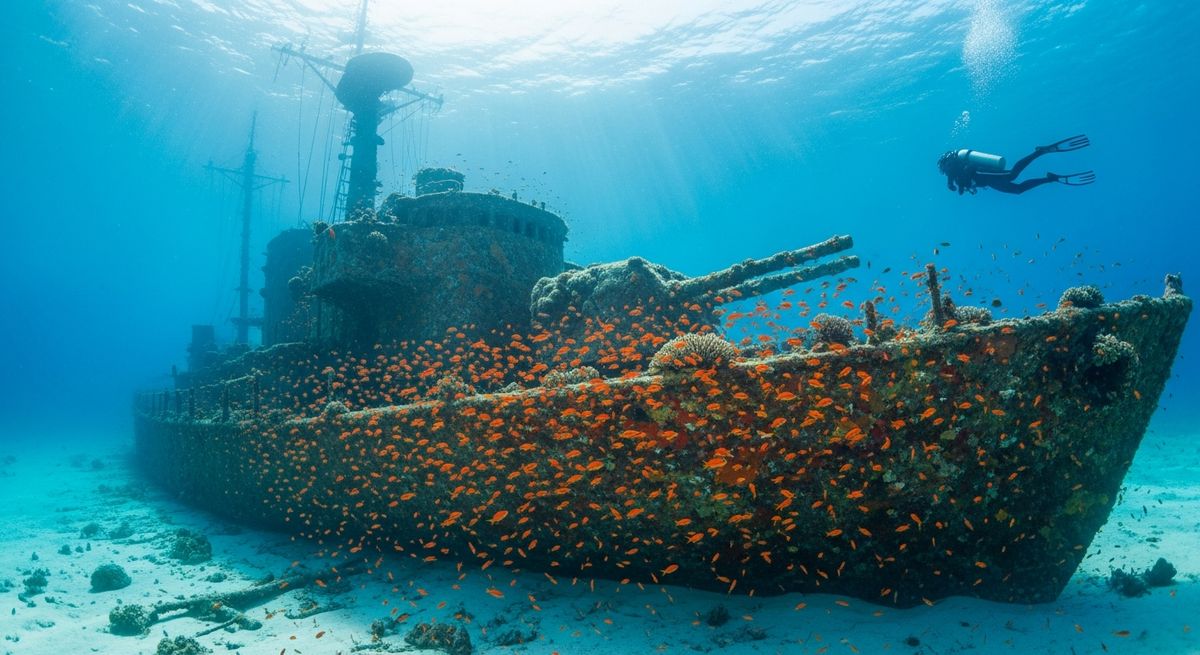
The *Amboim* wreck is a proper time capsule, sitting upright and surprisingly intact in the Algarve. We love how much of the original ship is still there, especially the sheer scale of the thing at 129 metres. Dropping down, you’re met with a sprawling hulk, big enough that you’ll need multiple dives just to get a proper feel for it. What really makes the *Amboim* sing, though, is the life that’s claimed it. We’ve seen giant schools of sea bream ghosting through the holds, and the deck plates are often covered in jewel anemones, sparkling like scattered gems. Keep an eye out for resident conger eels peeking from every dark corner, and the occasional octopus tucked into a crevice. It’s a site for divers who appreciate history but also get a thrill from seeing nature reclaim something so immense; a genuinely engaging dive without being overly challenging.
Typical AMBOIM Dive Profile
Illustrative profile based on site depth and type. Actual dive profiles vary - always follow your dive computer and training.
Safety Notes
Wreck site - avoid penetration without wreck diving certification. Watch for sharp metal and entanglement hazards.
AMBOIM Wreck History
Year Sunk
1974
Vessel Type
cargo ship
Cause
grounding
The M.V. Amboim was a Portuguese motor vessel whose final voyage took place during a pivotal moment in her country's history. In November 1974, just months after the Carnation Revolution signaled the end of the Portuguese Colonial War, the Amboim was sailing from Porto Alexandre, Angola. This was a period of great upheaval, with a mass exodus of citizens and assets from the former colonies back to Portugal. The Amboim's journey was part of this historic migration, but it was cut short when she ran aground and was lost just off the Algarve coast.
Lying in just 2 meters of water, the wreck of the Amboim is an incredibly accessible site, perfect for snorkelers, freedivers, and novice scuba divers. The shallow, sunlit waters make for a vibrant and easy exploration of what remains of the vessel. Over the decades, the sea has broken up the hull, scattering it across the seabed where it has become a thriving, colourful reef. It's a fantastic location for underwater photography, allowing for long, relaxed bottom times to observe the fish and invertebrates that have colonized the ship's remains.
Nearest Dive Centres to AMBOIM
Dive shops near AMBOIM
Clube Naval de Cascais
CascaisDive
GRUPO RECREATIVO DE MATOS CHEIRINHOS
Haliotis - Oeiras Diving Center
SPOT Freedive
Dive Club Cipreia - Outprostore LISBOA/ALFRAGIDE
Reviews for AMBOIM
Conditions
Ocean conditions, forecast and tides for AMBOIM
AMBOIM Ocean Conditions
Monthly averages for AMBOIM, sourced from Open-Meteo marine data - nearest station: Open-Meteo marine grid (37.92, -8.81) (40km away)
October Averages
Sea Temperature
19°C
65°F · Range: 16.7–20.2°C
Air Temperature
18°C
65°F
Wind Speed
8.24 m/s
16.0 knots
Atmospheric Pressure
1017.4 hPa
Based on 4 years of monitoring data · Data sources: Open-Meteo marine data
Plan & book
Ways to dive Algarve & Berlengas, from day trips to liveaboards.
Day trips & courses
via GetYourGuideGuided dives, courses and snorkel trips with instant booking.
Find dive trips in Algarve & BerlengasPlaces to stay
via Booking.comHotels and dive resorts near Algarve & Berlengas.
Search stays in Algarve & BerlengasDive insurance
Most travel insurance excludes or limits scuba. Check what you need before you go.
Dive insurance explainedPartner links: we may earn a commission if you book, at no extra cost to you. How we make money
Where to Stay near AMBOIM
Prices from Booking.com. We may earn a commission at no extra cost to you.