Diving in Azores
Why dive here
Azores offers some of Portugal's richest diving, with 219+ marine species recorded in the area - including blue sharks, blue whales, dolphins, dwarf minke whales and hammerhead sharks. Water sits around 17°C.
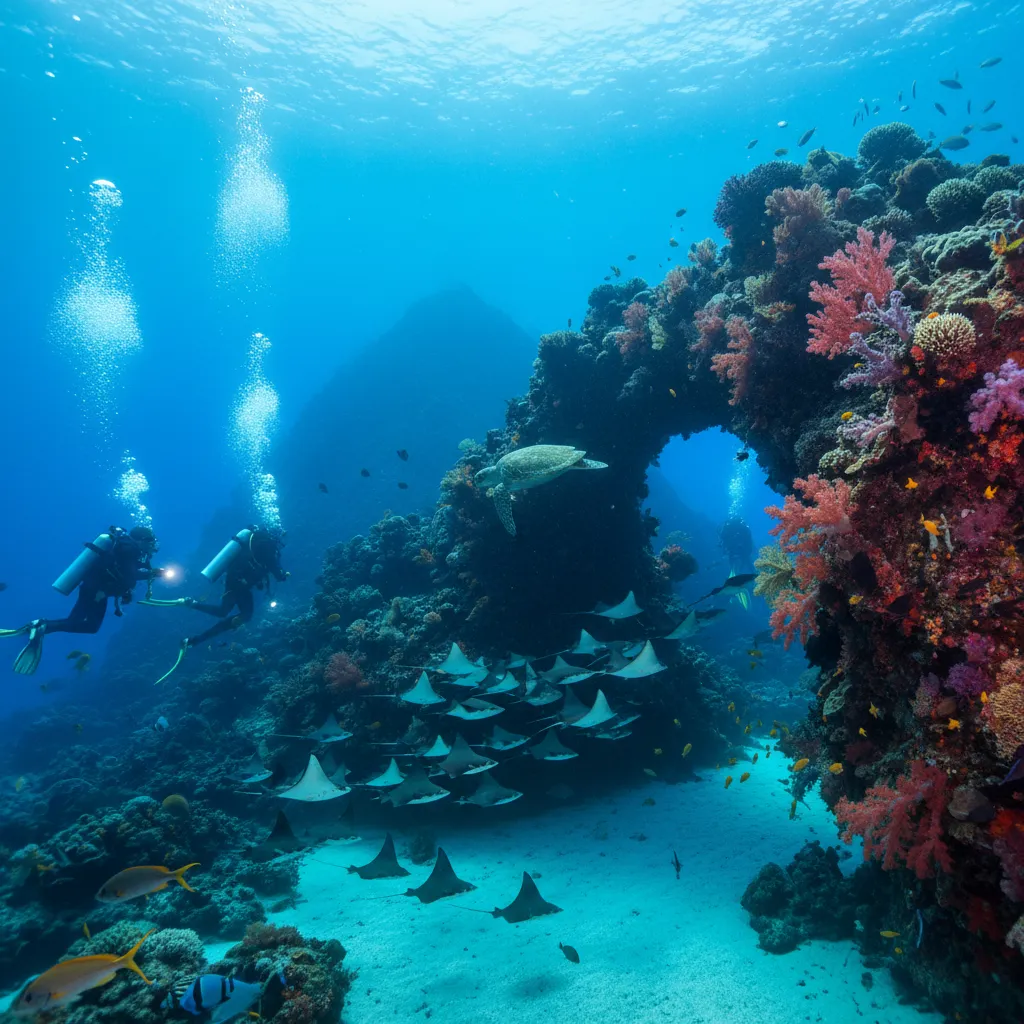
The Azores isn't your typical tropical escape. Forget warm, shallow reefs; this is raw, untamed Atlantic diving. Think dramatic volcanic architecture dropping into the blue, and a very real chance of spotting the big stuff. We love the seamounts here, especially Princess Alice Bank, where mobulas glide past in formation - it’s a proper spectacle. What makes the Azores truly special is the pelagic action. From June to October, blue sharks are a regular sight, often inquisitive and always graceful. We’ve had incredible encounters, just hanging in the blue, watching them circle. Visibility can be epic, 30 meters or more on a good day, giving you that profound sense of open ocean. The water can be chilly, even in summer, so a good 7mm wetsuit is sensible. For a different vibe, the cave diving is also fantastic, eerie and beautiful, with sunlight filtering through cracks above. It’s a place that demands respect, but rewards you with genuinely unique experiences.
Azores Dive Site Map
Dive sites and dive centres in Azores
Azores Dive Sites
56 dive sites in Azores
3 Houses
Three Houses sits close to shore, a convenient spot when the weather keeps you from the further offshore pinnacles. We find a series of large, swim-through boulders here, forming interesting arches and mini-caves that give the site its name. It’s a good place for intermediate divers to practice buoyancy while spotting octopus tucked into crevices and small schools of pelagic fish passing by. Expect a pleasant, straightforward dive when conditions are calm.
ANSA 9
ANSA 9 is one of those sites we always recommend, especially if you’re keen on exploring a bit of history without needing to go deep. At a maximum depth of two metres, it's essentially a snorkel or freediving spot, but don't let that fool you. This is the wreck of the ANCRE, a tugboat that went down in the 1960s, and it’s surprisingly intact given how shallow it is. You can make out the structure of the hull, some of the superstructure, and even peer into parts that would have been interior spaces. What we love about ANSA 9 is how the light plays on the metal, especially around midday. Sunlight dapples through the water, illuminating the rust-coloured plates and the vibrant green algae that cling to every surface. Shoals of juvenile fish dart in and out of the crevices, using the wreck as a nursery. We’ve often seen curious octopus peeking out from under a plate, and the nudibranchs here are surprisingly colourful. It’s a photographer's dream for wide-angle shots, capturing both the wreck and the surface. Our favourite time to go is on a calm, sunny morning before the afternoon breeze picks up, when the water is glass-smooth. It’s a super accessible site, perfect for those days when you just want to grab your fins and explore something unique without the fuss of a full scuba setup.
AQUÁRIO
Aquário, off the Azores, is a shallow, calm spot that lives up to its name. Dropping to just 22 metres, it’s a gentle introduction to Azorean diving, especially for newer divers. You’ll find schools of small fish milling about the rocks, with occasional rays gliding through. We’d suggest it for a relaxed second dive or a check-out dive.
Arco do Cavaco
Arco do Cavaco offers a straightforward cave dive, good for newer divers keen to experience overhead environments. The maximum depth stays around 18m, making it accessible. We’ve found the light filtering through the archway to be particularly striking, illuminating the volcanic rock formations inside. It's a solid choice if you're looking for a relatively easy intro to cave diving in the Azores.
Arcos Cruzeiro
Arcos Cruzeiro offers a straightforward dive to 25m, navigating a series of small archways and swim-throughs carved into the volcanic rock. We often spot schooling fish sheltering within the arches, alongside the usual suspects like moray eels and octopuses tucked into crevices. It’s a good choice for intermediate divers looking for a relaxed exploration of the Azores' unique volcanic topography, without strong currents.
Arcos da caloura
Arcos da Caloura is an easy, shallow dive, rarely deeper than 17m. We find it's a good spot for newer divers, or for those wanting a relaxed second dive. The main draw here are the swim-throughs and arches carved into the volcanic rock, usually full of small schooling fish. It's not a dramatic dive, but it's pleasant enough.
Arcos dal Calhetas
Arcos dal Calhetas offers a gentle dive to 18m, making it a good choice for intermediate divers looking for a relaxed exploration. We found a series of small arches and swim-throughs carved into the volcanic rock, providing interesting routes to navigate. It’s a pleasant spot for observing the smaller reef fish that shelter within the rock formations, though it’s not known for big pelagic encounters. Expect a straightforward dive with a focus on geology and the smaller creatures of the Azores.
Arena
Arena is a straightforward dive, perfect for newer divers looking for an easy introduction to the Azores' underwater landscape. At 19 meters, it's a relaxed drift over a sandy bottom dotted with volcanic rock formations. You'll often find stingrays resting here and schools of small pelagics cruising by. We think it's a good spot to get comfortable with the local conditions.
ARNEL
The Arnel wreck off Santa Maria Island is a good pick for a relaxed dive. This old freighter, sunk in 1958, sits in just 5 metres of water, making it super accessible for all experience levels. We often see it covered in colourful sponges and small anemones. You can poke around the superstructure and imagine its former life, though much of it has started to break down into the seabed. It’s an easy, gentle dive, ideal for a longer bottom time or for getting comfortable with wreck diving without the pressure of depth. We typically spot schools of juvenile fish flitting in and out of the metal frames, and often a few curious octopus tucked into crevices.
Baia de Sao Pedro
Baia de Sao Pedro is a shallow, sheltered bay, ideal for those just starting out or looking for an easy dip. Maximum depth is 9m, making it perfect for skill refreshers and new certifications. You’ll find small schools of fish navigating the volcanic rock formations. It’s a comfortable, relaxed dive, a good spot to get your fins wet.
Baixa do Espelho
Baixa do Espelho is a shallower site, dropping to 21 meters, making it a good choice for newer divers. We’ve found it to be a gentle introduction to Azorean diving. You’ll typically see schooling fish, occasional rays cruising by, and plenty of smaller reef inhabitants tucked into the rocks. It’s a relaxed dive, a pleasant way to spend an hour underwater without challenging conditions.
BAIXA DO OURO
Baixa do Ouro, off the Azores, is a good spot for newer divers looking for an easy introduction to the local underwater scene. Dropping to a manageable 20 meters, the site offers calm conditions most of the time. You'll likely see a decent range of the usual Atlantic suspects here – various wrasse, maybe some damselfish. It’s a comfortable dive, perfect for getting back in the water or building confidence.
Show all 56 dive sites in Azores
- Biscoitos Cavern 1, 2, 3
- Biscoitos Gate
- BURACO S. PEDRO
- CABEÇOS ILHÉU MOSTEIROS
- Caloura Panela
- Caneiro dos Meros
- Cinco Ribeiras
- Dollabarat
- Dom João de Castro
- Dori Wreck
- DORY
- ESPIRITO SANTO
- GAZA
- House Reef Ponta Delgada
- ILHÉU DE SÃO ROQUE
- Ilhéu de Vila Franca
- Ilhéus da Madalena
- IMPULSE
- Lidador - Archaeological UW Park
- LOURENÇOS
- Luso Wreck
- MORRO DAS CAPELAS
- O Arco
- Panela das Calhetas
- Ponta da Galera
- Ponta do Cintrão
- PORTO CAPELAS
- PORTO STA IRIA
- Princesa Alice
- princess alice bank
- Princess Alice Bank
- Prison Break
- SABRINA
- Santa Clara Arena
- SEABIRD
- SOFAREIA
- S. SALVADOR
- STARLIGHT
- SUMMER BREEZE
- Terceirense
- The Wall
- VELMA
- Wreck of Felicity Ace
- YELLOWSTONE
Azores Dive Centres
18 dive shops and operators in Azores
Ocean Wildlife in Azores
219 species recorded in Azores
Azores Daylight & Sunrise/Sunset
Sunrise and sunset times for Azores, calculated from coordinates
Today - Sunday 11 October
Sunrise
05:49
Sunset
17:16
Daylight
11h 27m
Golden Hour
16:41
First light (dawn) at 05:23 · Last light (dusk) at 17:42
Monthly Averages
| Month | Sunrise | Sunset | Daylight |
|---|---|---|---|
| Jan | 07:00 | 16:48 | 9h 48m |
| Feb | 06:37 | 17:23 | 10h 46m |
| Mar | 05:59 | 17:51 | 11h 52m |
| Apr | 05:12 | 18:20 | 13h 8m |
| May | 04:37 | 18:47 | 14h 11m |
| JunLongest | 04:23 | 19:09 | 14h 46m |
| Jul | 04:34 | 19:08 | 14h 34m |
| Aug | 05:00 | 18:41 | 13h 41m |
| Sep | 05:26 | 17:56 | 12h 30m |
| OctNow | 05:53 | 17:10 | 11h 18m |
| Nov | 06:25 | 16:35 | 10h 11m |
| DecShortest | 06:53 | 16:27 | 9h 34m |
Times are approximate local times based on longitude. Actual times may vary slightly depending on the exact timezone observed in Azores.
Where to Stay near Azores
Prices from Booking.com. We may earn a commission at no extra cost to you.
Marine Protected Areas near Azores
74 protected areas near Azores - please respect local regulations when diving
Formigas Bank
Ilheus das Formigas
D. João de Castro seamount
Banco D. Joao de Castro
Ilhéu das Formigas e Recife Dollabarat (Canal S. Miguel - Sta. Maria)
Costa Norte (Ilha de Santa Maria)
Ponta do Cintrao-Ponta da Maia
Costa Sul (Ilha de Santa Maria)
Ponta da Ferraria-Ponta da Bretanha
Banco D. João de Castro (Canal Terceira - S. Miguel)
Banco D. Joao de Castro
Porto das Capelas-Ponta das Calhetas
Showing 12 largest of 74
Getting to Azores
Ponta Delgada
Praia da Vitória
Vila do Porto
Plan & book
Ways to dive Azores, from day trips to liveaboards.
Day trips & courses
via GetYourGuideGuided dives, courses and snorkel trips with instant booking.
Find dive trips in AzoresPlaces to stay
via Booking.comHotels and dive resorts near Azores.
Search stays in AzoresDive insurance
Most travel insurance excludes or limits scuba. Check what you need before you go.
Dive insurance explainedPartner links: we may earn a commission if you book, at no extra cost to you. How we make money