ANSA 9
Protected Area
Porto das Capelas-Ponta das Calhetas
Why dive here
With 219+ marine species recorded in the area - including blue sharks, blue whales, dolphins, dwarf minke whales and hammerhead sharks - ANSA 9 offers some of Azores's richest wreck diving. Water ranges 16-24°C, warmest August, September, October.
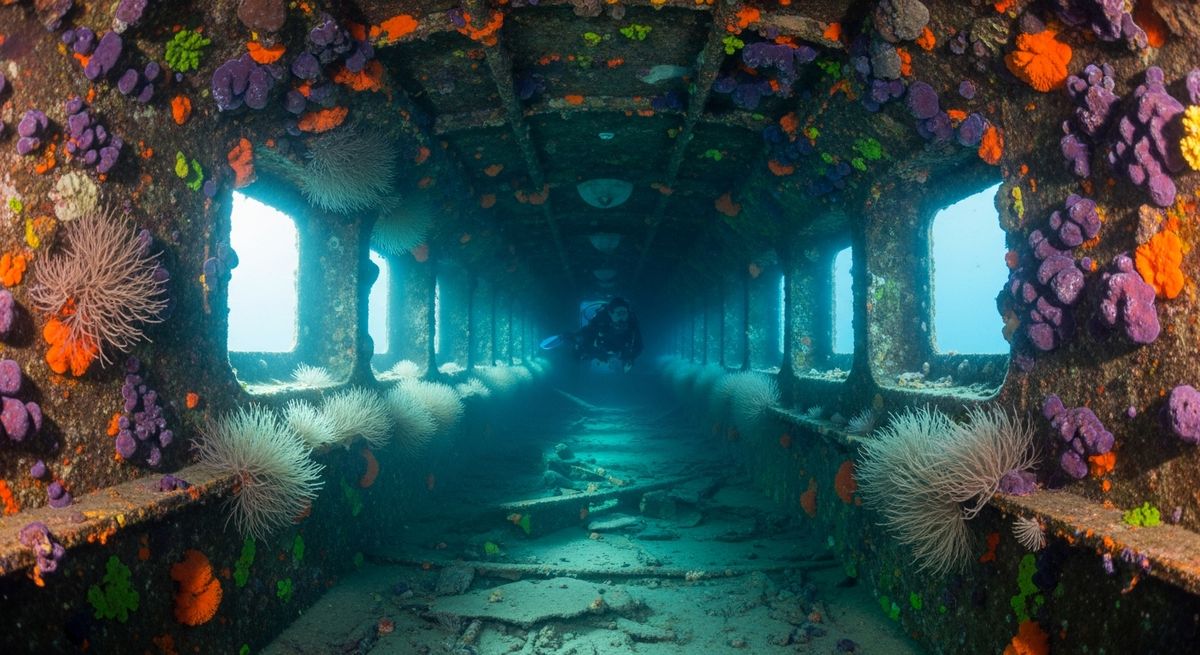
ANSA 9 is one of those sites we always recommend, especially if you’re keen on exploring a bit of history without needing to go deep. At a maximum depth of two metres, it's essentially a snorkel or freediving spot, but don't let that fool you. This is the wreck of the ANCRE, a tugboat that went down in the 1960s, and it’s surprisingly intact given how shallow it is. You can make out the structure of the hull, some of the superstructure, and even peer into parts that would have been interior spaces. What we love about ANSA 9 is how the light plays on the metal, especially around midday. Sunlight dapples through the water, illuminating the rust-coloured plates and the vibrant green algae that cling to every surface. Shoals of juvenile fish dart in and out of the crevices, using the wreck as a nursery. We’ve often seen curious octopus peeking out from under a plate, and the nudibranchs here are surprisingly colourful. It’s a photographer's dream for wide-angle shots, capturing both the wreck and the surface. Our favourite time to go is on a calm, sunny morning before the afternoon breeze picks up, when the water is glass-smooth. It’s a super accessible site, perfect for those days when you just want to grab your fins and explore something unique without the fuss of a full scuba setup.
Typical ANSA 9 Dive Profile
Illustrative profile based on site depth and type. Actual dive profiles vary - always follow your dive computer and training.
Safety Notes
Wreck site - avoid penetration without wreck diving certification. Watch for sharp metal and entanglement hazards.
ANSA 9 Wreck History
Vessel Type
barge
Cause
grounding
The wreck of the ANSA 9 offers a dramatic sight against the rugged volcanic coastline of the Azores. Lying at a mere 2 meters, with parts of its hull and superstructure breaking the surface, this is a classic example of a vessel that lost a battle with the rocky shoreline. The name suggests a commercial or utility craft, possibly a barge or workboat, that ran aground in the notoriously unpredictable Atlantic weather. Its exposed position means it is constantly battered by the elements, leading to its slow and picturesque decay.
This site is less of a traditional scuba dive and more of an adventure for snorkelers, freedivers, and photographers. Exploring the ANSA 9 requires careful timing with the tides and swell, but the reward is a unique underwater experience. You can swim through its skeletal remains in sun-dappled water, observing how sea life quickly colonizes a wreck in the turbulent shallows. It's a powerful visual testament to the power of the ocean and a fascinating site for those looking to explore a wreck that exists in two worlds-above and below the waves.
Nearest Dive Centres to ANSA 9
Dive shops near ANSA 9
Season Challenge diving center
AZZURRO - Dive Academy
Azores Low Dive
Azores Sub Dive Center
Espírito Azul Dive Center
Reviews for ANSA 9
Conditions
Ocean conditions, forecast and tides for ANSA 9
ANSA 9 Ocean Conditions
Monthly averages for ANSA 9, sourced from Open-Meteo marine data - nearest station: Open-Meteo marine grid (37.87, -25.92) (22km away)
October Averages
Sea Temperature
22°C
72°F · Range: 20.5–24.2°C
Air Temperature
21°C
70°F
Wind Speed
10 m/s
19.4 knots
Atmospheric Pressure
1018.8 hPa
Based on 4 years of monitoring data · Data sources: Open-Meteo marine data
Plan & book
Ways to dive Azores, from day trips to liveaboards.
Day trips & courses
via GetYourGuideGuided dives, courses and snorkel trips with instant booking.
Find dive trips in AzoresPlaces to stay
via Booking.comHotels and dive resorts near Azores.
Search stays in AzoresDive insurance
Most travel insurance excludes or limits scuba. Check what you need before you go.
Dive insurance explainedPartner links: we may earn a commission if you book, at no extra cost to you. How we make money
Where to Stay near ANSA 9
Prices from Booking.com. We may earn a commission at no extra cost to you.