AEGEO STAR
Protected Area
Gediz Delta
Why dive here
AEGEO STAR is a wreck dive where divers can encounter dolphins, sea turtles and sperm whales. Water ranges 17-27°C, warmest July, August, September.
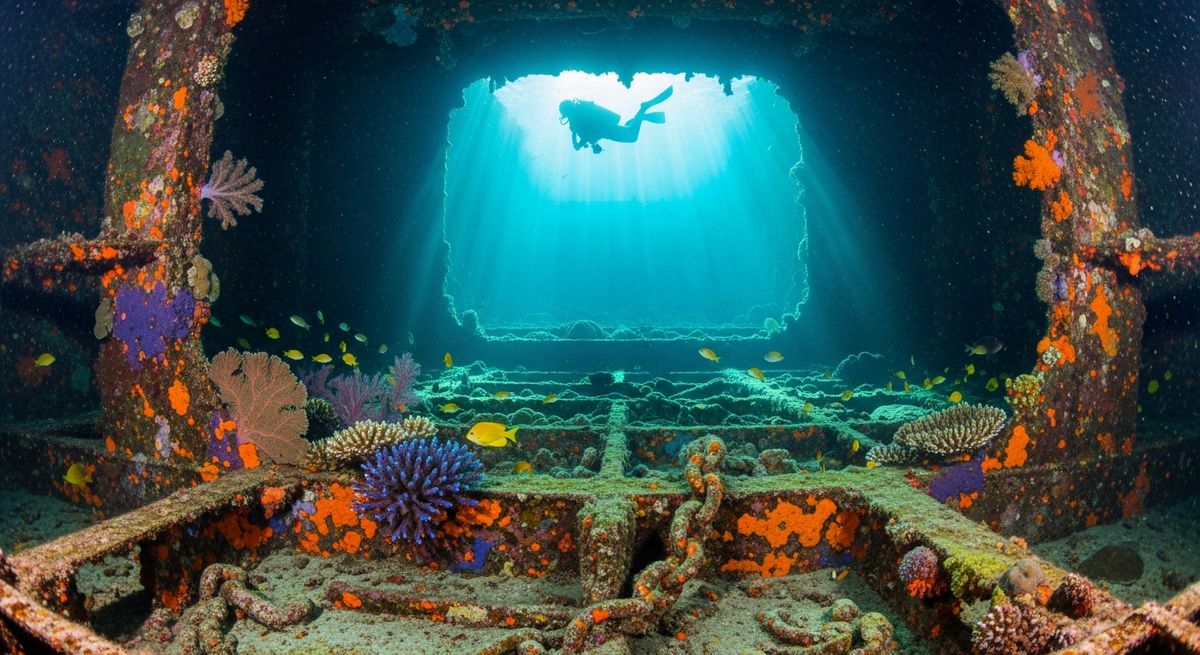
The Aegeo Star, just off Bodrum, isn’t just another sunken ship; it’s a proper dive into maritime history, and a good one at that. We often find ourselves drawn to wrecks with a story, and the Aegeo Star certainly has one. This 58-meter cargo ship, which went down in 1993 with a mysterious load of phosphotungstic acid, now rests upright at 40 meters, making it a fantastic deep dive. Dropping down onto her, you can still feel the scale of the vessel. The holds are open, inviting you to peek inside, though we’d suggest good buoyancy and a strong light for anything more than a quick look. The deck provides plenty to explore, with the bridge structure largely intact. Swarms of small reef fish, damselfish mostly, dart through the superstructure, and we’ve spotted moray eels tucked into crevices more than once. The mast still stands, reaching up towards shallower depths, draped in anemones. It’s a site that rewards multiple dives; you’ll always find a new detail, a different angle. We think it’s best suited for experienced divers comfortable with depth and overhead environments, offering a real sense of adventure.
Typical AEGEO STAR Dive Profile
Illustrative profile based on site depth and type. Actual dive profiles vary - always follow your dive computer and training.
Safety Notes
Deep dive (40m) - monitor air consumption closely. Advanced certification recommended.
Wreck site - avoid penetration without wreck diving certification. Watch for sharp metal and entanglement hazards.
Always perform a 3-minute safety stop at 5m before surfacing.
AEGEO STAR Wreck History
Year Sunk
1993
Vessel Type
cargo ship
Cause
unknown
The story of the motor vessel Aegeo Star ends with a note of suspicion. On September 19, 1993, the ship sank shortly after departing the Aliaga industrial complex near Izmir. She was carrying a valuable cargo of 1,000 tons of phosphotungstic acid bound for Rijeka, Croatia. The official report simply notes the sinking, but the term 'Loss Alleged' in maritime records hints at controversy and speculation, with many believing the ship may have been intentionally scuttled for an insurance payout.
Resting at a depth of 40 metres near the popular diving hub of Bodrum, the Aegeo Star is a fantastic dive for advanced and technical divers. As a relatively modern wreck, its structure is largely intact, offering opportunities to explore its decks, cargo holds, and superstructure. The clear Aegean waters provide excellent visibility, revealing a vessel whose final moments remain a compelling maritime mystery. The depth ensures the wreck is visited less frequently, allowing for a more pristine and adventurous dive experience.
Nearest Dive Centres to AEGEO STAR
Dive shops near AEGEO STAR
EGE OCTOPUS
KARABURUN DALIS MERKEZI
SHARKS CLUB
DERIN DALIS TUR. TIC .LTD. STI.
Reviews for AEGEO STAR
Conditions
Ocean conditions, forecast and tides for AEGEO STAR
AEGEO STAR Ocean Conditions
Monthly averages for AEGEO STAR, sourced from Open-Meteo marine data - nearest station: Open-Meteo marine grid (37.02, 27.18) (31km away)
October Averages
Sea Temperature
24°C
75°F · Range: 22.1–26°C
Air Temperature
21°C
71°F
Wind Speed
4.96 m/s
9.6 knots
Atmospheric Pressure
1015.9 hPa
Based on 4 years of monitoring data · Data sources: Open-Meteo marine data
Plan & book
Ways to dive Bodrum, from day trips to liveaboards.
Day trips & courses
via GetYourGuideGuided dives, courses and snorkel trips with instant booking.
Find dive trips in BodrumPlaces to stay
via Booking.comHotels and dive resorts near Bodrum.
Search stays in BodrumDive insurance
Most travel insurance excludes or limits scuba. Check what you need before you go.
Dive insurance explainedPartner links: we may earn a commission if you book, at no extra cost to you. How we make money
Where to Stay near AEGEO STAR
Prices from Booking.com. We may earn a commission at no extra cost to you.