ANGOLA
Protected Area
Liverpool Bay / Bae Lerpwl
Why dive here
With 118+ marine species recorded in the area - including dolphins, dwarf minke whales, humpback whales, ocean sunfish (mola mola) and orcas - ANGOLA offers some of Northumberland & Northeast's richest wreck diving.
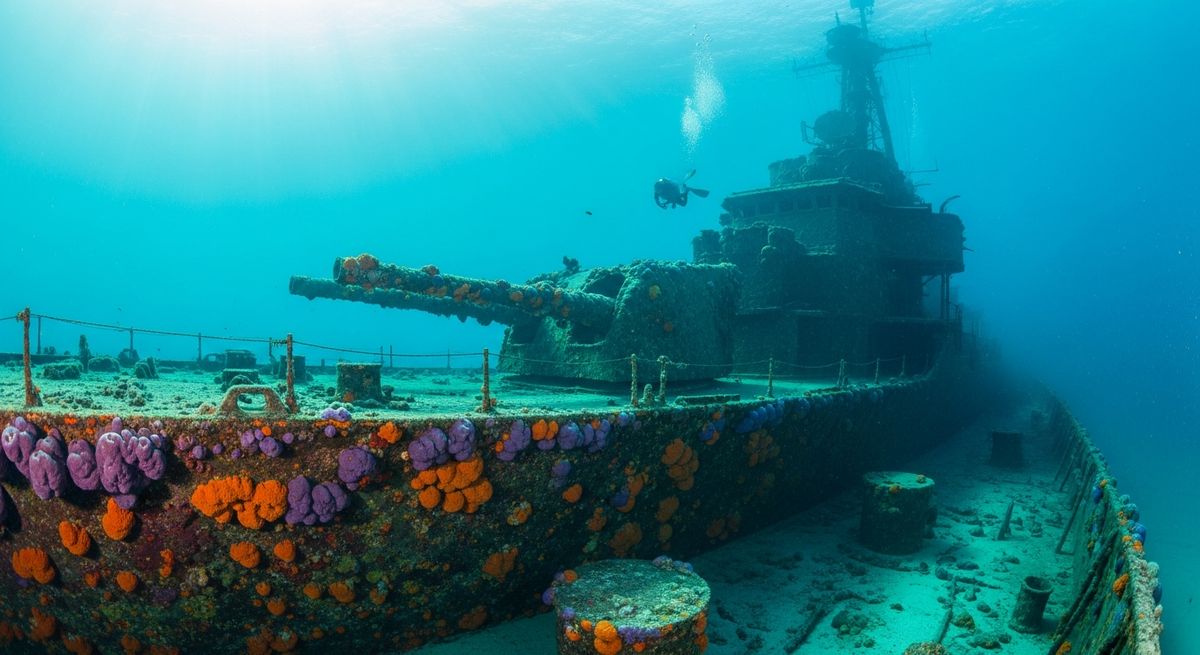
Angola is a proper classic, the kind of wreck we love returning to in Northumberland. It's a steamship, sunk way back in 1887, and she sits upright on a sandy seabed at 16 metres. When you drop down, the first thing you notice is how intact she still feels, even after all this time. You can really get a sense of her shape, the bow and stern are distinct, and that single boiler still stands proud, a real focal point. The character of Angola comes from her age and how the North Sea has claimed her. She’s encrusted in dead man’s fingers, which glow orange and white in your torch beam, and you’ll find plenty of plumose anemones swaying in the gentle surge. Look closely in the nooks and crannies for squat lobsters, and we often spot wolf fish tucked away, just peering out. It’s a site that rewards a slow, methodical explore, tracing the deck lines, peeking into cargo holds. Best dived on slack water, of course, to fully appreciate her scale. It’s not a deep dive, making it perfect for divers who want to spend some quality time soaking in a bit of maritime history.
Typical ANGOLA Dive Profile
Illustrative profile based on site depth and type. Actual dive profiles vary - always follow your dive computer and training.
Safety Notes
Wreck site - avoid penetration without wreck diving certification. Watch for sharp metal and entanglement hazards.
Always perform a 3-minute safety stop at 5m before surfacing.
ANGOLA Wreck History
Year Sunk
1887
Vessel Type
cargo ship
Cause
grounding
Tonnage
1,146 GRT
The SS Angola was a typical British cargo steamer of the late Victorian era. Built in Liverpool in 1880, the 1,146 GRT vessel was powered by a 120-horsepower compound steam engine, dutifully plying the trade routes of Northern Europe for her owners, Halton & Cookson of Liverpool.
On March 5th, 1887, the Angola was on a routine voyage from Hamburg to Newcastle, carrying a general cargo. As she neared the English coast, she encountered thick fog and heavy seas. The poor visibility proved fatal, and the ship ran aground on the notorious Hasborough Sands. She managed to pull free from the sandbank, but the damage was done; she was taking on water faster than her pumps could handle. The crew had no choice but to abandon ship before the Angola foundered and slipped beneath the waves, coming to rest on the seabed off the Farne Islands.
At a depth of 16 meters, the wreck of the Angola is a fantastic dive for a wide range of experience levels. While over a century of immersion has left the wreck well-broken, her most substantial components, including her single boiler and the remains of her compound engine, are still clearly identifiable. The site is a haven for marine life, with colourful anemones and soft corals adorning the metalwork. Divers exploring the wreckage are often greeted by the area's famous inquisitive grey seals, adding a memorable wildlife encounter to this historic dive.
Nearest Dive Centres to ANGOLA
Dive shops near ANGOLA
Aquaventurers
Delph Watersports Centre
Blue Planet Aquarium
Blackpool Area Diving Centre
Shipmates
Fins Scuba
Reviews for ANGOLA
Conditions
Ocean conditions, forecast and tides for ANGOLA
Plan & book
Ways to dive Northumberland & Northeast, from day trips to liveaboards.
Day trips & courses
via GetYourGuideGuided dives, courses and snorkel trips with instant booking.
Find dive trips in Northumberland & NortheastPlaces to stay
via Booking.comHotels and dive resorts near Northumberland & Northeast.
Search stays in Northumberland & NortheastDive insurance
Most travel insurance excludes or limits scuba. Check what you need before you go.
Dive insurance explainedPartner links: we may earn a commission if you book, at no extra cost to you. How we make money
Where to Stay near ANGOLA
Prices from Booking.com. We may earn a commission at no extra cost to you.