ANGOLA (PART OF)(POSSIBLY)
Protected Area
Liverpool Bay / Bae Lerpwl
Why dive here
With 118+ marine species recorded in the area - including dolphins, dwarf minke whales, humpback whales, ocean sunfish (mola mola) and orcas - ANGOLA (PART OF)(POSSIBLY) offers some of Northumberland & Northeast's richest wreck diving.
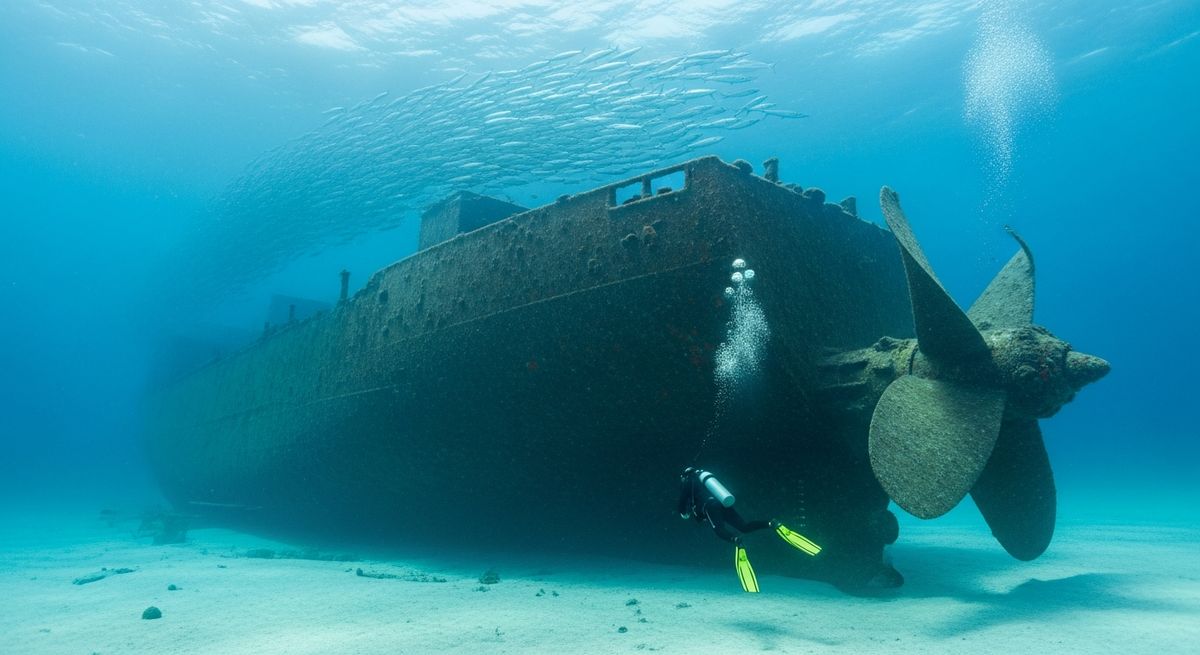
The Angola wreck, sitting at 17 metres, is one of those sites that just gets under your skin. We often find ourselves drawn back to it, especially when the visibility is behaving itself – and a good day here can mean 10 metres, sometimes more. She went down in 1887, a steamship carrying cargo from Gabon, and you can still feel that history when you’re finning past her plates. We love how the wreck has settled into the seabed, with a distinct list that adds to the drama. The stern is a fantastic place to start, dropping down onto the propeller shaft and then working your way forward. You’ll find plenty of open sections to peer into, giving you glimpses of her internal structure, and the single boiler is still prominent, often swarming with schools of coalfish. Look closer amongst the encrusting anemones and dead man’s fingers for the smaller stuff – nudibranchs are plentiful here, especially on the deeper sections. It’s a site that really rewards a slower pace, letting you soak in the atmosphere and explore the nooks and crannies. We’d suggest saving this one for a calm day with minimal swell for the best experience.
Typical ANGOLA (PART OF)(POSSIBLY) Dive Profile
Illustrative profile based on site depth and type. Actual dive profiles vary - always follow your dive computer and training.
Safety Notes
Wreck site - avoid penetration without wreck diving certification. Watch for sharp metal and entanglement hazards.
Always perform a 3-minute safety stop at 5m before surfacing.
ANGOLA (PART OF)(POSSIBLY) Wreck History
Year Sunk
1887
Vessel Type
cargo ship
Cause
grounding
Tonnage
1,146 GRT
The SS Angola was a 1,146 GRT cargo steamer built in 1880, a workhorse of the seas during the height of the British Empire's maritime trade. Her career was steady and uneventful until her final voyage in March 1887, when she was sailing from Hamburg to Newcastle with a mixed cargo.
Caught in dense fog and rough seas off the Northumberland coast, the Angola struck the treacherous Hasborough Sands. Although she managed to refloat, the hull was critically damaged. Despite the crew's best efforts, the sea poured in, and the ship eventually foundered and sank. The crew successfully abandoned ship and were rescued, but their vessel was lost to the sea forever.
This site, charted at 17 meters, is believed to be a major section of the SS Angola, which broke apart as it sank or in subsequent storms. The wreck field is scattered, and this particular location offers divers a chance to explore a concentrated area of the vessel's remains. Here you can find significant structural elements, possibly part of the engine works or the prominent boiler. Like other parts of the wreck, this section is now a vibrant artificial reef, teeming with fish and crustaceans and frequently visited by playful seals from the nearby Farne Islands.
Nearest Dive Centres to ANGOLA (PART OF)(POSSIBLY)
Dive shops near ANGOLA (PART OF)(POSSIBLY)
Aquaventurers
Delph Watersports Centre
Blue Planet Aquarium
Blackpool Area Diving Centre
Shipmates
Fins Scuba
Reviews for ANGOLA (PART OF)(POSSIBLY)
Conditions
Ocean conditions, forecast and tides for ANGOLA (PART OF)(POSSIBLY)
Plan & book
Ways to dive Northumberland & Northeast, from day trips to liveaboards.
Day trips & courses
via GetYourGuideGuided dives, courses and snorkel trips with instant booking.
Find dive trips in Northumberland & NortheastPlaces to stay
via Booking.comHotels and dive resorts near Northumberland & Northeast.
Search stays in Northumberland & NortheastDive insurance
Most travel insurance excludes or limits scuba. Check what you need before you go.
Dive insurance explainedPartner links: we may earn a commission if you book, at no extra cost to you. How we make money
Where to Stay near ANGOLA (PART OF)(POSSIBLY)
Prices from Booking.com. We may earn a commission at no extra cost to you.