ARANTZAZU MENDI
Protected Area
Ballyquintin Point
Why dive here
With 118+ marine species recorded in the area - including dolphins, dwarf minke whales, humpback whales, ocean sunfish (mola mola) and orcas - ARANTZAZU MENDI offers some of Northumberland & Northeast's richest wreck diving.
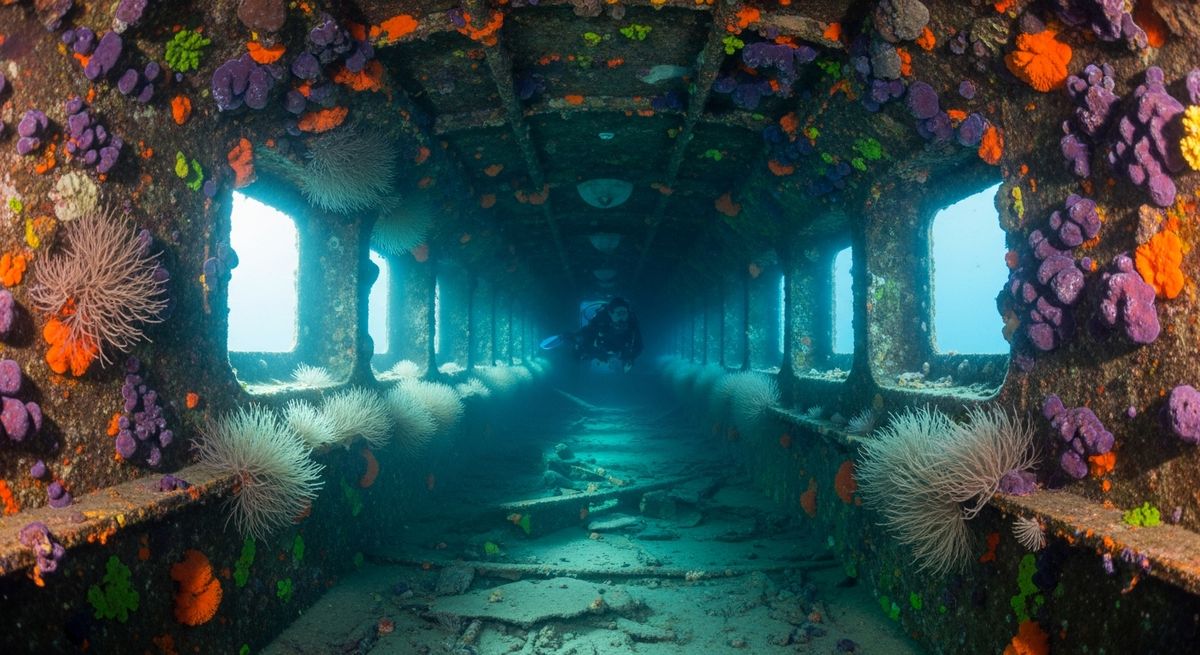
The Arantzazu Mendi is a proper beast of a wreck, just off Beadnell Point, and honestly, we love it. At only 3m deep, it’s not about the technical challenge, but the sheer scale of the thing. You’re essentially diving a colossal, broken-up hull spread across the seabed, a steamship that met its end in dense fog back in '39. It’s an absolute maze of twisted metal and huge plates, all encrusted with seaweeds and anenomes. You’ll weave through massive sections of hull, spotting crabs scuttling in every crevice and shoals of juvenile fish darting between the rusty frames. Our favourite parts are the enormous boilers, still surprisingly intact, and the propeller shaft. The low depth means you get fantastic bottom time, perfect for just poking around and really soaking in the history. It's an ideal spot for macro photographers and those who appreciate a good, historical wreck without the need for deep diving skills. Visibility can be a bit hit or miss, so aim for slack water on a calm day to get the best out of it.
Typical ARANTZAZU MENDI Dive Profile
Illustrative profile based on site depth and type. Actual dive profiles vary - always follow your dive computer and training.
Safety Notes
Wreck site - avoid penetration without wreck diving certification. Watch for sharp metal and entanglement hazards.
ARANTZAZU MENDI Wreck History
Year Sunk
1939
Vessel Type
cargo ship
Cause
grounding
Tonnage
3,059 GRT
The Arantzazu Mendi was a Spanish steamship built in 1920 in Sunderland, just a stone's throw from where she would eventually meet her end. In the spring of 1939, just months before the outbreak of World War II, she was on a passage from Bougie, Algeria, bound for Glasgow with a cargo of iron ore. The journey was uneventful until she reached the treacherous waters off the Northumberland coast.
On May 9, 1939, a dense fog enveloped the sea, severely limiting visibility. The ship lost its bearings and struck the notorious Knivestone reef, part of the Farne Islands chain. The impact tore a hole in the hull, and the vessel was doomed. The crew was successfully rescued by the Longstone lighthouse keepers and the Seahouses lifeboat, a testament to the bravery of the local mariners.
Lying in just 3 meters of water, the Arantzazu Mendi is now a highly scattered wreck, battered by decades of North Sea storms. It is an excellent site for novice divers and even snorkelers. Divers can explore the ship's massive boilers, which stand proud of the seabed, along with twisted plates and sections of the hull that are now completely integrated into the reef. The site is a favorite haunt for the local grey seal population, often providing divers with curious and playful companions during their exploration.
Reviews for ARANTZAZU MENDI
Conditions
Ocean conditions, forecast and tides for ARANTZAZU MENDI
Plan & book
Ways to dive Northumberland & Northeast, from day trips to liveaboards.
Day trips & courses
via GetYourGuideGuided dives, courses and snorkel trips with instant booking.
Find dive trips in Northumberland & NortheastPlaces to stay
via Booking.comHotels and dive resorts near Northumberland & Northeast.
Search stays in Northumberland & NortheastDive insurance
Most travel insurance excludes or limits scuba. Check what you need before you go.
Dive insurance explainedPartner links: we may earn a commission if you book, at no extra cost to you. How we make money
Where to Stay near ARANTZAZU MENDI
Prices from Booking.com. We may earn a commission at no extra cost to you.