ARDBEG
Protected Area
West of Walney
Why dive here
With 118+ marine species recorded in the area - including dolphins, dwarf minke whales, humpback whales, ocean sunfish (mola mola) and orcas - ARDBEG offers some of Northumberland & Northeast's richest wreck diving.
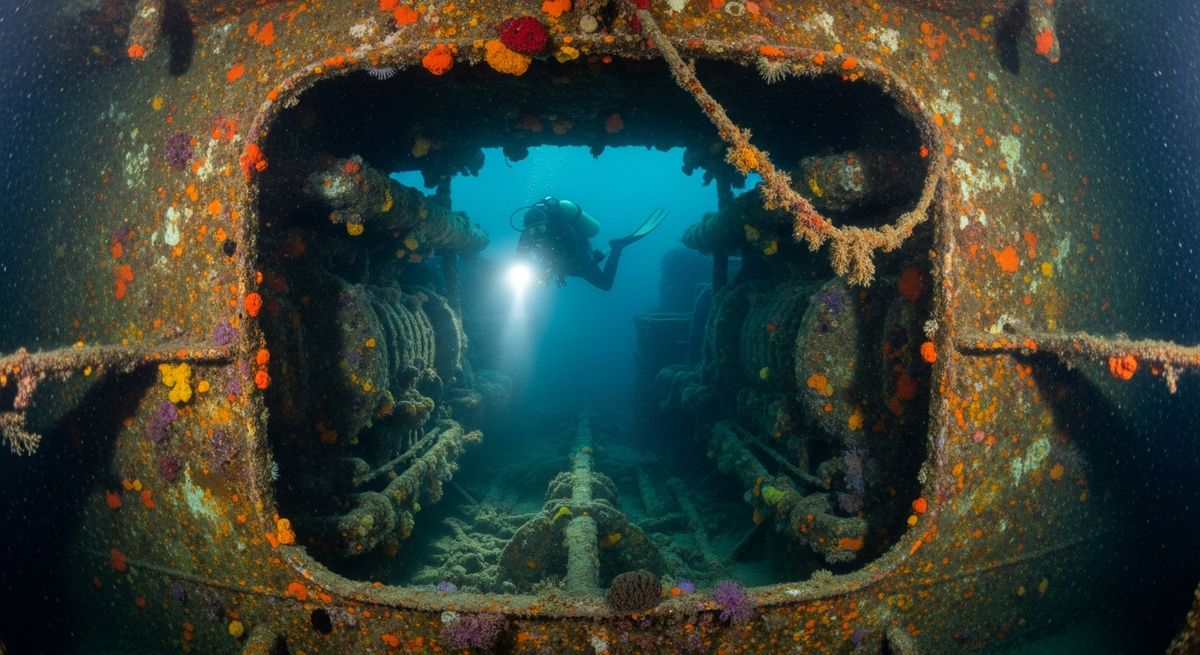
The Ardbeg wreck off the Northumberland coast is one of our favourites, especially if you’re into a bit of history with your dive. She was a steamship, sunk by gunfire from a U-boat in 1918, and you can still feel that story down there. Lying at around 20 metres, the visibility can be a bit hit-and-miss – it’s the North Sea, after all – but on a good day, the light filtering through the green water really highlights her ghostly outline. We love exploring the bow section; there’s always something new to spot. Often, you’ll find huge conger eels peering out from the deeper crevices, and the wreck is absolutely smothered in plumose anemones, their white tentacles swaying like a field of flowers in the gentle current. For us, it’s not just a dive; it’s a journey back in time, a tangible piece of maritime history colonised by the sea. It’s definitely a dive for those who appreciate the narrative behind the rust.
Typical ARDBEG Dive Profile
Illustrative profile based on site depth and type. Actual dive profiles vary - always follow your dive computer and training.
Safety Notes
Depth of 20m - Advanced Open Water certification recommended.
Wreck site - avoid penetration without wreck diving certification. Watch for sharp metal and entanglement hazards.
Always perform a 3-minute safety stop at 5m before surfacing.
ARDBEG Wreck History
Year Sunk
1918
Vessel Type
cargo ship
Cause
gunfire
Tonnage
732 GRT
The SS Ardbeg was a small British steamship built in 1880, a workhorse of the coastal coal trade. By the time of the First World War, it was an old vessel, but still played a vital role in supplying Britain's home front. Its long career came to a violent end at the hands of one of the war's most feared weapons: the German U-boat.
On February 7, 1918, the Ardbeg was steaming from the River Tyne towards London with a cargo of coal. While just a few miles off Seaham Harbour, it was spotted and intercepted by the German submarine UB-30. In a common practice to conserve torpedoes for more valuable targets, the U-boat surfaced, its crew boarded and captured the Ardbeg, and then systematically sank the defenseless collier using their deck gun. Thankfully, the Ardbeg's crew were allowed to abandon ship and there were no casualties.
Today, the remains of the SS Ardbeg lie at a depth of 20 meters off the Durham coast. The wreck is heavily broken up after more than a century underwater, a result of its sinking and the unforgiving North Sea environment. However, its boilers still stand proud of the seabed, providing a clear landmark for divers. The surrounding wreckage of twisted plates and steel ribs has become a thriving habitat for marine life, particularly large conger eels and lobsters who have made the old steamship their fortified home. Diving the Ardbeg is a journey back in time, offering a tangible connection to the naval conflict of WWI.
Nearest Dive Centres to ARDBEG
Dive shops near ARDBEG
View all dive centres in Northumberland & NortheastReviews for ARDBEG
Conditions
Ocean conditions, forecast and tides for ARDBEG
Plan & book
Ways to dive Northumberland & Northeast, from day trips to liveaboards.
Day trips & courses
via GetYourGuideGuided dives, courses and snorkel trips with instant booking.
Find dive trips in Northumberland & NortheastPlaces to stay
via Booking.comHotels and dive resorts near Northumberland & Northeast.
Search stays in Northumberland & NortheastDive insurance
Most travel insurance excludes or limits scuba. Check what you need before you go.
Dive insurance explainedPartner links: we may earn a commission if you book, at no extra cost to you. How we make money
Where to Stay near ARDBEG
Prices from Booking.com. We may earn a commission at no extra cost to you.