ARDLOUGH
Protected Area
Great Orme
Why dive here
With 118+ marine species recorded in the area - including dolphins, dwarf minke whales, humpback whales, ocean sunfish (mola mola) and orcas - ARDLOUGH offers some of Northumberland & Northeast's richest wreck diving.
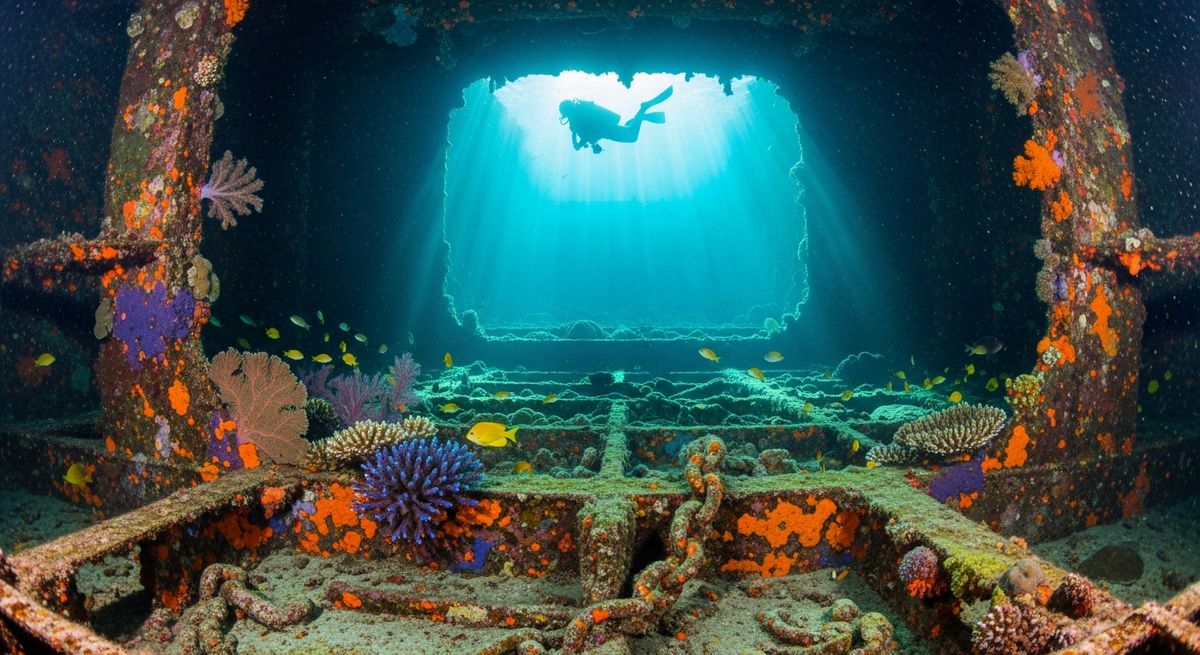
The Ardlogh is one of those wrecks that just keeps delivering. She sits upright, pretty much intact, and really makes you feel like you've stumbled onto a forgotten piece of history. We love that you can still make out her original shape – the stern section is particularly interesting, with the prop shaft still visible. Drop down to the main deck and you'll find it's a bustling apartment complex for local fish; a few times we've had a curious wolf fish peer out from a dark corner, then slowly retreat. Our favourite part is exploring the holds, they’re big and open, and you often find schools of pollock circling inside, sometimes a few wrasse dart about too. It’s a proper dive, pushing just shy of 40 metres, so it’s one for the more experienced cold-water wreckies. We’d suggest hitting it on a neap tide for the best visibility and a more relaxed drift along her length. Just remember, she's a big girl, so you’ll need a few dives to properly get acquainted.
Typical ARDLOUGH Dive Profile
Illustrative profile based on site depth and type. Actual dive profiles vary - always follow your dive computer and training.
Safety Notes
Deep dive (39m) - monitor air consumption closely. Advanced certification recommended.
Wreck site - avoid penetration without wreck diving certification. Watch for sharp metal and entanglement hazards.
Always perform a 3-minute safety stop at 5m before surfacing.
ARDLOUGH Wreck History
Year Sunk
1988
Vessel Type
cargo ship
Cause
storm
Tonnage
999 GRT
The MV Ardlough had a varied and international career spanning two decades. Built in 1968 at the Schlichting Werft in East Germany, it began life as the Barbel Bolten. Over the years, it changed hands and names several times, also sailing as the Theano and the Ekenis before finally being registered as the Ardlough. This journey reflects the global nature of maritime trade in the late 20th century.
In September 1988, the Ardlough was battling heavy weather in the North Sea when it began taking on water. Despite the crew's desperate efforts, the ship foundered and sank on September 26th. Tragically, all six members of its crew were lost to the storm, adding a somber chapter to the ship's long history. The sinking was a stark reminder of the unforgiving power of the sea.
Today, the Ardlough rests at 39 meters off the Northumberland coast, making it an excellent dive for advanced and technical divers. The wreck is largely intact and sits upright on the seabed, offering a clear layout of a modern cargo vessel. Divers can explore its superstructure, holds, and deck machinery, which are now draped in anemones and home to a variety of fish and crustaceans. Visiting the Ardlough is not just an exploration of a shipwreck, but a moment to reflect and pay respects to the six sailors who went down with their ship.
Nearest Dive Centres to ARDLOUGH
Dive shops near ARDLOUGH
View all dive centres in Northumberland & NortheastReviews for ARDLOUGH
Conditions
Ocean conditions, forecast and tides for ARDLOUGH
Plan & book
Ways to dive Northumberland & Northeast, from day trips to liveaboards.
Day trips & courses
via GetYourGuideGuided dives, courses and snorkel trips with instant booking.
Find dive trips in Northumberland & NortheastPlaces to stay
via Booking.comHotels and dive resorts near Northumberland & Northeast.
Search stays in Northumberland & NortheastDive insurance
Most travel insurance excludes or limits scuba. Check what you need before you go.
Dive insurance explainedPartner links: we may earn a commission if you book, at no extra cost to you. How we make money
Where to Stay near ARDLOUGH
Prices from Booking.com. We may earn a commission at no extra cost to you.