ASMUND
Protected Area
Ynys Mon/Anglesey
Why dive here
With 118+ marine species recorded in the area - including dolphins, dwarf minke whales, humpback whales, ocean sunfish (mola mola) and orcas - ASMUND offers some of Northumberland & Northeast's richest wreck diving.
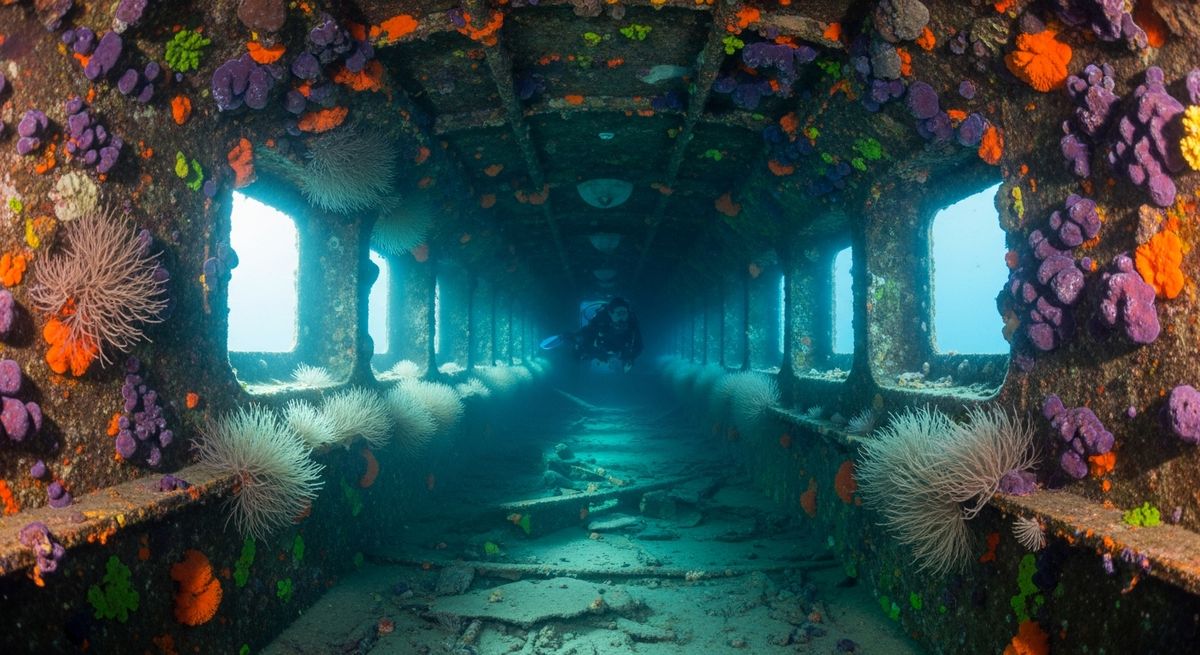
We’ve spent a lot of time poking around the Northeast wrecks, and the Asmund always feels like a bit of a secret. It’s incredibly shallow, just 3 metres, which means even on a grey day, you get decent ambient light filtering through. You're diving on history here, an old steamship that went down in 1930, built way back in 1900. What makes it special for us is how much of the structure remains, even after all these years and the constant push of the North Sea. The plates are well-broken, but you can still trace the lines of her bow and stern. We love picking through the twisted metal, finding little nooks where crabs have set up shop. The ship’s ribs, especially, are a fantastic sight, silhouetted against the surface. It’s a site for divers who appreciate the subtler beauty of a historic wreck, rather than a coral garden. The nudibranchs here are surprisingly diverse, little flashes of colour on the corroded steel. It’s the kind of dive where you can spend an hour just exploring a small section, imagining the ship in her glory. If you like your wrecks with a side of history and quiet contemplation, this is our pick.
Typical ASMUND Dive Profile
Illustrative profile based on site depth and type. Actual dive profiles vary - always follow your dive computer and training.
Safety Notes
Wreck site - avoid penetration without wreck diving certification. Watch for sharp metal and entanglement hazards.
ASMUND Wreck History
Year Sunk
1931
Vessel Type
cargo ship
Cause
unknown
The vessel that ended its days as the Asmund had a long and storied history, reflecting the changing tides of early 20th-century shipping. Built in 1900 in Hartlepool, UK, this steamship served under a succession of owners and names, including Lugond, Bolivia, Atlantis, and Lotus. Each name represented a different chapter in its 31-year career at sea.
In February 1931, its final chapter came to a close when it sank off the coast of Northumberland. The exact cause of its loss is not recorded, but the treacherous nature of the North Sea in winter suggests weather likely played a role. The ship settled in the shallows, where it has been slowly surrendering to the sea ever since.
The wreck of the Asmund is now found in the extreme shallows, at a depth of only 3 meters. This makes it a unique site, accessible to snorkelers and novice divers when sea conditions permit. Decades of wave action have broken the wreck apart, scattering its remains across the seabed. Divers won't find an intact ship, but rather a fascinating historical debris field where they can spot boilers, hull plating, and other remnants of this turn-of-the-century steamer.
Nearest Dive Centres to ASMUND
Dive shops near ASMUND
View all dive centres in Northumberland & NortheastReviews for ASMUND
Conditions
Ocean conditions, forecast and tides for ASMUND
Plan & book
Ways to dive Northumberland & Northeast, from day trips to liveaboards.
Day trips & courses
via GetYourGuideGuided dives, courses and snorkel trips with instant booking.
Find dive trips in Northumberland & NortheastPlaces to stay
via Booking.comHotels and dive resorts near Northumberland & Northeast.
Search stays in Northumberland & NortheastDive insurance
Most travel insurance excludes or limits scuba. Check what you need before you go.
Dive insurance explainedPartner links: we may earn a commission if you book, at no extra cost to you. How we make money
Where to Stay near ASMUND
Prices from Booking.com. We may earn a commission at no extra cost to you.