BANGOR
Protected Area
Ballyquintin Point
Why dive here
With 118+ marine species recorded in the area - including dolphins, dwarf minke whales, humpback whales, ocean sunfish (mola mola) and orcas - BANGOR offers some of Northumberland & Northeast's richest wreck diving.
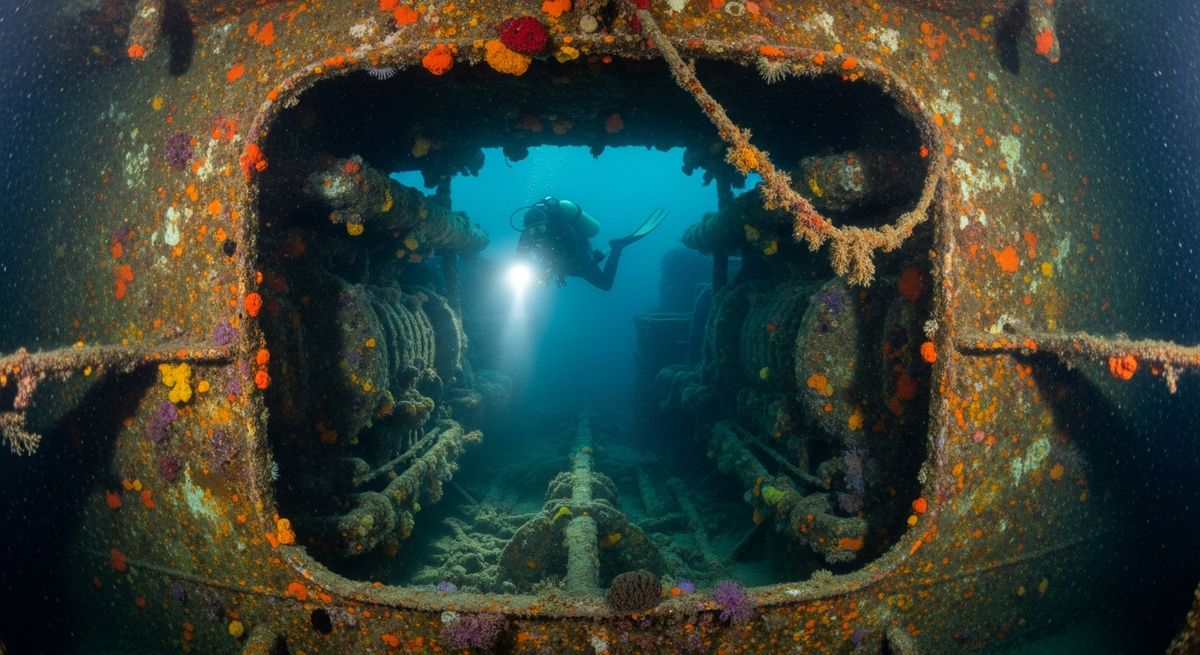
The Bangor, a steamship that went down in 1934, sits upright at a modest 16 metres, making it incredibly accessible for a decent wreck dive in Northumberland. We love that you can follow the line of the hull from stern to bow, imagining her sailing days before she became home to crabs and lobsters. Look closely, and you’ll see the engine room, a jumble of machinery colonised by anemones, offering a glimpse into the ship's guts. For us, the real joy here is exploring the cargo holds, now open to the sea, where you'll often find schools of coalfish darting amongst the shadows. The structure itself, though broken in places, gives a strong sense of its original form, a true dive into history. It's a fantastic site for newer wreck divers or those who prefer to spend their bottom time really getting to know a single wreck intimately.
Typical BANGOR Dive Profile
Illustrative profile based on site depth and type. Actual dive profiles vary - always follow your dive computer and training.
Safety Notes
Wreck site - avoid penetration without wreck diving certification. Watch for sharp metal and entanglement hazards.
Always perform a 3-minute safety stop at 5m before surfacing.
BANGOR Wreck History
Year Sunk
1934
Vessel Type
cargo ship
Cause
grounding
The SS Bangor was a classic steamship of her era, built in 1894 by Scott & Sons in Bowling, Scotland. For four decades, this hardy vessel, powered by a 67-horsepower compound engine, plied the coastal waters of the UK, faithfully transporting cargo from port to port. Her long career came to an abrupt end during a fierce storm in the winter of 1934 while on passage from Portland.
On February 26th, battling poor visibility and rough seas, the Bangor ran aground and was lost to the waves off the Northumberland coast. Today, she rests in just 16 meters of water, making her an accessible and popular dive for all levels of certified divers. Time and the relentless North Sea have flattened much of her structure, but the wreck is still easily recognizable. Divers can explore the twisted plates and beams, with the most prominent features being her large boiler and the remains of her two-cylinder engine, which stand proud of the seabed. The wreckage has become a thriving artificial reef, attracting ballan wrasse, lobsters, and crabs amidst the kelp-covered steel.
Reviews for BANGOR
Conditions
Ocean conditions, forecast and tides for BANGOR
Plan & book
Ways to dive Northumberland & Northeast, from day trips to liveaboards.
Day trips & courses
via GetYourGuideGuided dives, courses and snorkel trips with instant booking.
Find dive trips in Northumberland & NortheastPlaces to stay
via Booking.comHotels and dive resorts near Northumberland & Northeast.
Search stays in Northumberland & NortheastDive insurance
Most travel insurance excludes or limits scuba. Check what you need before you go.
Dive insurance explainedPartner links: we may earn a commission if you book, at no extra cost to you. How we make money
Where to Stay near BANGOR
Prices from Booking.com. We may earn a commission at no extra cost to you.